Get Full Government Meeting Transcripts, Videos, & Alerts Forever!
Get email alerts on the Consumer Safety topic
No spam. Unsubscribe anytime.
Senate approves bill to restrict sale, require labeling of aerosol dusters containing DFE
Summary
The Oregon Senate passed SB 1032A to require labeling, age limits and purchase caps for aerosol dusters containing 1,1-difluoroethane after members and family members described deaths and injuries linked to inhalation abuse.
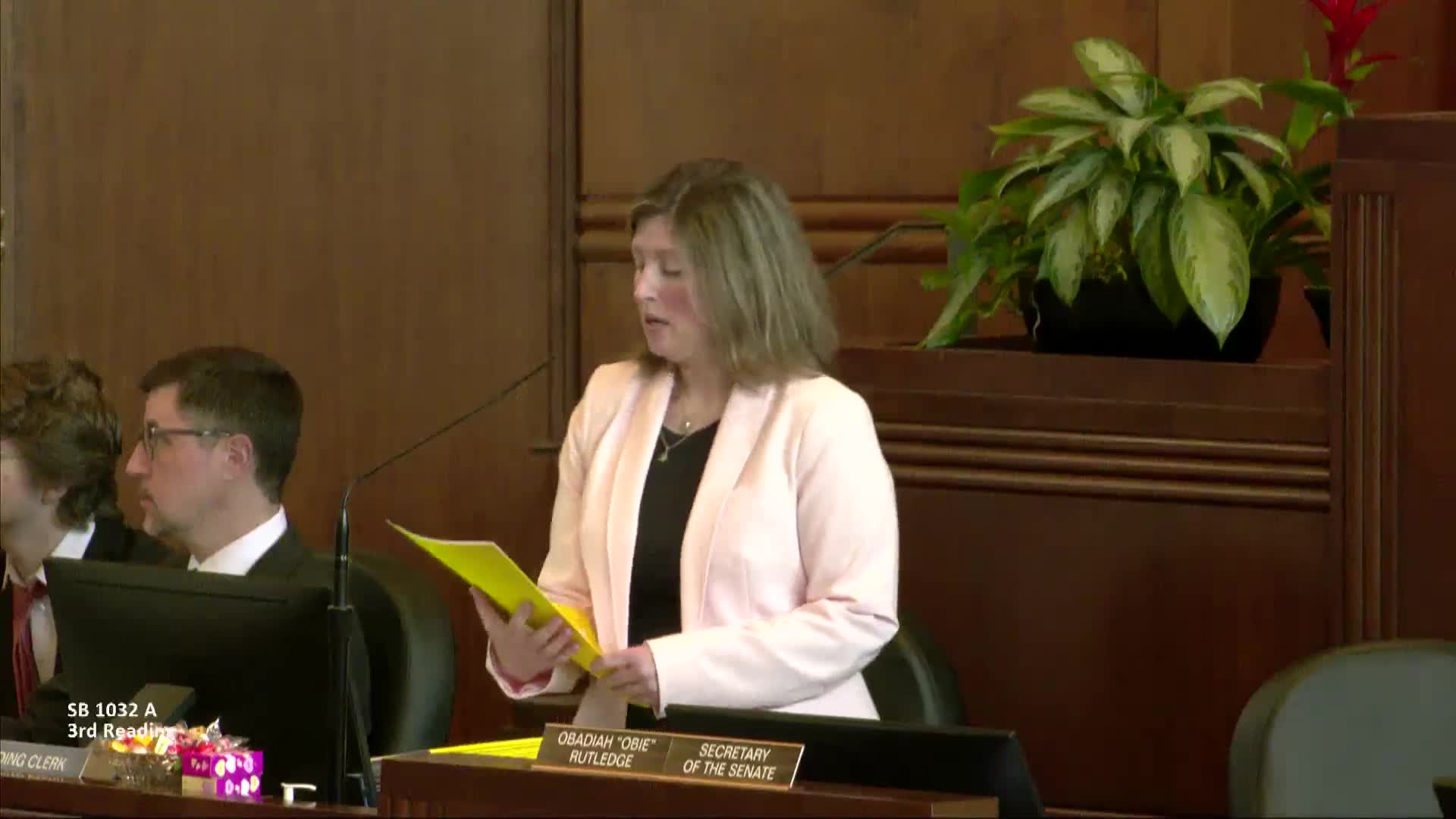
The Oregon Senate on third reading passed Senate Bill 10 32 A on Wednesday, a measure that would require explicit warning labels on aerosol dusters that contain 1,1-difluoroethane, limit sales to adults and cap the number of cans a single buyer may purchase.
Proponents said the measure targets a growing pattern of intentional inhalation, often called "huffing," that has led to emergency-room visits and deaths. Senator Elizabeth Weber, sponsor of the bill on the floor, cited written testimony and constituent accounts and said, "Between Feb. 2006 and Feb. 2022, over 1,000 deaths and more than 28,000 emergency room visits came from the abuse of DFE." She urged colleagues to adopt labeling, age restrictions and purchase limits to reduce harm.
The bill would strengthen product labeling, require retailers to keep products out of public reach, limit purchases to adults and limit the number of cans that may be bought (the floor discussion referenced a three-can limit). Sponsors said the measure includes exemptions intended to reduce burdens on legitimate commercial users: business-to-business transactions would be exempt from the purchase cap, and online deliveries can continue if the seller verifies the purchaser's age.
Senator Laurie Reynolds described a constituent case that helped shape the bill and used a brand sample as a visual aid on the Senate floor. Reynolds said an assailant high on DFE struck and killed a local woman, Jolene Brashberry, in October 2020, and recounted a chain of retail availability that enabled the person to obtain the product despite some stores keeping it behind locked compartments.
Senator Brock Smith also spoke in support, saying two of the deaths in the nationwide count were his constituents and describing the physiological risks the chemical poses when inhaled.
Senator Christopher Robinson explained his no vote on the measure, saying he sympathized with victims but worried the restrictions could hinder legitimate, high-volume purchasers such as contractors and that the approach singles out one chemical without addressing substitutes.
The bill passed final passage and was declared adopted on a roll call. The clerk recorded the final tally on the floor as 22 ayes; several senators recorded no votes; one senator was excused. The measure had been amended in committee and on the floor to clarify exemptions for business transactions and online sales with ID verification.
The passage follows months of testimony and outreach discussed in committee and on the floor; sponsors emphasized education and retail safeguards alongside the regulatory limits as the bill's principal tools. The measure moves next as required by the Senate process.
Votes at a glance for this measure and others taken Wednesday are summarized in a separate roundup article.