Get Full Government Meeting Transcripts, Videos, & Alerts Forever!
Get email alerts on the Land Use Agricultural Enclaves topic
No spam. Unsubscribe anytime.
Senate rejects bill to fast-track development of ‘agricultural enclaves,’ opponents warn of sprawl
Summary
A proposal to create a streamlined route for developing agricultural parcels surrounded by growth failed 18-19 after extended debate. Supporters described the measure as protecting property rights; opponents said the change would enable a chain reaction of conversions and remove meaningful local discretion.
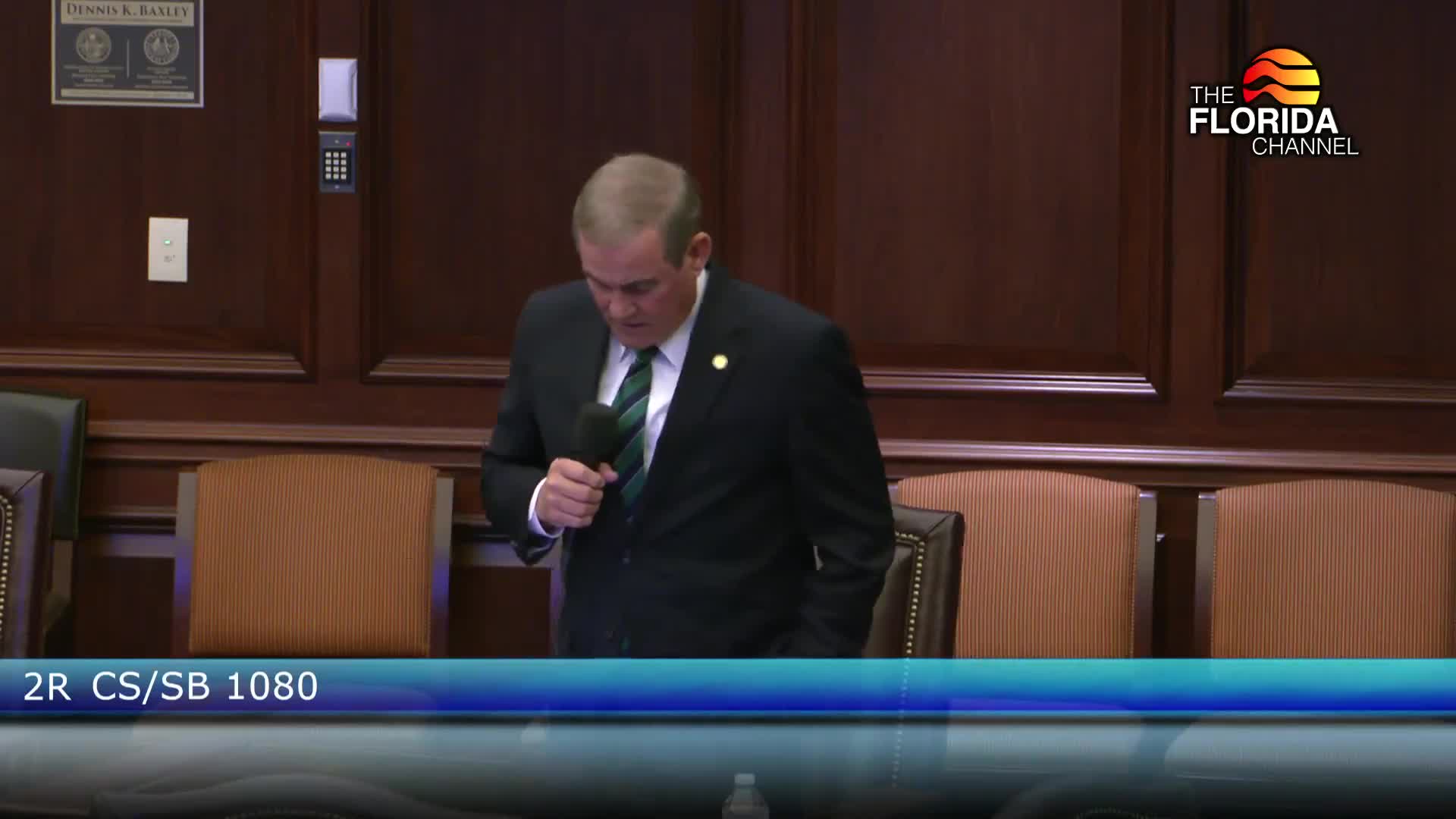
Tallahassee — The Florida Senate voted 18-19 on April 19 to reject CS for Senate Bill 1080 (local government land regulation), a measure that would have created a faster certification path for certain farm properties designated as “agricultural enclaves” inside urban growth boundaries.
Senator McLean, sponsor of the bill, argued the proposal protected long-standing property rights for agricultural landowners who find themselves surrounded by urban development and want a clear process to transition property to residential use. McLean said the bill contains checks — including an urban-growth boundary requirement and a date cutoff for eligible parcels — and a sunset provision to limit potential unintended consequences.
Opponents, including Senator Smith and Senator Collins, said the bill would erode local land-use control, silence community input, and trigger a stepwise conversion of rural land into suburban development. Senator Smith noted the certification procedure would be largely mechanical: if the parcel met the statutory checklist the county would be required to approve it, leaving limited discretion for local decision-makers.
“This bill … redefines an agricultural enclave to have only 50% adjacency and creates a process where, once you start, a daisy chain can consume adjacent agricultural land,” Smith said on the floor, arguing the change would accelerate sprawl.
Supporters pointed to protections in the measure including a requirement that a parcel be within an established urban growth boundary and an administrative sunset of the policy if it produced unintended outcomes. Sponsors also said the process was intended to be used sparingly and only for parcels that had been bona fide agricultural operations.
After nearly two hours of debate and multiple amendments, the Senate rejected the measure, 18 in favor and 19 opposed. The sponsor said he will continue to work with stakeholders, but the bill failed to secure the majority needed to advance.
Ending: The vote exposed a persistent divide on land-use policy in Florida: balancing private property rights and development entitlements against local land-use control and long-term preservation of agricultural lands. The sponsor said he would continue discussions; opponents said the result preserves local review authority for now.