Get Full Government Meeting Transcripts, Videos, & Alerts Forever!
Get email alerts on the Trust Fund Interest topic
No spam. Unsubscribe anytime.
Senate approves measure to cap interest on client trust accounts after contentious floor debate
Summary
The Florida Senate passed CS/CS/SB 498 to limit interest paid on IOTA/trust accounts to a small, fixed rate range; supporters said the change would stabilize funding streams derived from client trust interest, while opponents warned it would sharply reduce funding for civil legal aid and could prompt litigation.
Tallahassee — The Florida Senate on April 19 passed CS/CS/SB 498, a bill that changes how financial institutions must pay interest on lawyer trust accounts (commonly called IOTA accounts), setting a floor tied to simple percentage thresholds and requiring banks to attest to the comparable rates. The measure passed 28-10.
Supporters said the bill is intended to “right-size” a source of unpredictable funding and to return interest earnings to the clients whose funds generate the income. Opponents warned the change will sharply reduce revenue now directed to legal-aid organizations and could spur court challenges.
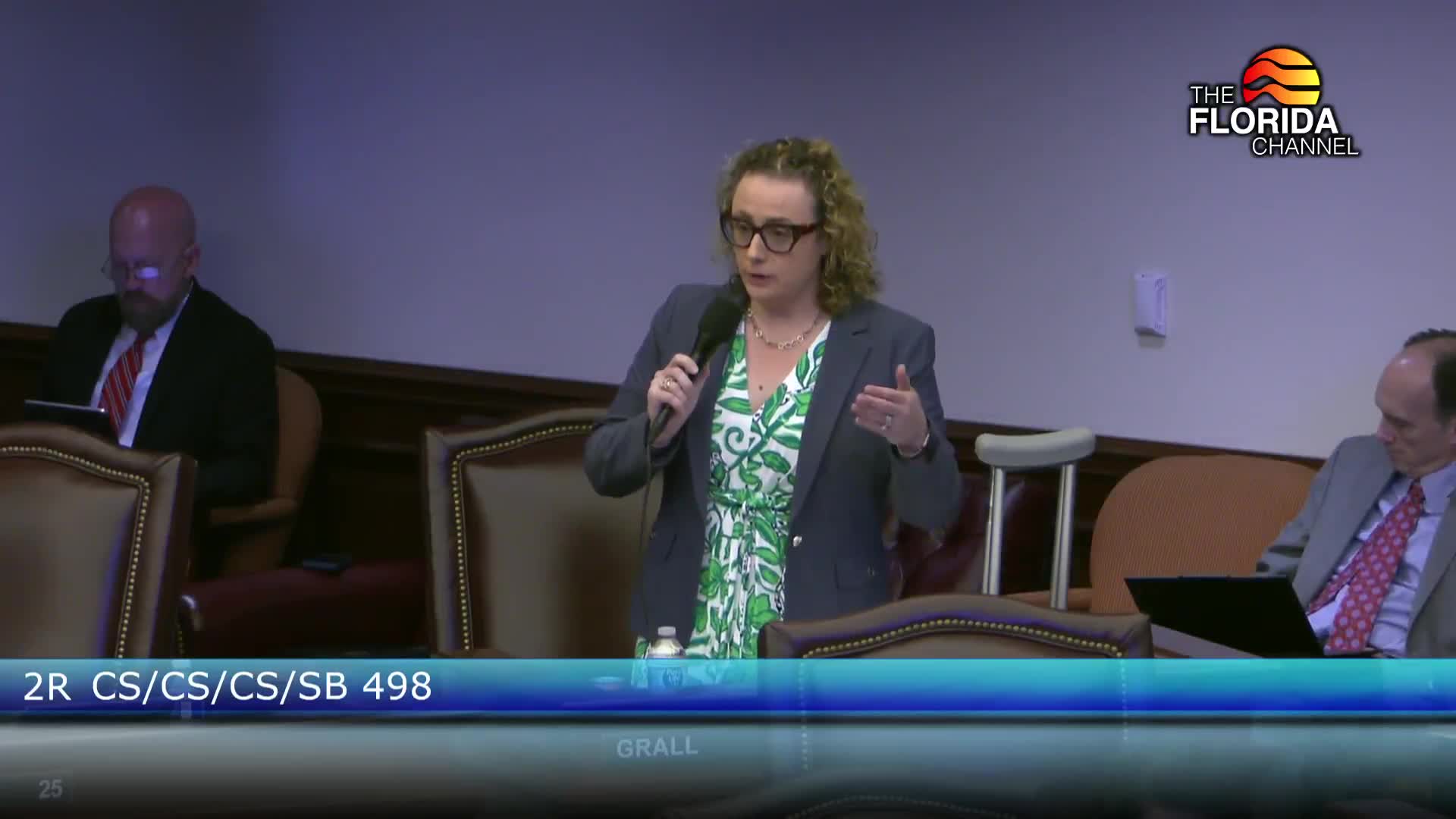
Senator Grama, 29th District, the bill sponsor, told the chamber the change will stabilize what has been an extremely volatile revenue stream and make the program predictable year to year. He told colleagues that prior court rule changes had pushed the interest payments from relatively modest sums to a single-year total in the hundreds of millions, and that the legislature needed to set a statutory standard for comparable consumer account rates.
“The average that had resulted from this interest on these accounts for many years was about $15 million to $30 million,” Grama said. “Then there was a rule change at the Supreme Court … so in 23-24 the amount went skyrocketed really from $15 to $30 million to $279 million that year because the interest rate was so much higher.”
Opponents, including Senator Berman and Leader Pizzo, pressed on the floor for details about how much funding legal-aid groups rely on now and whether the bill would create service shortfalls for low-income Floridians who need civil legal representation. Senator Berman said the change could be “very hurtful to our legal aid here in the state and they do perform an amazing function.”
Senator Grama responded that the interest earnings are client-generated funds and argued the bill returns those earnings to clients at rates comparable to what banks pay other customers. “I believe this is client's money,” Grama said on the floor, and he argued the statute should not leave that distribution entirely to bank and court practice.
Debate also touched on small community banks’ ability to offer the new required rates. Grama said the statute is voluntary for banks but noted the statutory rate cannot be lower than 0.25% when the federal funds rate is below a threshold and 0.5% when it is higher, and he described those levels as closer to typical consumer checking/money market yields than the prior calculation methods used by the court.
Several senators predicted litigation over the statute. Leader Pizzo said courts would likely decide whether the law is enforceable and that passage would not settle the long-term question about how best to fund civil legal services.
The final vote was 28 in favor, 10 opposed. The bill will now proceed to the House or to enrollment, as provided by legislative process.
Ending: The measure prompted sustained floor discussion about trade-offs between fiscal predictability and the operating budgets of nonprofit legal services. Sponsors said the law aims to provide steady, modest annual funds while returning the remainder to the individual clients who generated the earnings; critics said the change risks diminishing services for vulnerable Floridians pending alternative funding.