
Huntersville staff outline $330 million CIP and five-year budget forecast; warn of possible fund‑balance drawdown
Get AI-powered insights, summaries, and transcripts
Sign Up Free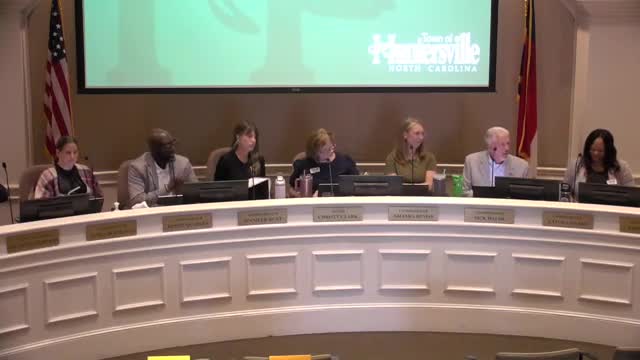
Summary
Town staff reviewed a five-year capital improvement program that lists roughly $330 million in projects (prior-funded, FY‑26 and future years), described funding sources and timing for major items and presented a five‑year financial forecast showing a potential $15 million planned use of general fund balance in FY‑26 under current assumptions.
Jackie Huffman, introduced at the meeting as a 30‑year veteran of local government, told the Town of Huntersville board on April 22 that staff will present a five‑year capital improvement program (CIP) and a financial forecast intended as a planning tool rather than a recommended binding plan. "This afternoon's pre meeting is dedicated to us to our discussion of what I'm gonna call our CIP, capital improvement program," Huffman said. "It is my hope that this is a conversation. I do not have, prepared remarks."
Huffman and staff showed a spreadsheet that lists about $111 million in projects funded in prior years that remain active, roughly $46 million of projects listed in future years that have no identified funding source yet, and a combined total across prior, FY‑26 and future columns of about $330 million. Staff said roughly $38 million (about 34 percent of the prior‑funded total) is expected to roll off the list this year as projects complete, including the town hall project.
The nut of the presentation was the town's five‑year financial forecast, which models revenues, operating costs, capital and debt service under a range of assumptions. Huffman and other staff emphasized the forecast is a tool for discussion: under the assumptions shown, general fund revenues were projected at about $73 million and expenditures about $89 million in FY‑26, producing a planned use of roughly $15 million of fund balance. Staff noted audited fund balance at the end of FY‑24 was about $83 million but cautioned much of that is restricted or reserved and not available for discretionary use.
Why it matters: the CIP list and forecast show how project timing, grant awards, and debt issuance affect the town's ability to pay for major projects. Huffman walked the board through funding sources — including previously issued limited obligation bonds (LOBs), grants (for example, CRTPO and other sources), transportation reserves and proposed fund‑balance contributions — and explained the timing of issuing debt and the subsequent appearance of debt‑service payments in future fiscal years. "When you issue debt, you're gonna need to make debt service payments," she said, noting a design‑then‑bid process will determine the final debt amount for projects such as Fire Station No. 5.
Key details and examples: town hall is expected to complete this calendar year and was funded largely with LOBs as a prior year project; staff estimated town hall was about a $30 million project. Staff also flagged projects that will likely remain active for multiple years — for example the Stumptown Road Extension and Gilead Road West — and described a small‑dollar category of capital (police cars, equipment) that will be included in the manager's recommended budget.
On taxes and the forecast, staff showed illustrative scenarios that let the board change the assumed tax rate in the spreadsheet to see long‑range impacts on fund balance. Huffman and other presenters stressed the forecast does not represent a firm recommendation to deplete reserves and encouraged the board to use the Excel model to test alternatives.
Quotes from the meeting that summarize staff guidance include Huffman's direction to the board: "If you see projects that are listed in future, I can't be more blunt than this, those are projects we think we ought to be thinking about, we ought to be considering, but we have not funded them." Manager Anthony (first name only in the record) and other staff repeatedly said the numbers are scenario inputs and that grant awards, construction schedules and actual bids will change outcomes.
The board was told the manager's recommended budget will be released May 6, a budget workshop is planned for May 7, a public hearing on the budget is scheduled for May 20, and adoption is targeted for the first meeting in June. "We can have as many budget workshops as it takes to get you comfortable with voting on the budget at that first meeting in June," Huffman said.
The presentation included many project‑level details and funding assumptions; board members and staff agreed to continue reviewing the Excel CIP and to adjust project timing or tax assumptions as needed before the manager's recommended budget. The discussion closed with staff urging the board to focus on FY‑26 assumptions and use the CIP spreadsheet for "what‑if" scenarios.
Ending: Staff emphasized that the CIP and forecast are working documents and that final budget decisions and any debt issuance will follow later steps in the budget calendar, after the manager's recommended budget, public hearings and further board direction.