Get Full Government Meeting Transcripts, Videos, & Alerts Forever!
Get email alerts on the Fisheries Chinook Hatchboxes topic
No spam. Unsubscribe anytime.
Oregon committee hears divided testimony on bill to expand Coos County fall Chinook incubation nurseries
Summary
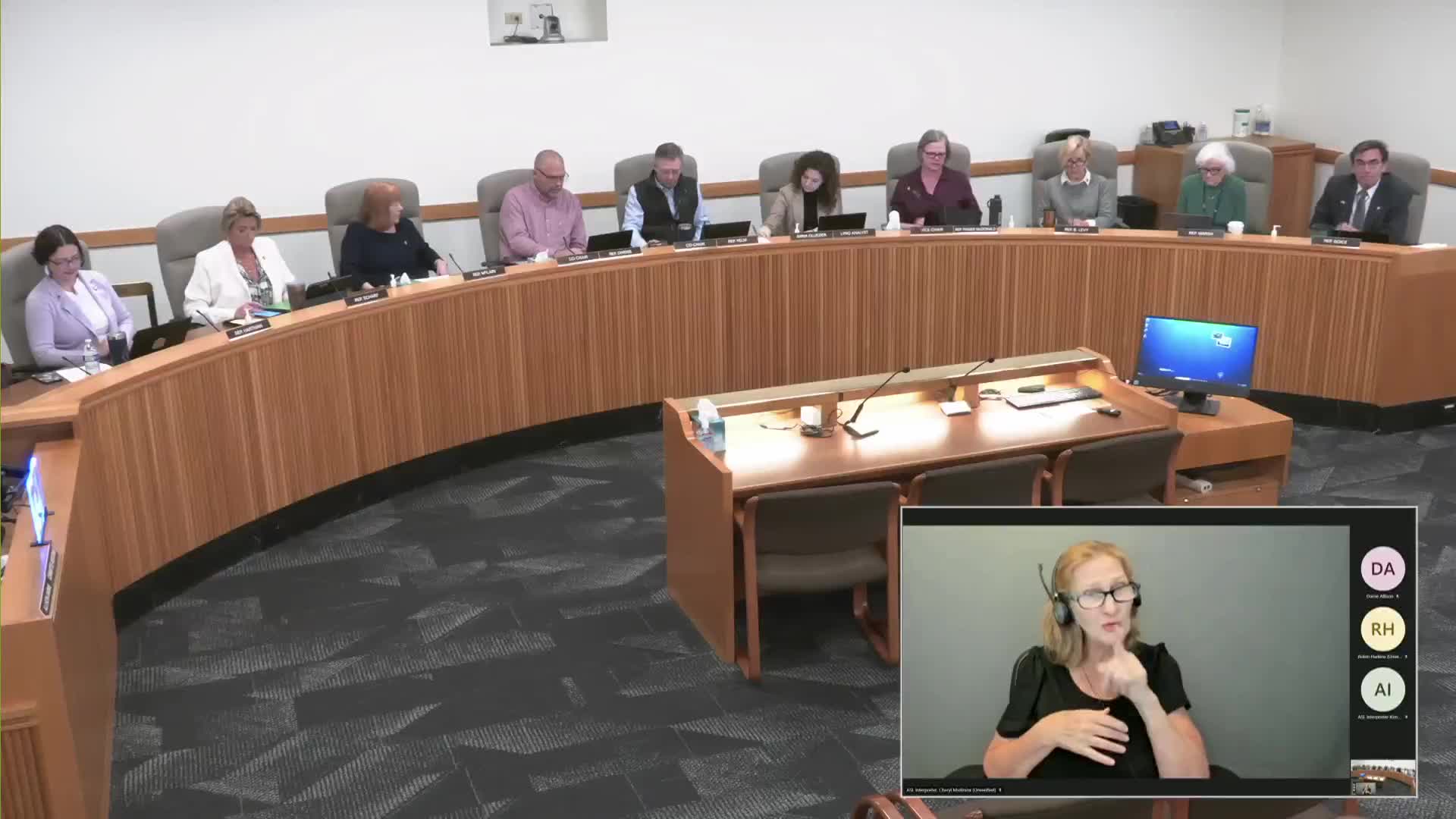
The House Committee on Agriculture, Land Use, Natural Resources and Water held a public hearing April 23 on Senate Bill 221, which would direct the Oregon Department of Fish and Wildlife (ODFW) to encourage one or more entities to establish and fund fall Chinook fish incubation nursery projects in certain Coos County streams.
The House Committee on Agriculture, Land Use, Natural Resources and Water held a public hearing April 23 on Senate Bill 221, which would direct the Oregon Department of Fish and Wildlife (ODFW) to encourage one or more entities to establish and fund fall Chinook fish incubation nursery projects — commonly known as streamside incubators or “hatch boxes” — in certain Coos County streams.
Why it matters: Proponents said the measure provides a management tool to counter a steep, recent decline in natural-origin fall Chinook in the Coquille and Coos watersheds and to support tribal cultural practice and local fisheries. Opponents — including Trout Unlimited, Wild Salmon Center and Native Fish Society — warned the bill, as drafted, would permit third parties to run programs without ODFW oversight, lacks required monitoring and reporting, contains no sunset, and could conflict with existing coastal management plans.
Senator David Brock Smith, sponsor for Senate District 1, opened the testimony by saying the bill would expand tools used in Coos and Coquille basins and called hatch boxes an established technique used elsewhere in the Pacific Northwest. John Ogan, executive director of the Coquille Indian Tribe, described an existing co-management relationship with ODFW and urged the committee to pass the bill "so we can add another tool to our toolkit to restore abundance of Fall Chinook." Ogan cited what he called a historic stock collapse: he said the Coquille watershed averaged about 11,000 natural-origin spawners for decades prior to 2017, fell to fewer than 700 in 2018, and had a 2024 model projection of about 319 fish that year (he said those 319 were not directly observed but represent a modeled expansion from carcass counts).
Local commercial and volunteer leaders also testified in favor. Heath Hempel, president of the Coquille STEP Association and owner of Chuck’s Seafoods, described the volunteer network that historically supported hatch boxes and said modern incubation systems have low water use and high egg-to-fry survival in the incubation stage. Josh Bettisworth, vice president of the Oregon Anglers Alliance and a STEP board member, said the science and public support favor expanded use for Chinook.
Opposition and concerns: Several conservation organizations opposed the bill as written. James Fraser, Oregon policy director for Trout Unlimited, said the technology is already used in Coos County under ODFW’s existing research framework and that SB 221 "directing ODFW to work with third parties on similar, further, or expanded work indefinitely and without similar research requirements, is unnecessary and problematic." Fraser and Kurt Blaine of Wild Salmon Center urged that any expansion be tied to ODFW plans, include monitoring, reporting and a time-limited pilot structure. Jennifer Fairbrother of Native Fish Society said the bill would create a statutory “carve-out” that could let third parties operate outside management plans and asked for clearer constraints on broodstock, program size, reporting and a sunset.
ODFW perspective: Deputy Director Sean Clements told the committee the Coastal Multi-Species Plan (CMP) adopted in 2014 already allows limited, experimental use of hatch boxes and includes adaptive-management provisions. Clements said the CMP will begin formal review in 2026 and that the department is pursuing co-management and research in the Coquille and Coos basins; he described an ODFW-approved conservation hatchery and ongoing work with the Coquille Tribe to suppress invasive smallmouth bass and restore habitat.
Quantitative details raised in testimony included: a LUBA estimate for a different bill (noted earlier in the hearing) that agency budgets and fee revenues do not fully cover costs; a Coquille Tribe claim of nearly $3,000,000 secured for passage and habitat work; a cited broodstock collection low in 2021 (three pairs collected for the hatchery program that year) followed by improved collections in 2023–24 after changes in protocol.
Outcome and next steps: The committee took public testimony but recorded no committee vote on SB 221 at the hearing. Supporters urged the Legislature to adopt the bill to expand local management tools; opponents urged amendments to require monitoring, alignment with ODFW management plans and a sunset or pilot structure before authorizing indefinite third‑party programs.
Ending: Committee members asked multiple panelists about research design, broodstock sourcing and how ODFW would review proposed projects; ODFW said scientifically sound proposals would need clear questions, broodstock assurances, and genetic and carcass monitoring to detect parentage. The public hearing was closed with the committee reserving further action.