Get Full Government Meeting Transcripts, Videos, & Alerts Forever!
Get email alerts on the Criminal Justice Expungement topic
No spam. Unsubscribe anytime.
Oregon House approves bill lengthening wait to clear contempt findings from 1 to 5 years
Summary
The House passed HB 2492, which extends the waiting period to petition for expungement of contempt findings tied to protective-order violations from one year to five, and clarifies rules on reclassified convictions and traffic offenses.
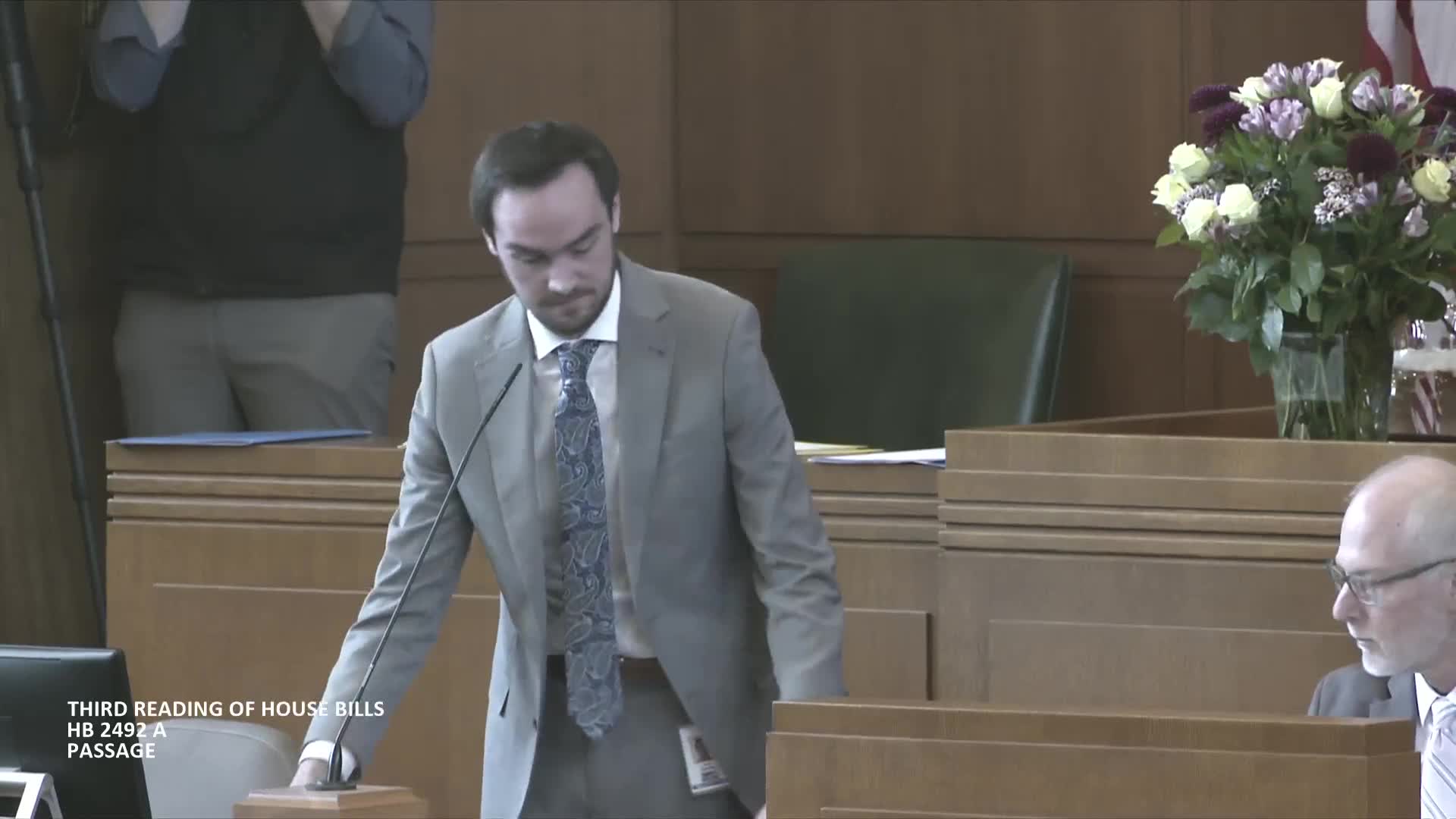
The Oregon House passed House Bill 2492 on third reading after brief floor debate, extending the waiting period for expunging contempt findings tied to protective orders from one year to five.
Supporters said the measure clarifies existing expungement rules, aligns timelines when courts reclassify convictions, and makes clear that traffic violations are not eligible for expungement. Representative (sponsor of HB 2492) described three parts of the bill: changing the waiting period for contempt tied to protective orders, clarifying expungement timing when convictions are reclassified, and a technical fix excluding traffic violations from expungement eligibility.
Representative Tran registered concern and announced a planned no vote to mark broader objections, saying she supports protections for survivors of domestic violence but argued lengthening the waiting period imposes “invisible shackles” on Oregonians seeking housing and employment. Tran cited large numbers of pending expungement cases and court debt as reasons the state should pursue additional reforms alongside the bill.
The clerk opened the voting system and declared House Bill 2492 passed after it received a constitutional majority.
The bill’s final text and implementation steps were not read into the record during the floor remarks provided; lawmakers urged attention to broader expungement backlogs and court-fee barriers in follow-up work.