Get Full Government Meeting Transcripts, Videos, & Alerts Forever!
Get email alerts on the Civil War Memory topic
No spam. Unsubscribe anytime.
Yale historian David Blight says U.S. memory of the Civil War sidelined emancipation in favor of reconciliation and the Lost Cause
Summary
At an afternoon lecture at the University of Montana in Missoula, David Blight, professor of history at Yale University, argued that American culture long prioritized reconciliation and the Lost Cause legend over emancipation, citing textbook battles, reunion ceremonies and archival evidence that together reshaped public memory.
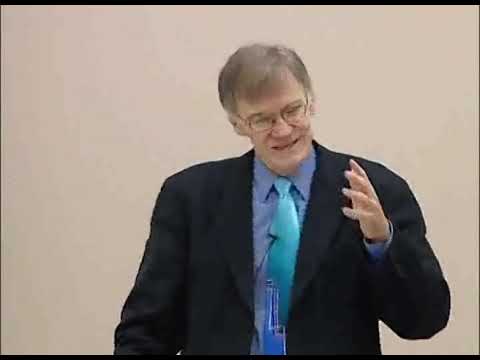
David Blight, professor of history at Yale University, told an audience at an afternoon lecture at the University of Montana in Missoula that American memory of the Civil War largely sidelined slavery and emancipation in favor of reconciliation and the Lost Cause.
Blight said the study of collective memory requires the same rigorous evidence historians apply to other subjects and warned that memory can be both "an extraordinary record" and a source of distortion. He quoted philosopher Avishai Margalit, saying, "Memory is knowledge from the past," and invoked Augustine to stress memory’s power: "Great is the power of memory, a fearful thing."
Why this matters: Blight argued that how a nation remembers its past shapes its politics, textbooks and monuments. He described three dominant strands of Civil War memory in the half-century after the war: reconciliationist memory that emphasized shared soldierly sacrifice; white-supremacist memory that justified segregation and violence; and emancipationist memory embodied in African Americans' own complex remembrances tied to Reconstruction and the postwar constitutional amendments.
Blight cited specific examples and archival research to support his argument. He said historians once dismissed Works Progress Administration collections "—3,300 odd oral narratives" from the 1930s — but later scholars found recurring themes across those testimonies. He described efforts by veterans’ groups to shape textbook content and recounted the rise of Blue-Gray reunion culture, which by the late 19th and early 20th centuries prioritized reunion and valor over causes and consequences.
Turning to public commemoration, Blight said he examined the 1913 Blue‑Gray reunion at Gettysburg and found it was organized under Jim Crow rules. "The 1913 Blue-Gray reunion at Gettysburg was a Jim Crow reunion, explicitly organized so," he said, adding that his archival searches at the National Archives, Gettysburg National Military Park and Carlisle Barracks turned up no evidence of black veterans being permitted as participants in 1913; footage of black veterans shown in other histories, he said, came from a 1938 reunion and was reused in later documentaries.
Blight also criticized historical framing that minimized slavery’s centrality. He described how mid‑20th century writers and commemorations often presented the conflict as mutual valor rather than a struggle rooted in slavery, citing Bruce Catton’s 1965 essay as an example of a widely held view at that time that the Civil War’s memory had "healed" the nation. Blight contrasted that with W. E. B. Du Bois’s 1912 commentary that warned the public appetite for a softened history had "spoiled" the factual record.
He drew broader lessons about balancing healing and justice. Using examples from U.S. history and comparative truth‑seeking efforts abroad, Blight said nations face a persistent tension between commemorations that promote unity and the demands of historical accountability.
The talk concluded with questions from the audience. Blight noted forthcoming anniversaries — the Harper's Ferry sesquicentennial and the Lincoln bicentennial among them — and said he plans to expand his work in those contexts. He also reminded listeners of an evening lecture at 8:00 p.m. in the University Center Ballroom, where he said he would discuss Slaves No More and two recently discovered slave narratives.