Get Full Government Meeting Transcripts, Videos, & Alerts Forever!
Get email alerts on the Emancipation Slave Narratives topic
No spam. Unsubscribe anytime.
Historian David Blight presents two newly surfaced slave narratives and frames emancipation as both individual action and military effect
Summary
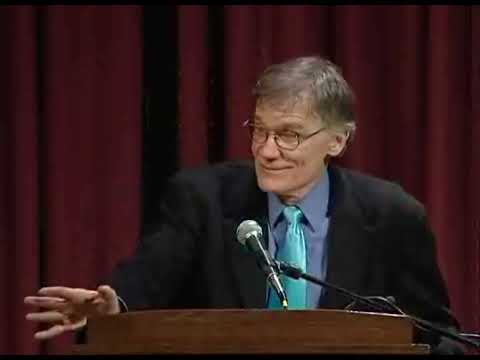
Professor David Blight of Yale University spoke in Missoula about two recently discovered post‑emancipation slave autobiographies — by John Washington and Wallace Turnage — and used them to argue that emancipation on the ground required both the actions of enslaved people and the presence of Union armies and navies.
Professor David W. Blight of Yale University spoke in Missoula about two newly surfaced slave autobiographies and how those first‑person accounts illuminate how emancipation happened for individual people during the Civil War.
Blight framed the narratives by John Washington and Wallace Turnage as windows onto ‘‘how emancipation actually happened on the ground,’’ saying neither the presence of Union forces nor the fugitives’ own courage alone explains their freedom; ‘‘the answer to that has always been both,’’ he said.
Blight began by placing the narratives in the wider shift in American memory: he described a recent growth of public interest in slavery and emancipation through films, museum exhibitions and renewed scholarship. He argued that the rise of African American history within the national historical conversation has helped make room for these recovered first‑person accounts.
The lecture summarized each manuscript and the research tracing its provenance. Blight said John Washington, born into slavery in Fredericksburg, Virginia, wrote his account in 1873 and escaped to Union lines in April 1862; according to the lecture, Washington later settled in Washington, D.C., became a founding member of Shiloh Baptist Church, and worked as a painter. Wallace Turnage, born on a tobacco farm near Snow Hill, North Carolina, recorded multiple escape attempts and — after a final successful flight in August 1864 from Mobile Bay — served as a servant to a Union officer and later lived in New York and Jersey City, Blight said.
Blight described how the manuscripts reached modern repositories: John Washington’s manuscript was at one point offered to the Library of Congress (Blight said a photocopy was made and later the family retained the original); Wallace Turnage’s manuscript was given to the Greenwich (Conn.) Historical Society after a neighbor alerted local staff. Blight said both came to him through intermediaries: John Washington’s manuscript through the family line ending with a grandson‑in‑law who contacted Blight’s agent; Turnage’s manuscript when a local historical society invited Blight to authenticate and work with it.
Using both narratives, Blight read extended passages. He quoted Washington’s description of his first night as a free man and Turnage’s account of being taken aboard a Union boat after rowing into Mobile Bay. Blight emphasized that these texts are ‘‘utterly raw, unedited’’ primary documents; he said he did minimal editing and paragraphing to make Turnage’s continuous prose easier to read.
Blight also reviewed the scarcity and genres of slave autobiographies: he said researchers count roughly 65 published autobiographies before 1865 and about 55 written after emancipation through the early 20th century. He described pre‑war narratives as focused on bondage and escape, while many postwar autobiographies became spiritual or progress narratives (for example, Booker T. Washington’s Up From Slavery).
At the end of the talk Blight returned to the central interpretive point: neither presidential proclamations nor army presence alone freed people, he said; emancipation depended both on federal military and naval power and on the decisions, cunning and bravery of enslaved people themselves.
The event closed with audience questions and a brief book signing.