Get Full Government Meeting Transcripts, Videos, & Alerts Forever!
Get email alerts on the Federal Budget topic
No spam. Unsubscribe anytime.
GAO Comptroller General David M. Walker urges action on mounting U.S. fiscal shortfall in Missoula lecture
Summary
Comptroller General David M. Walker, head of the U.S. Government Accountability Office, told a University of Montana audience in Missoula that the nation faces a long-term fiscal threat from rising entitlement costs, demographic change and growing public debt and urged early policy action to avoid a serious fiscal crisis.
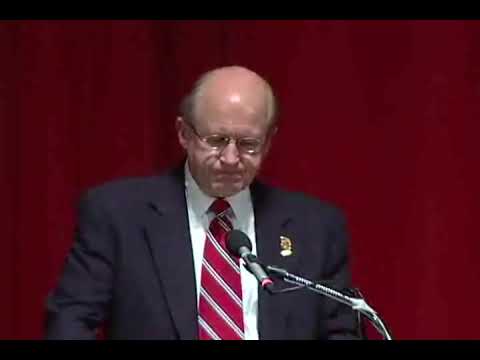
Comptroller General David M. Walker, head of the U.S. Government Accountability Office (GAO), told an audience at the University of Montana in Missoula that the nation faces a long-term fiscal threat from rising entitlement costs, demographic change and growing public debt and urged early policy action to avoid a serious fiscal crisis.
Walker framed the problem as a set of solvable policy failures: long-range deficits and “unfunded commitments” for Social Security and Medicare, health-care cost growth, and weak budget controls. He said the retirement of the baby-boom generation and escalating health-care costs are the main drivers of the problem and repeated his central claim that “our government has made a whole lot of promises that in the long run, it cannot possibly keep.”
Why it matters: Walker warned the costs will compound and that delaying reforms will increase the burden on younger generations. He cited a GAO-style view of the nation’s fiscal outlook — long-range liabilities measured in tens of trillions of dollars — and argued that without policy changes the country’s fiscal position will worsen.
In the lecture, Walker gave specific examples and time points he said should focus policymakers’ attention. He said the first baby boomers would be eligible for early Social Security retirement on Jan. 1, 2008, noted that Social Security surpluses were projected to begin declining in 2009, and recited GAO-style projections that Medicare trust fund dates posed near- and medium-term fiscal pressure (he referenced Medicare Part A negative cash flow and a trust fund shortfall in the decade ahead). He also cited an estimate of roughly $50 trillion in long-range unfunded obligations and translated that figure into an illustrative “IOU” per household used to show scale.
Walker recommended a multi-part policy response: reimpose stronger statutory budget controls, pursue Social Security reform to restore solvency, restrain growth in Medicare and Medicaid through health-care reform, and realign spending and taxes so revenues rise over time. He said performance-based budgeting and removing ineffective programs would be part of an effective approach and recommended establishing commissions or task forces to give the next president and Congress a framework for action.
During a question-and-answer session that followed, Walker addressed contracting and infrastructure oversight, saying contract awards can be based on “best value” rather than lowest bid and arguing that inadequate post-award oversight frequently produces higher cost, lower quality and schedule problems. In response to questions about single-payer health care, he said few systems are truly single payer in practice and that he favored universal access to basic and essential services while acknowledging political and cultural limits to a fully government-run system.
Walker also discussed the debt ceiling, calling it a technical legal limit that policymakers will ultimately raise to avoid default, and said the more important debate is how to avoid repeatedly increasing the ceiling by addressing root fiscal problems. He repeatedly urged civic engagement, saying public demand for action is required to enable elected officials to make difficult long-term choices.
The lecture included exchanges with students and local attendees who asked about contracting practices, health-care models, the debt ceiling and what would motivate broader public action. Walker recommended a mix of leadership, civic education and public involvement; he named the Concord Coalition as one organization working on fiscal awareness and encouraged audience members to get involved.
The program was presented as part of a presidential lecture series at the University of Montana; the host acknowledged Senator Max Baucus and University President George Denison for facilitating Walker’s appearance. Walker said the lecture would be podcast on the university’s lecture-series website.
The talk focused on policy prescriptions and public education rather than specific legislation; no formal votes or governmental actions were taken during the event.