Get Full Government Meeting Transcripts, Videos, & Alerts Forever!
Barnett Rubin: Afghanistan’s weak state, Durand Line and Pakistan’s tribal areas enable transnational threats
Summary
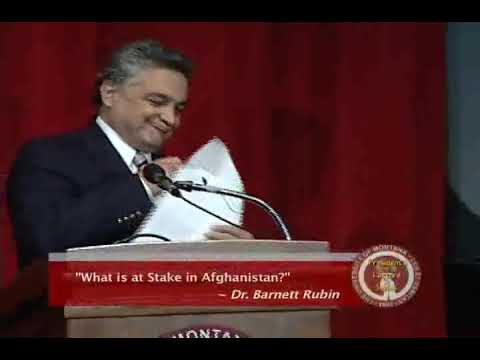
Professor Barnett Rubin, director of studies and senior fellow at the Center on International Cooperation at New York University, delivered a lecture in Missoula arguing that Afghanistan’s weak central state, long-colonial borders and the ungoverned tribal territories along the Durand Line are central to why transnational networks such as al Qaeda were able to establish bases there.
Professor Barnett Rubin, director of studies and senior fellow at the Center on International Cooperation at New York University, delivered a lecture in Missoula arguing that Afghanistan’s weak state institutions, long-colonial borders and the ungoverned tribal territories along the Durand Line are central to the current security threat and to why transnational networks such as al Qaeda were able to establish bases there.
Rubin said the most relevant question is how Afghanistan became “the center of organization for this transnational network, the center of which is now in the tribal areas of Pakistan,” and he warned that the tribal frontier’s weak authority and cross-border social ties helped create a space outside effective state control. “There’s not a single Afghan member of Al Qaeda, and never has been,” Rubin said, noting that al Qaeda’s recruits increasingly include European converts and second‑generation immigrants who were radicalized outside Afghanistan.
Why it matters: Rubin tied the security threat to longstanding political geography and the legacy of colonial-era agreements. He emphasized that the Durand Line—drawn in the late 19th century and referenced repeatedly in his remarks—has “never been recognized by Afghanistan,” and that many people on both sides of the line do not accept it as a state border. That, Rubin said, helps explain persistent instability and cross-border movement of fighters.
Key points and evidence
- State weakness and governance: Rubin described Afghanistan as a “highly centralized but extremely weak” state that historically…
Already have an account? Log in
Subscribe to keep reading
Unlock the rest of this article — and every article on Citizen Portal.
- Unlimited articles
- AI-powered breakdowns of topics, speakers, decisions, and budgets
- Instant alerts when your location has a new meeting
- Follow topics and more locations
- 1,000 AI Insights / month, plus AI Chat