Get Full Government Meeting Transcripts, Videos, & Alerts Forever!
Get email alerts on the Funding topic
No spam. Unsubscribe anytime.
Sustainable Business Council workshop explores dues, sustaining sponsors and in-kind models to fund Buy Local campaign
Summary
Attendees reviewed membership tiers, suggested sustaining levels from $200–$2,000, discussed in-kind contributions, merchandise sales and municipal or foundation seed funding options.
Missoula Sustainable Business Council leaders and an outside organizer reviewed membership tiers, sponsorship levels and fundraising options for a Buy Local campaign during a workshop Thursday.
Why it matters: organizers said early funding choices will shape whether the Council can hire a coordinator, print materials and mount a visible launch.
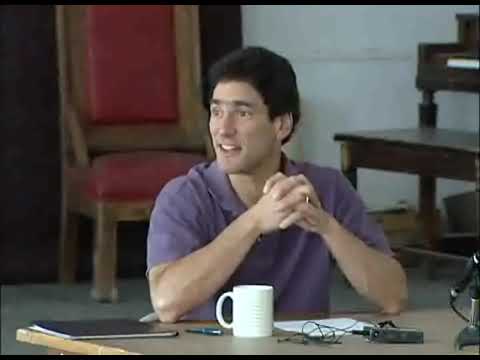
Jeff Milton, outreach director for the American Independent Business Alliance, described approaches other communities used to start: a sliding membership scale (roughly $200–$600), a voluntary sustaining level (commonly $2,000), and occasional higher-tier “primary sponsor” gifts (examples cited up to $10,000) that paid for promotional items such as fold-out maps and directories. “There’s no reason… you couldn’t also do a $5,000 level if you thought there was a business for whom $2,000 wasn’t adequate,” Milton said.
The group discussed allowing in-kind membership — for example, graphic designers, printers or accountants supplying services in exchange for a reduced cash fee. Milton said Boulder had recruited in-kind sustaining members with a $2,000 sustaining level that could be paid in cash or trade, in part by offering website banner ads and directory placement as benefits.
The workshop covered other revenue streams discussed widely in practice: merchandise (tote bags, stickers), paid member directories, discounted group advertising deals with local papers, and small “starter kits” for participating businesses. Members noted merchandise often functions primarily as marketing rather than a major revenue source but can recoup costs if sold at or near cost.
Local and municipal funding possibilities also came up. Milton described Gallatin Valley’s example, where city council allocated $30,000 from big-box impact fees to seed an independent business alliance; Salt Lake City-area alliances used a $10,000 bank-sponsored directory as an example of a successful primary sponsorship. Council members discussed approaching large local businesses and regional foundations for sponsorships and whether to separate campaign sponsorship from SBC organizational membership.
Susan Anderson, SBC board chair, said the Council had just applied for 501(c)(3) status and that, while foundation grants are possible, early-stage funding might also come from membership dues and in-kind support. The American Independent Business Alliance offered to serve as a fiscal sponsor for affiliates while they await their own 501(c)(3) approval, charging a pass-through administration fee, Milton said.
No formal funding commitments were made at the workshop; participants directed the steering group and fundraising committee to develop a benefits package for potential sustaining members and draft an RFP for graphic design that could be used as an in-kind solicitation.
Key numeric references from the discussion: membership dues in other communities ranged from $200 to $600; a sustaining level of $2,000 was discussed; $5,000 and $10,000 sponsor levels were proposed as possibilities; Gallatin Valley’s seed from city big-box impact fees was cited as $30,000.