Get Full Government Meeting Transcripts, Videos, & Alerts Forever!
Get email alerts on the School Finance topic
No spam. Unsubscribe anytime.
Silver Creek finance director reports healthy cash but warns of state funding ‘storm’
Summary
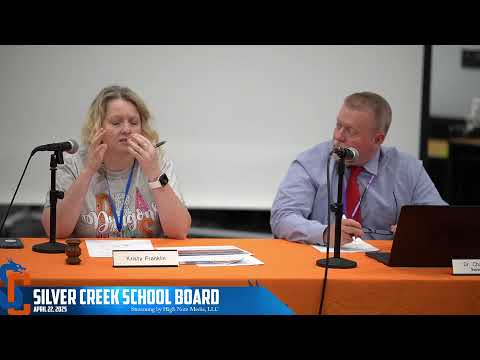
Dr. Balmer, presenting the district’s first-quarter financial report on the education and operations funds, told the Silver Creek School Corporation board on April 22 that the district ended the quarter with roughly $6.4 million in the education fund but that $640,000 of that is restricted for curriculum materials.
Dr. Balmer, presenting the district’s first-quarter financial report on the education and operations funds, told the Silver Creek School Corporation board on April 22 that the district ended the quarter with roughly $6.4 million in the education fund but that $640,000 of that is restricted for curriculum materials.
The report showed beginning education-fund cash near $6.3 million; revenue through March of about $6.04 million; and expenditures a little over $6.03 million. The Department of Local Government Finance has an appropriation on record of $22,500,000 for the education fund for the period reported; the district has spent about 24% of that appropriation through the first quarter, roughly 1 percentage point below the 25% benchmark for the period.
The operations fund began the year with about $3.5 million, brought in a little more than $1 million through March and had spent roughly $1.9 million, leaving an ending balance of about $2.8 million. Balmer told the board that the operation fund receives most of its revenue in June and December (property taxes) and that the district is relying on transfers from the education fund to cover ongoing operational costs.
“Once we get through the money that we have in our curriculum material fund and that begins to get spent down, [it] could potentially start negatively impacting the education fund,” Balmer said. He added that about 98% of education-fund expenditures currently go to salaries and benefits and that the district receives roughly $7,000 per student in basic tuition support and about $8,000 per student when grants and additional weights are included.
Balmer reviewed the district’s rainy‑day fund, which stood at $1.7 million and had neither receipts nor expenditures through the quarter. He said the district’s financial advisers recommend a rainy‑day balance near 15% of budget — about $5 million for a district this size — and noted the current balance is well below that guideline.
Balmer flagged local revenue losses tied to the property-tax “circuit breaker” (tax cap). He said the district lost about $140,000 in 2023, about $640,000 in 2024 and estimates an additional $900,000 loss this calendar year. “I think there’s a storm coming when it comes to school finance for traditional public schools,” Balmer told the board, urging continued scrutiny of expenditures and conservative staffing plans.
Board member Joe (last name not specified in the record) also gave a legislative update, saying roughly 40 bills remained under consideration at the statehouse that could affect education funding. He noted the state is moving a requirement that a specific percentage of tuition support be spent on teacher compensation from 62% to 65%, and he credited district actions for already reporting a 65% teacher-compensation percentage on a six-month report to the Indiana Department of Education.
Board members asked follow-up questions about enrollment volatility, the district’s appropriation levels and timing of property‑tax receipts. Balmer said average daily membership (ADM) has fluctuated (fall ADM 31.58; spring ADM 31.34) and briefly described timing effects: payroll and large benefit payments can cause months in which expenditures exceed revenue.
The board received the report; Dr. Balmer said staff will continue forecasting and present further detail at future finance presentations.
Notes: This account uses figures and statements presented by Dr. Balmer at the April 22 meeting. Quotations are taken verbatim from the meeting transcript.