Get Full Government Meeting Transcripts, Videos, & Alerts Forever!
Get email alerts on the Soil Conservation topic
No spam. Unsubscribe anytime.
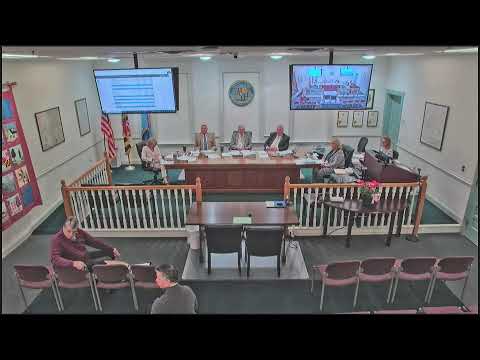
Kent County soil conservation leaders ask for budget flexibility as federal staff cuts shrink local services
Summary
Representatives of the Kent County Soil Conservation District told county officials that federal staff reductions at the U.S. Department of Agriculture could force the district to change operations and may require county flexibility in how allocated funds are spent.
Representatives of the Kent County Soil Conservation District told county officials that federal staffing cuts at the U.S. Department of Agriculture are shrinking local capacity and asked the county for flexibility in how it spends its appropriation.
A staff member for the district, joined by Charlie Miller, chair of the board, and Sam Leverett, a senior planner with the Maryland Department of Agriculture, reviewed the district’s recent accomplishments and warned that federal reductions were already affecting office staffing and space. "We have employees in our office, they have vehicles in our office, they pay the rent for our office," the district staff member said, describing the U.S. Natural Resources Conservation Service as “a significant contributor” to local conservation work.
The presentation pointed to recent performance data the district said comes from the Maryland Department of Agriculture: the district ranked fourth statewide for best management practices installed, second in participants in the agricultural cost-share program, first in conservation reserve enhancement (buffers) and first in cover crop acres. The district said 58,734 acres are planted to cover crop annually — about half of Kent County’s tillable acres, the presenter said.
The district requested a modest increase in its county appropriation and noted that the budget request represents a 5% increase over last year. The presenter asked county officials to permit some flexibility in how those funds are used, because the district may need to reassign duties or shift priorities if federal support is reduced.
District officials described staff reductions at the federal partner agency: they said rural office staffing has dropped to two federal employees assigned locally (one of whom splits time with another county) and that a probationary federal employee is scheduled for termination in May as part of a reduction in force. The presenters said the district has already lost three federal position numbers and that empty desks in the office raise the prospect that the federal leaseholder could seek to reduce space.
The district said those cuts could require it to change operations and possibly give up programs it has supported while still pursuing watershed goals under the Chesapeake Bay program. The presenters said they are working with the Maryland Department of Agriculture to identify any PINs or vacancies the state could move into the local office.
The district also noted local successes and fundraising: staff said private donors and sponsors supported a record attendance conservation dinner and the organizers raised $5,000 for a high-school scholarship. The district provided commissioners with a draft newsletter and recognized Fabio Turlovich as its cooperative of the year.
District leaders said they would stay in touch with the county and, if needed, return for further briefings. "If we need to come back to a meeting and present, we'll be happy to do that," the district staff member said.
Ending: The presenters closed by asking county officials to consider the request for budget flexibility while district leadership evaluates options to maintain service levels as federal partners reduce local staffing.