Get Full Government Meeting Transcripts, Videos, & Alerts Forever!
Get email alerts on the Pavement Markings topic
No spam. Unsubscribe anytime.
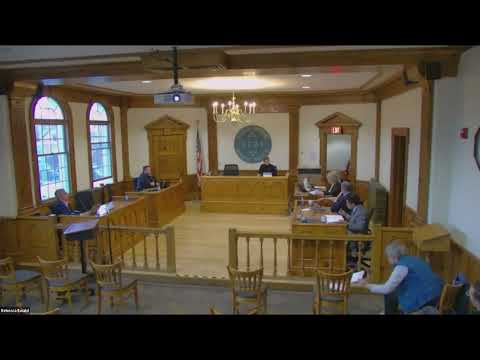
Public Works committee weighs maintenance schedule for Capitol Drive pavement markings
Summary
The Public Works committee reviewed a draft pavement‑marking policy and cost projections. Staff presented options that would alter maintenance intervals for paint and epoxy markings; trustees debated whether to adopt a binding policy or keep guidance as past practice.
The Public Works Committee reviewed a draft pavement‑marking policy for the 2025 Capitol Drive Pedestrian Improvements Initiative and heard staff cost projections showing how different maintenance intervals would affect future budgets.
Leanne Butchlick, director of public works, told trustees the initial draft assumed painted markings every other year, epoxy maintenance on Capitol Drive every three years, and epoxy on other arterials every five years. The committee requested alternate cost scenarios extending epoxy re‑application on Capitol Drive to every five years and on other arterials to every seven years. "The markings currently, though, during the daytime, they do appear to be faded," Butchlick said, adding that retroreflectivity at night still appeared to be in "good working order." She noted that many municipalities, including Shorewood, use enhanced crosswalk markings to better signal pedestrians to motorists.
Trustees debated safety, visibility and budget priorities. One trustee said a five‑year interval for epoxy felt too long given the community priority on visibility near the school corridor, while another favored longer intervals given competing budget needs and the lack of data showing that more frequent remarking changes crash outcomes. The committee discussed whether to codify a policy or retain the current approach as guidance based on past practice. "A policy may remove some flexibility in future budget discussions," Butchlick said.
Committee members noted that the intersection on Capitol Drive has multiple layers of pedestrian protection — signals, auditory signals, and paid crossing guards during school times — and that data supplied so far did not show a clear crash‑reduction benefit from yearly remarking. Trustees asked staff to use the cost projections as a planning blueprint and to continue studying permanent traffic‑calming measures, such as bump‑outs and raised crosswalks, which could reduce reliance on frequent remarking.
No formal policy was adopted at the meeting. Staff will provide the cost analysis and updated guidance to inform budgeting and future committee consideration.