Get Full Government Meeting Transcripts, Videos, & Alerts Forever!
Get email alerts on the Board Training topic
No spam. Unsubscribe anytime.
Code enforcement board receives refresher on quasi-judicial hearing procedures, sunshine and ethics
Summary
The board received a detailed training on hearing procedures, evidence rules, sunshine law, public-records obligations and conflict-of-interest reporting to reduce due-process risk and improve procedural consistency.
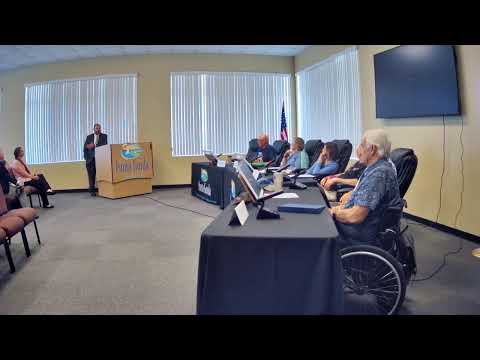
The Punta Gorda Code Enforcement Board received updated training on quasi-judicial hearing procedures, evidence rules, the Sunshine Law, public records and ethics aimed at reducing due-process risk and improving the board's handling of code cases.
Deputy City Clerk Jennifer Faulkner and board attorney Dan Lewis led the session and emphasized that the board acts as a quasi-judicial body: members must base rulings on competent, substantial evidence presented in hearings, avoid ex parte information, and disclose any outside information received. Faulkner said the training would focus on hearing procedures and the “order of operations” for enforcement proceedings and that staff had revised slides to emphasize practical steps for hearings.
Lewis described common pitfalls that create reversable due-process errors: board members conducting independent research, undisclosed site visits or communications, or hearing testimony not tied to the notice of violation. He advised that if a board member has outside information relevant to a case it must be disclosed on the record and the member should consider recusal if impartiality is affected. "You can be a witness or you can be a judge; you can't be both," Lewis said.
Training covered evidence standards (competent, substantial evidence), hearsay (may supplement but not form the basis of a decision), and the distinction between witnesses (must be disclosed and relevant) and members of the public (no public comment in enforcement quasi-judicial hearings unless called by a party). The presenters recommended that board motions state the factual bases for time frames and fines to create a clear record for any appeal.
On sunshine law, staff reminded members not to discuss board business outside public meetings and that quorum requires four physically present members under current procedures; members were cautioned against exchanging substantive emails or conducting research that could create ex parte problems. The clerk's office also highlighted the requirement that board members file Form 1 financial-disclosure statements with the Florida Commission on Ethics and use the city's retention email for any record the member believes should be preserved.
The training concluded with a Q&A addressing site visits, how to handle neighbors who wish to provide testimony, when the city should call witnesses and how penalty hearings differ from repeat-violation hearings. Faulkner said the city will include a flowchart summarizing the enforcement timeline with future notices of violation to help respondents understand steps before a hearing.