Get Full Government Meeting Transcripts, Videos, & Alerts Forever!
Get email alerts on the Shade And Heat Mitigation topic
No spam. Unsubscribe anytime.
Students propose planting trees at uncovered bus stops in East Central to provide shade and heat relief
Summary
Two EWU students proposed a pilot to plant trees at uncovered bus stops in East Central to provide shade, lower temperatures and improve comfort for transit riders, citing offers from Spokaneopy to supply trees and maintenance.
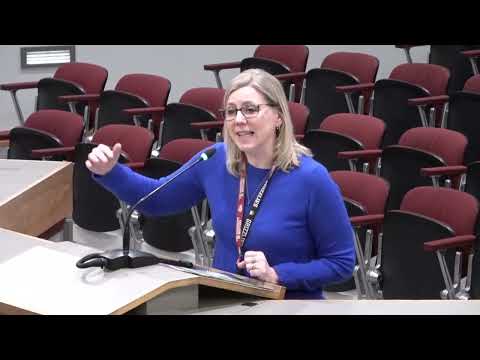
Two Eastern Washington University students and local social workers presented a pilot concept to plant street trees at uncovered bus stops in East Central to provide shade and reduce heat exposure for transit riders.
Bea Budke and Mark Anthony told the committee the project responds to community feedback that many bus stops — about 194 of 1,680 citywide, per their count — lack shelter or shade and that certain shelters with plexiglass can become heat traps. They cited data from a Gonzaga Institute study and city surveys showing increases in extreme‑heat days and said shading trees can lower ambient temperature around stops by 2–9 degrees.
The students said Spokaneopy and Lands Council had offered to supply up to 1,000 trees and to provide maintenance for up to three years if irrigation is available nearby. They noted a typical covered bus stop costs roughly $10,000 and argued trees could be a lower‑cost, distributed mitigation while planning for longer‑term shelter investments.
Council members welcomed the concept but flagged practical questions: where trees could be sited without interfering with sidewalks, signage and utilities; long‑term maintenance funding after the initial maintenance period; and coordination with urban forestry and transit plans. Staff and students said they would work with Spokaneopy and city surveyors to identify feasible sites and agree that maintenance during the critical establishment period is essential.
The students said they will seek funding and partners for a pilot along high‑ridership routes (they identified routes 45 and 94) and will coordinate with city and nonprofit partners for site surveys and initial planting.