Get Full Government Meeting Transcripts, Videos, & Alerts Forever!
Get email alerts on the Public Health Opioid Response topic
No spam. Unsubscribe anytime.
Council approves $18 million package to expand stabilization services, debate centers on data spending
Summary
The Spokane City Council approved a special budget ordinance supplying up to $18 million toward expanding the city’s Stabilization Center and related opioid-response services. Debate focused on administrative spending, including a $140,000 annual data analyst line.
The Spokane City Council voted 5–2 to approve special budget ordinance C36661, a package that officials said would allocate roughly $18 million in combined federal, state and city funds to expand Spokane’s Stabilization Center and related opioid-response services.
Council members described the measure as a coordinated, county‑city investment to expand clinic hours, add sobering beds and increase culturally specific treatment. “It’s gonna have 12 additional sobering beds … expanded access to the clinic until 10 p.m.,” Council member Zappone said in support.
Why it matters: Council and public testimony tied the opioid response to housing stability, public safety and emergency services. Supporters said expanded space and harm-reduction services would fill service gaps; critics argued some administrative spending should instead directly fund frontline services.
Main points and debate: Sponsor and supporters emphasized partnership with Spokane County and providers. Council member Dylan said the package was “overall a net positive” and praised collaboration that included matching county funds and additional STARS beds.
Opposition focused on a $140,000 annual salary line for a data analyst. “140,000 on a data analyst, I feel like we could be sharing that with the county,” Council member McGatkart said, asking whether the position duplicated county capacity and noting remaining opioid dollars the county might reallocate. Council member Bingo echoed that concern, arguing the city might achieve data needs with lower-cost tools and should maximize money spent directly in the field.
Supporters countered that a data analyst would create benchmarks and enable evaluation of interventions over time. “We have been collecting data. I don't think we are truly benchmarked where we're at and where we're going,” one council member said, urging staff to track outcomes.
What the ordinance does: The ordinance funds an expansion of Spokane’s Stabilization Center, additional sobering beds, extended clinic hours (to 10 p.m.), increased culturally specific treatment and STARS program beds. The council recorded a 5–2 vote in favor.
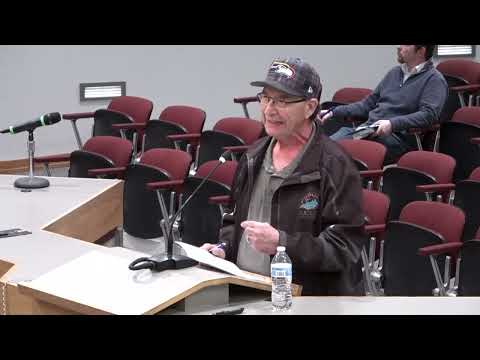
Public comment: Students and community members, including a Gonzaga University student, urged support for harm‑reduction and stabilization investments. A public speaker earlier thanked council for a new van for detox and STARS but asked for more mental‑health supports for outreach workers.
Next steps: The ordinance authorizes the described funding and program expansion. Council members asked staff and partners to develop a clearer, consolidated plan for how remaining opioid funds will be deployed and for measurable benchmarks to track outcomes.
Ending: The ordinance passed 5–2; council members on both sides asked staff to return with more detailed plans and data so future allocations can be evaluated.