Get Full Government Meeting Transcripts, Videos, & Alerts Forever!
Get email alerts on the Police Services Contract topic
No spam. Unsubscribe anytime.
North Bend council continues review of police-service proposals; public urges more time
Summary
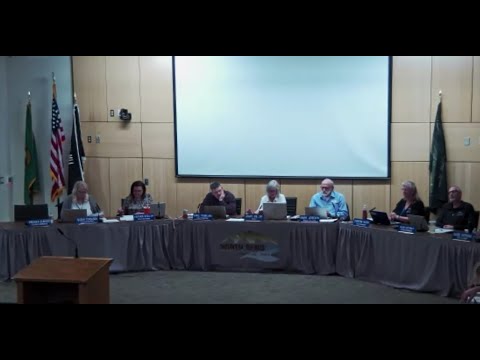
North Bend city council on April 15 continued its review of competing proposals to provide police services to the city, hearing public comment, a staff summary of scored proposals from Snoqualmie and King County, and receiving introductions of two new North Bend police employees.
North Bend city council on April 15 continued its review of competing proposals to provide police services to the city, hearing public comment, a staff summary of scored proposals from Snoqualmie and King County, and receiving introductions of two new North Bend police employees.
The discussion matters because the city must decide whether to continue contracting with the Snoqualmie Police Department or move to a King County contract when its short-term extension ends; council members and residents said the choice affects local visibility, response times and long-term cost.
Finance Director Martin Shaw summarized the evaluators’ scores and high-level differences in the two proposals. Snoqualmie’s written proposal scored higher overall (121.25 points) in the packet scoring; King County scored higher on the presentation portion. Key figures Shaw presented from the proposals: Snoqualmie’s 2025 cost as presented was $3,980,000 (dispatch excluded in that figure); King County’s comparable cost after removing dispatch and specialty units was just under $3,700,000, plus a King County one-time startup/hiring cost cited by county staff of about $1,200,000 that can be amortized. Snoqualmie proposed eight dedicated North Bend officers and 15 shared staff with a department-wide average tenure cited at 4.5 years; King County proposed 12 dedicated North Bend deputies and cited an average deputy tenure of about 8.3 years. Snoqualmie’s average priority‑1 response time cited in the packet was about 9 minutes 26 seconds; King County offered example response times in other contract cities of roughly 6 minutes 20 seconds to 8 minutes 62 seconds (the council asked staff to confirm whether those numbers include dispatch time).
Shaw also presented cost-per-officer and overhead comparisons. Using the packet assumptions, the estimated all-in average cost per patrol officer was roughly $365,000 under the Snoqualmie proposal (based on 10.9 patrol officers) and about $282,000 under the King County proposal (based on 10 deputies); reported overhead allocations in the materials were roughly 15% (Snoqualmie) versus about 7.5% (King County). Council members asked staff to clarify how a “clawback” or cost differential between the city’s current short-term ILA payment level and the Snoqualmie proposal would be carried in the analysis; Shaw said the differential would be amortized back to January for apples-to-apples comparisons and that equipment-reserve funds exist for vehicles.
Public commenters—business owners and residents—spoke primarily in favor of preserving the current Snoqualmie/North Bend policing arrangement or otherwise ensuring local visibility and fast response. Kelly Coughlin Games, CEO of the Snoqualmie Valley Chamber of Commerce, asked council to pause any long-term decision until the outcome of key regional elections and to require a side‑by‑side comparison before committing; she told the council that mall owners reported a roughly 60% drop in theft after a police substation was added at the North Bend Outlet Mall. Small-business owners Alyssa Sprague and Lena Bonsgard described fast response times and said the local presence increased staff and customer safety. Several longtime residents recounted perceived improvements in trail and downtown safety after the Snoqualmie contract began and urged the council to maintain that level of service.
Council members pressed staff and the two bidders on specifics the packet did not fully address: whether response times reported by King County included dispatch, the treatment and timing of vehicle replacement funds, the details behind each side’s overhead-line items, and how any one-time startup costs would be amortized in an apples-to-apples cash-flow comparison. Council members also discussed political and governance differences: King County’s contract documents are generally standard across contracted cities and thus less negotiable, while Snoqualmie’s proposal may allow for more local discussion on terms. Several council members emphasized that the city cannot be without a police contract and that a decision must be reached at or before the council’s upcoming meetings; staff said they planned to send consolidated questions to both proposers and to hold another work study April 22 with a council meeting on May 6 to consider next steps.
Acting Chief Gary Horace introduced two recently hired members of the Snoqualmie‑North Bend policing team: Sherry Tai, assigned to records and public-records responsibilities, and Officer Daniel Bergey, hired as the city’s school resource officer and in training. Both were welcomed by council.
Council did not take a final vote on a policing contract on April 15. Staff will transmit follow-up questions to both Snoqualmie and King County and expect additional material for the April 22 work study and the May 6 council meeting.
Community members and council members raised several items for staff follow-up, including: confirmation of whether cited response times include dispatch time; a line‑item breakdown for each bidder’s overhead charge; the treatment and availability of the equipment‑replacement reserve that has been funded at approximately $6,000 per month; and clarification on how one‑time startup or clawback costs would be amortized for comparative analysis.
Looking ahead, council scheduled more work‑study time to review requested clarifications and indicated a May 6 meeting as the next opportunity to act or direct additional negotiations.