Get email alerts on the Traffic Safety topic
No spam. Unsubscribe anytime.
Cheyenne committee advances critical traffic-control ordinance on third reading
Summary
The Public Services Committee voted to advance an ordinance revising the city’s process for creating and enforcing Critical Traffic Control Areas to the full governing body on third reading.
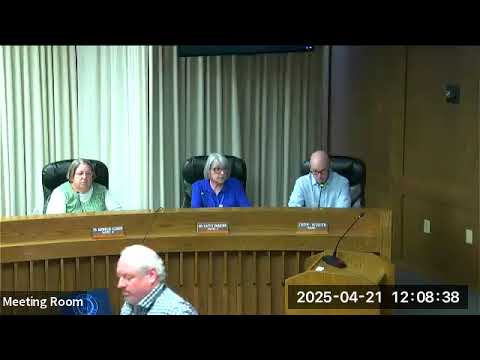
The Cheyenne Public Services Committee on April 21 voted to advance an ordinance on third reading that adjusts the municipal code provisions governing creation and enforcement of Critical Traffic Control Areas.
Mayor Patrick Collins, who presented the item, told the committee the program “does work, slow speed slowed down, and it made a difference.” He said the draft before the committee contains only “a couple of small changes” to the ordinance adopted last year and offered to answer questions from members.
The committee heard no public comment and moved the ordinance forward by voice vote. The chair called for those in favor to signify by saying “aye,” and the item was reported as moving forward to the governing body.
The ordinance as read modifies Section 10.24 0.19 of the Cheyenne Municipal Code to adjust how Critical Traffic Control Areas are created and administered; the committee record did not include the full text of the changes. No formal vote tally with individual member votes was recorded in the transcript of the committee meeting.
The measure will be considered by the full governing body at its next meeting. The committee did not identify any additional referral or implementation tasks beyond typical ordinance processing.
AI generated
The text on this page is AI generated. Summaries, highlights, analysis, and video transcripts are all produced from the original source material.
AI can make mistakes, so if you spot one, and we will fix it for everyone.
Note: the source content is unaltered by us. Any content source we link to, be it a video, an audio recording, or a document, is presented exactly as its publisher released it. That publisher is usually a government body, sometimes an individual official or another organisation.