Get Full Government Meeting Transcripts, Videos, & Alerts Forever!
Get email alerts on the Special Education Complaint topic
No spam. Unsubscribe anytime.
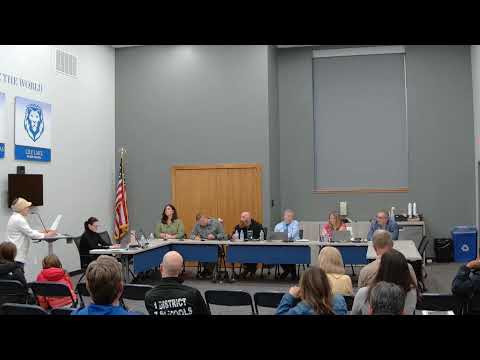
Parents urge Central CUSD 301 board to act after state finds IEP violations; callers seek policy changes
Summary
Multiple public commenters urged the board to address special-education failures after a state complaint confirmed violations, calling for policy changes including banning confidentiality clauses and reimbursing families’ legal fees.
Several parents and advocates used the district’s public-comment period to press the Central CUSD 301 Board of Education to take specific actions after one family reported a state complaint found multiple violations of a student’s individualized education program (IEP).
What speakers said: Michelle Dubonoskin, who identified herself as a parent of two children who had IEPs in the district, described a case she said involved repeated failures to implement accommodations. "The district failed to implement required accommodations. The family filed a state complaint and the state confirmed multiple violations of the student's IEP and their right to a free, appropriate public education," Dubonoskin said. She described canceled meetings, lack of staff responses and alleged that staff were told to avoid the family.
Requests for board action: Dubonoskin urged the board to ban confidentiality clauses in cases with confirmed violations, reimburse families for legal fees incurred because of the district's noncompliance, and to investigate staff members who obstructed accountability. She said the state ordered corrective actions in that complaint and said public education funds were being used to pay lawyers defending the district.
Other public comments: Laurie McDevitt and other speakers urged the new board to prioritize inclusion and to choose a superintendent who supports services for students with disabilities and empowers staff and families. Speakers emphasized transparency, better communication with the public, and improved supports for special-education teams.
Why it matters: The speakers framed the issue as both legal and ethical: enforcement of IEPs is a statutory responsibility and state findings of violations trigger corrective actions. Callers asked the board to pursue policy changes and investigations beyond the individual complaint.
Board response: At the meeting the board took no immediate formal action in response to the comments. Several trustees thanked speakers for their remarks. The transcript does not show any direct commitments to the specific remedies requested during that session; staff or the board may follow up through administrative channels.
Ending: Public commenters requested prompt board attention to special-education compliance and public transparency. The board's next steps were not recorded in the public comment segment.