Get Full Government Meeting Transcripts, Videos, & Alerts Forever!
Get email alerts on the Sewer Infrastructure topic
No spam. Unsubscribe anytime.
Mayor outlines EPA-mandated LTCP, new treatment technology and grant-funded sewer work
Summary
Tiffin’s mayor said the city is moving forward on an EPA-mandated Long Term Control Plan estimated at $160 million, that new high-rate treatment technology will cut the price by about $20 million, and that recent sewer projects were heavily funded by loan forgiveness and grants.
Mayor (name not specified) said Tiffin is proceeding with a federally driven Long Term Control Plan (LTCP) to reduce sanitary sewer overflows and comply with U.S. Environmental Protection Agency requirements, and that recent technical and funding choices have substantially changed the city’s cost profile.
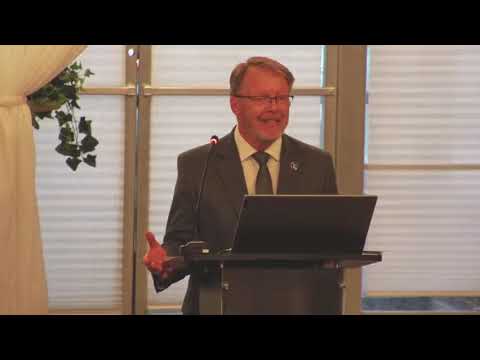
The mayor told an audience at the State of the City event that the LTCP remains the “big heavy lift” and that the full plan was estimated at $160,000,000. He said newer high-rate treatment (HRT) technology and a shortened main interceptor alignment will markably reduce costs: “this should save us about 20,000,000,” he said.
The plan’s scope includes interceptors and storage components previously envisioned as an over-a-mile main interceptor and a large equalization (EQ) basin. The mayor described the EQ basin as expensive — he recalled prior estimates of roughly $22,000,000 for an EQ tank — and said the HRT approach allowed the city to buy property nearer the plant and avoid the larger EQ basin.
City engineering work in 2024, the mayor said, relied on a mix of principal-forgiveness loans and grants: $4,000,000 from the Water Pollution Control Loan Fund (WPCLF) in principal forgiveness, roughly $390,000 from an Ohio Water and Wastewater grant program, and “over $2,000,000” in other grants for sewer projects handled by the engineering department. He also said the city received substantial state, local and federal grant funding for other infrastructure projects that do not rely on local taxes.
Mayor (name not specified) credited city staff and the engineering department — especially City Engineer Matt Watson — for pursuing technical options and grant funding that trimmed the project bill. He said wastewater plant staff reviewed HRT in Indiana before recommending it, and that the city bought nearby property on Harrison and Water Street for the new treatment footprint.
The mayor framed the LTCP as an urgency for cost reasons: “if you put it off, it's just going to get more expensive,” he said, reiterating the administration’s preference to “stick to the plan.” He also described the WPCLF principal-forgiveness loans as functionally similar to grants for the projects benefited.
The mayor’s remarks did not include a council vote or final contract award related to the LTCP; he described planning decisions, grant awards and property purchases made to date and credited staff work but did not list a formal board action during the event.
Background and next steps: the mayor said the LTCP work is multi-phase and will continue to rely on a combination of federal/state grants, WPCLF assistance and local planning. He encouraged staying with the published plan to limit future escalation in cost and said the engineering department has mapped project phases and timelines.