Get Full Government Meeting Transcripts, Videos, & Alerts Forever!
Get email alerts on the Bylaws And Organization topic
No spam. Unsubscribe anytime.
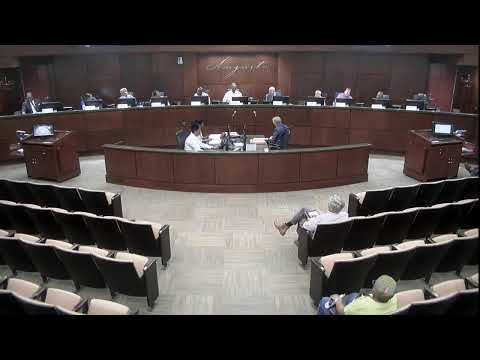
Augusta charter review committee adopts bylaws, elects chair and sets meeting rules
Summary
The Augusta Charter Review Committee approved bylaws and elected leadership, setting a quorum of seven, an affirmative-vote threshold of six for committee recommendations, a rule to silence electronic devices, a biweekly meeting schedule and a minimum of three public hearings.
The Augusta Charter Review Committee voted to adopt its bylaws and elect officers, approving key rules that will govern how the group conducts its work and how recommendations will move toward the General Assembly and the public.
The committee adopted bylaws that set a quorum at seven members and — after a substitute motion — an affirmative vote threshold of six for committee recommendations. Members also approved a requirement that personal electronic devices be turned off during proceedings, set a biweekly meeting schedule and agreed to hold at least three public hearings before final votes on recommendations to the legislature.
Why it matters: The committee is drafting recommendations that could lead to changes in the city-county charter and eventually to state review and a public ballot. The procedural rules the committee set Wednesday determine how easily changes can be proposed and how the public can provide input before the group forwards recommendations to the Augusta legislative delegation and the Georgia General Assembly.
The meeting began with an extended election process for committee officers. After multiple nomination rounds, Marcy Wilhelmi was elected chair by a 6-4 vote. The roll call read during the results named Dr. McCorn, Angela Backus, Marcy Wilhelmi, Ginger Cody, Charlie Coleman and Steve Fouchier as voting yes; Tanya Turnley, Leigh Powell, Lonnie Wimberley and Mr. Pearson as voting no. The committee later elected Tanya Barnhill Turnley as vice chair; the vice-chair vote also passed by a 6-4 margin.
On bylaws and voting thresholds, the committee debated whether to require the same thresholds used by the Augusta Commission, a two-thirds threshold for matters that will be submitted to the General Assembly, or a single standard for committee business. Attorney Plunkett reviewed the legal context and Robert's Rules of Order: “an abstention is not considered a no vote; it is just simply an absence of a vote,” he said during the discussion. The committee considered a primary motion that would have required six votes for regular business and eight for matters forwarded to the General Assembly, then considered and passed a substitute motion to require six affirmative votes for recommendations to the legislature. The clerk announced the substitute passed 7-3 (Miss Bacchus, Miss Cody and Mr. Powell voting no).
Committee members also voted on procedural items that affect public engagement and meeting logistics. The panel approved a motion requiring members to turn off personal electronic devices during meetings; the motion carried 8-2 with Miss Backus and Mr. Wimberley voting no. The committee agreed to meet biweekly on Thursdays at 10 a.m. (first and third Thursdays), with the substitute motion for that schedule carrying 10-1 (Mr. Powell opposed). Members set a minimum of three public hearings to be scheduled before the committee finalizes recommendations; that motion carried 10-1.
The committee approved the bylaws as amended during the meeting and then received an overview presentation from the Carl Vinson Institute on charter structure, consolidation history and options the panel may consider. Carl Vinson presenters outlined key charter elements (form of government, executive/legislative authority, procurement, budgeting, special districts and amendment processes) and offered to support the committee with research and comparative examples.
Next steps: The committee chair and staff will coordinate logistics (meeting location and streaming) with the marshal's office and IT; the committee directed staff to post meeting materials and to schedule the agreed public hearings. The Carl Vinson Institute presenters will provide their slide deck to staff for posting and will work with the chair to provide targeted research as the committee advances each review topic.