Get Full Government Meeting Transcripts, Videos, & Alerts Forever!
Get email alerts on the Land‑development‑manual topic
No spam. Unsubscribe anytime.
Lexington County planning committee debates raising limits of disturbance, new erosion controls and stop‑work penalties
Summary
County planning staff proposed draft amendments to the Land Development Manual that would expand disturbance thresholds, require more best management practices and add stronger stop‑work enforcement; the committee agreed to take the draft to the Stormwater Advisory Board and to solicit developer and public review.
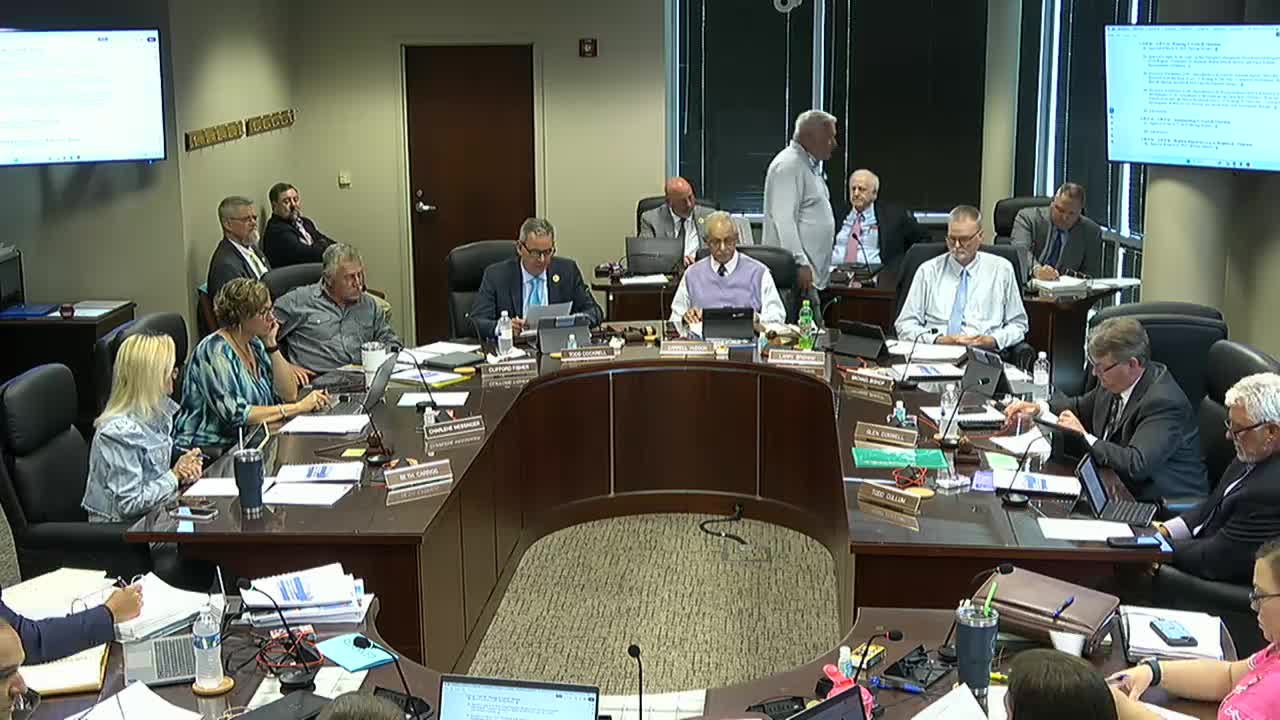
Planning committee members and staff on Tuesday discussed proposed amendments to Lexington County’s Land Development Manual that would change how many acres a developer may disturb and add new erosion‑control requirements and enforcement measures.
Community Development Director Robbie Derek told the committee the draft text would simplify the manual by using a single set of disturbance tiers similar to the county’s commercial rules: staff approvals for 0–20 acres, an “expanded master plan” process for 20–60 acres and a review by the Stormwater Advisory Board and then county council for sites over 60 acres. Derek said the expanded master plan would require additional best management practices (BMPs) drawn from the Georgia Erosion and Sediment Control manual and locally derived measures, plus public notification signage listing the engineer, contractor and developer contact information.
The draft also would allow phased stabilization so a developer can open more acres once a project engineer and county staff confirm stabilization, Derek said. On enforcement, he read that “Each day such violation continues shall be considered a separate offense,” language the staff drafted to align stop‑work orders with other county ordinances.
The proposal prompted extended debate among council members. Some members said the current 20‑acre cap had reduced complaints and mass clearing in the past and worried that raising thresholds would reopen the problems the cap solved. Councilman Daryl said the 20‑acre limit “works” and reported complaints stopped after the limit was set. Other members welcomed the added BMPs on the redline and recommended additional review. Councilman Clifford Fisher noted several of the new BMPs — turbidity sampling, increased sediment basins, soil testing and storm buffer adjustments — and praised that the draft added measures such as compost blankets and slope stabilization.
On the question of enforcement, Derek explained that staff issue notices of violation and stop‑work orders and then document noncompliance for referral to the Lexington County Sheriff’s Department code enforcement unit, which writes citations and may pursue magistrate court action. Derek said the sheriff’s office has discretion on timing and that, historically, citations typically were pursued only after a documented failure to cooperate; if a defendant is convicted and the judge does not impose remediation, citations can be assessed for each day a violation continues.
Committee members pressed for more technical review. Several asked staff to circulate the redline to developers, engineers and the county’s Stormwater Advisory Board and to schedule a field trip to a local site so members could see the impacts of different disturbance and stabilization practices. Derek said staff would take the draft to the advisory board and to user groups and return with their comments; he emphasized the draft was for discussion and that the formal ordinance process would require public hearings and planning commission review if council elects to proceed.
The committee did not vote to adopt the amendments at the meeting. Instead it directed staff to seek further input from the Stormwater Advisory Board, developers and engineers and to bring back recommended edits.
Next steps: staff will present the draft to the Stormwater Advisory Board for formal review, coordinate developer and public comment and return to committee with updated text and recommendations. No first reading or ordinance adoption occurred at this meeting.