Get Full Government Meeting Transcripts, Videos, & Alerts Forever!
Get email alerts on the Atoka Golf Ownership topic
No spam. Unsubscribe anytime.
Atoka trustees weigh returning golf course to private ownership amid rising city fees
Summary
Trustees discussed options — member ownership, private sale or alternate municipal arrangements — after saying city fees approached about $1,000 per week. The board took no formal action and asked staff to prepare detailed cost estimates and legal options.
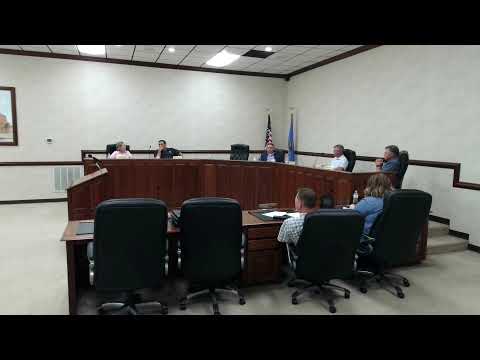
Trustees of the Tokyo Municipal Golf Authority discussed whether to remove Atoka Golf Club from municipal control and return it to private ownership, citing rising city fees that trustees estimated at about $1,000 a week and ongoing reliance on volunteers and donations.
The conversation, held during the authority's regular meeting, centered on three broad options: reconverting the course to a member-owned model, selling to private purchasers, or restructuring the club's relationship with the city so the course could handle some operations independently while remaining a city facility. Trustees agreed to gather detailed cost and legal information before asking the city council to consider any exit plan; no motion was made and no formal decision was reached.
Why this matters: Trustees said the course remains largely sustained by volunteer labor and donations and that the trust is struggling to cover recently itemized municipal costs including administrative overhead, insurance and labor-related charges. The board said it needs a clearer monthly snapshot of income and expenses to determine whether staying under the municipal authority is financially viable.
Discussion details: Board members described two ownership pathways discussed at length. One would return the course to member ownership, with members holding shares; the other would involve a small group of private owners or an LLC purchasing course assets. Trustees noted major operational differences and recordkeeping burdens between those models — for example, a for-profit corporate structure would require issuing K-1s to owners, and a member-owned structure could be a “record-keeping nightmare” for the many small shareholders the club would likely have.
The board also discussed legal and statutory hurdles. Attendees flagged state statutory constraints and federal tax rules that limit nonprofit (501(c)(3)) eligibility when a substantial share of revenue comes from nonmembers. The authority was told the Internal Revenue Service threshold discussed in the meeting is commonly cited around 65% member-versus-nonmember revenue; trustees said Atoka’s nonmember revenue commonly exceeds 80% during peak months, which would make nonprofit conversion unlikely even if all net revenue were reinvested in course operations.
Logistics and costs: Trustees requested a clear line-item estimate of the annual and prorated monthly cost to remain under the city's administration. Items mentioned as contributing to the authority’s costs included: quarterly insurance premiums, administrative staff charges billed by the city, annual audit fees, and pay and benefits for course employees. The board asked staff to produce a simplified monthly financial report so trustees could see incoming revenue and recurring expenses on the same sheet.
Operational concerns: Trustees noted that the course relies heavily on unpaid labor and donations to stay open and that the current superintendent, Fred, is nearing the end of his tenure; hiring a full-time superintendent was identified as another expense the authority would face under any ownership model.
Next steps: The board directed staff to compile a full cost analysis and options paper, including sample legal structures observed in other Oklahoma municipalities. Trustees said the city attorney (Johnny) will network with city attorneys in other jurisdictions and report back after a municipal law conference. The item will return for further discussion once staff and legal research are complete.
Votes at a glance: At the same meeting trustees conducted three routine roll-call votes and an adjournment vote. All recorded votes below were unanimous among trustees present (Miss Thomas; Mr. Burridge; Mr. Henderson; Mr. Armstrong; Chairman Kathy):
- Approval of minutes, March 17, 2025 — motion approved (mover/second: not specified). Vote: 5 yes, 0 no, 0 abstain. Notes: Routine approval of minutes.
- Approval of minutes, April 7, 2025 — motion approved (mover/second: not specified). Vote: 5 yes, 0 no, 0 abstain.
- Approval of payment of purchase orders for February 2025 (Municipal Golf Authority) — motion approved (mover/second: not specified). Vote: 5 yes, 0 no, 0 abstain.
- Motion to adjourn — approved (mover/second: not specified). Vote: 5 yes, 0 no, 0 abstain.
No formal motion or vote was taken on the Atoka ownership item; trustees explicitly decided to gather more information rather than direct staff to pursue an immediate transfer or to place an item on a city council agenda.