Get Full Government Meeting Transcripts, Videos, & Alerts Forever!
Get email alerts on the Floodplain Compliance Nonresidential topic
No spam. Unsubscribe anytime.
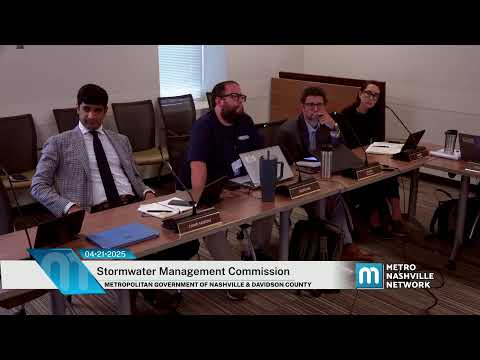
Commission defers Northgate Business Parkway floodplain elevation case; staff recommends elevation or dry floodproofing
Summary
Property owner asked to keep finished floor at 431.91 NAVD88 (0.6 ft above BFE). Staff opposed and recommended elevation or dry floodproofing; commissioners deferred to allow owners to explore dry‑flood proofing and Greenways easement coordination.
Commissioners deferred a variance request for a commercial building at 1209 Northgate Business Parkway after hearing that the existing building was demolished and rebuilt on the existing slab following tornado damage and now sits about 5 inches below Metro’s nonresidential freeboard requirement.
Applicant architect Greg Mayo and contractor representative Luke Randolph said the building was reconstructed on the original slab after the December 2023 tornado. Mayo told the commission the owner maintained FEMA flood insurance and that the rebuilt finished floor is roughly 4.31 feet NAVD88, about five inches below the nonresidential requirement in Metro’s code. Staff noted the applicant did not pursue a full grading review because reconstruction was performed on the existing slab; stormwater staff said the department still required compliance either by elevating the structure or by achieving an approved dry‑floodproofing solution for nonresidential buildings.
Metro Parks & Greenways staff asked that the commission consider a greenway easement over the buffer area shown on the master plan; the applicant said ownership has no problem granting an easement over wooded back property. Commissioners discussed dry floodproofing—mechanical or removable barriers around entries and loading docks that prevent water intrusion—as a feasible compliance option for nonresidential structures. Staff advised that if the owner used approved dry‑floodproofing the structure could meet Metro requirements without elevation; if a variance were granted the commission would need to weigh community impacts.
After an initial motion to deny lacked a second, commissioners voted to defer the case so the applicant could return with a documented dry‑floodproofing plan or evidence it is infeasible, and to coordinate any Greenways easement and technical materials with staff. The commission set a tentative return for June 5.
Why it matters: Nonresidential structures may meet Metro’s nonresidential flood standard either by elevation or by engineered dry‑floodproofing; the deferral allows the owner time to develop and document a floodproofing approach and to coordinate a possible Greenways easement with Metro Parks.