Get Full Government Meeting Transcripts, Videos, & Alerts Forever!
Get email alerts on the Boat Landing Dredging topic
No spam. Unsubscribe anytime.
Forestry says Second Landing boat launch unsafe; county to seek permits, post warnings
Summary
Ashland County forestry staff reported that the Second Landing boat launch is too shallow for safe navigation and described a multi-permit process and funding questions for dredging. The zoning committee agreed to post warning signs and asked staff to pursue permitting and contractor estimates.
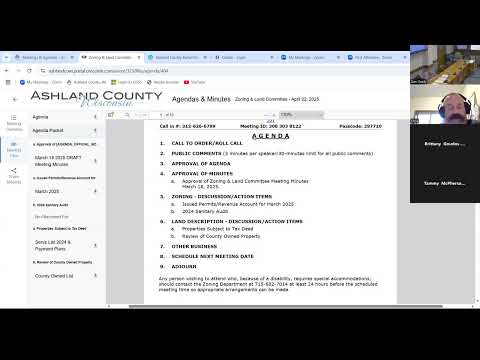
Ashland County forestry staff told the Zoning and Land Committee on April 22 that the Second Landing boat launch is “very shallow, and probably unsafe to use,” and recommended temporary public notice while the county pursues permits and contractor estimates for dredging.
The update came as an informational item during the committee’s meeting. Dan (chair/staff), who asked Forestry to report, said staff had inspected the landing after reports from constituents. Chris Hoffman, Forestry, said county staff performed soundings and that the site is currently unsafe for normal use.
Hoffman said the county is exploring dredging “inside the bowl of the boat landing” but the work will require multiple permits, including state approval and U.S. Army Corps of Engineers authorization. He said the Department of Natural Resources (DNR) would have jurisdiction if work stays in the water, and a county zoning permit may be required if dredged material is removed from the water and placed on land. “We have to get the permitting done first,” Hoffman said, adding that a preliminary state application is only two pages and will clarify whether engineering or additional planning costs are necessary.
Committee members discussed near-term public-safety steps. Hoffman said the county intends to post signage this week to warn that boats may be able to be launched into the bowl but might not be able to exit because deeper water outside the break wall remains shallow. “We will probably be posting signage to that effect sometime yet this week, to advise the public that the boat landing is probably not safe for use at this point,” Hoffman said.
Committee members and staff described practical next steps: an on-site meeting with a contractor was scheduled to get cost guidance, staff will submit a preliminary state meeting request, and county staff are weighing whether dredged material could be placed at a county sandpit if a contractor’s operation requires on-land disposal. Hoffman told the committee he would meet a contractor on site the following day and expected a clearer timeline after that meeting.
Members noted the broader regional problem: several other landings and shallow bays on the lake have similar low-water problems. Committee member Blake Ellifson and others said citizens had offered volunteer help and that the highway department had been contacted about possible assistance; Hoffman and committee members urged following permitting rules rather than ad hoc volunteer dredging.
No formal committee vote was required for the informational update. Committee members set the next regular meeting for June 10 and said the dredging matter could require additional or earlier meetings depending on permitting timelines.