Get Full Government Meeting Transcripts, Videos, & Alerts Forever!
Finance presents tax‑credit overhaul to target subsidies, lower homeowners’ sticker rate
Summary
Deputy Finance Director Bob Senamy told the Budget and Appropriations Committee the mayor’s tax credit work group found six themes in its review and will propose a package of reforms designed to better target development incentives, boost enrollment in a state homeowners credit and lower the apparent residential property tax "sticker" rate.
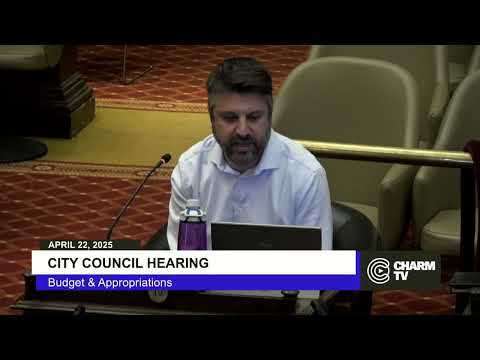
Deputy Director of Finance Bob Senamy told the Baltimore City Council’s Budget and Appropriations Committee that a mayor‑directed tax credit work group has identified six themes and will recommend reforms to better target development incentives, increase enrollment in a state homeowners credit and correct what he called misalignments that make the city’s residential property tax look higher than peer counties.
The work group, formed in January 2024 at the mayor’s direction, completed a review of eight city tax‑credit programs and is moving from fact‑finding to deliberation, Senamy said. “Our mission is, pretty simple. It's to develop a program, a mix of tax credits that accomplishes 3 things. 1 is to attract additional investment to Baltimore City,” Senamy told the committee. He said the group will next craft a reform package to present to the mayor and then to the full council.
Why it matters: tax credits affect where developers build, how much homeowners pay and how the city budgets for services. Finance officials said reforms could both reduce the city’s recurring cost of subsidies and present a lower “sticker” property‑tax rate to prospective homebuyers—a step they argue could make Baltimore more competitive with neighboring counties.
Senamy summarized six key findings. First, three structural differences make the city’s headline tax rate appear high: the targeted homeowners tax credit (often reducing the effective residential rate), a relatively generous homestead cap now set at 4% (state law allows local caps from 0% to 10%), and the practice of funding solid‑waste costs from the general fund rather than a separate fee. Senamy said the group is considering…
Already have an account? Log in
Subscribe to keep reading
Unlock the rest of this article — and every article on Citizen Portal.
- Unlimited articles
- AI-powered breakdowns of topics, speakers, decisions, and budgets
- Instant alerts when your location has a new meeting
- Follow topics and more locations
- 1,000 AI Insights / month, plus AI Chat