Get Full Government Meeting Transcripts, Videos, & Alerts Forever!
Get email alerts on the Rail Trail Ownership topic
No spam. Unsubscribe anytime.
Select board appoints committee to study rail-trail ownership, tax status
Summary
The Town of North Brookfield select board voted to appoint a committee to investigate transferring ownership of rail-trail property from a railroad corporation to the town and to clarify whether the property is taxable, including asking the Massachusetts Department of Transportation about a right of first refusal.
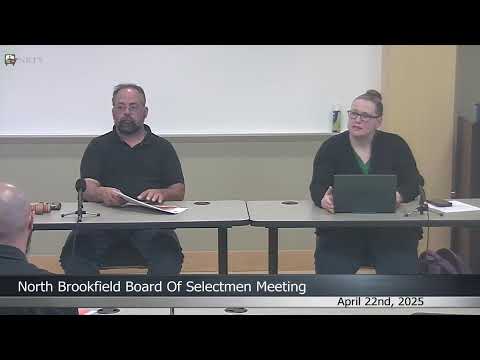
The Town of North Brookfield Board of Selectmen on an April meeting voted to appoint a small committee to investigate ownership, taxation and possible transfer of the former rail line used as the town’s rail trail.
Board members said a review of historical records and case law by resident Brandon Avery suggests the town may not owe property taxes on much of the railroad corridor and that transferring ownership from the railroad corporation to the town could simplify grant applications and maintenance. The board approved a motion to form a committee to gather the initial information and contact state officials; the motion passed by voice vote.
The discussion traced the corridor’s history: residents financed a local railroad corporation in 1875 and the town acquired most of the stock; passenger service ended decades ago and tracks were removed in the 1970s. Board members and Avery said the town’s ownership arrangement has been inconsistent in assessor records — taxed at about 2 acres in some years and later listed as roughly 24 acres — and that error has left open whether the property should be taxable.
Avery and other speakers urged the select board to seek an official determination from the Massachusetts Department of Transportation (MassDOT) and to use statute and precedent to clarify the town’s obligations. Speakers cited materials they had compiled, including references to Massachusetts General Laws cited in the meeting as “chapter 161C section 7,” “chapter 160 section 31,” “chapter 160 section 87,” and the town’s review of a 1970 senate report and case law on rail-rights-of-way and tax exemptions.
Board members flagged additional questions the committee should address: whether the town’s ownership extends into neighboring East Brookfield, whether existing leases or easements (including two residential leases mentioned along the corridor) will need to be rewritten if ownership changes, and whether any reversion language could allow a railroad to reclaim the property for rail use under certain conditions (the board referenced Massachusetts General Laws chapter 82, section 35A in the discussion).
Selectmen said the practical benefits of a transfer could include clearer eligibility for state and federal trail grants and simpler local management, but they emphasized the need to follow state procedures before any transfer. Several select board members suggested the committee’s first official task should be to request MassDOT’s position on a right of first refusal for the corridor so the town understands the formal process and any state interest.
The board voted to form a three-person committee to pursue those initial inquiries and report back with recommended next steps.
Ending: The select board directed staff to place the committee appointments on a future agenda and to provide the committee with the documents Brandon Avery submitted; the board also said any formal petition or letter to MassDOT should come from the board in an official capacity.