Get Full Government Meeting Transcripts, Videos, & Alerts Forever!
Get email alerts on the Public Asset Management topic
No spam. Unsubscribe anytime.
Board hears legal guidance on Old Quincy High School request and Faith Apostolic mortgage options
Summary
The board received legal guidance about a request from Quincy Main Street to receive the Old Quincy High School property and about options to address an outstanding mortgage with Faith Apostolic Church, including foreclosure, deed in lieu or sale of the promissory note.
Legal counsel advised the Gadsden County School Board on two separate property matters: a request from Quincy Main Street for the Old Quincy High School property and the district’s options regarding an outstanding mortgage held against property formerly sold to Faith Apostolic Church.
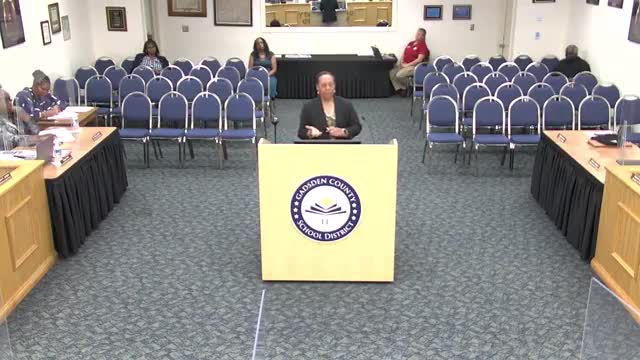
Miss Minnis, who provided the guidance, told the board the statute governing disposal of educational property requires the board to determine the property is no longer needed for educational purposes, adopt a resolution to dispose of it, and “take diligent measures to dispose of educational property only in the best interest of the public.” She said the statute does not precisely define “best interest,” so the board should document due diligence, including written plans for the property’s public-benefit use, before donating or disposing of school-owned property.
Regarding the Quincy Main Street request, Miss Minnis said the board had at least three options: donate the property if written plans demonstrate public interest; lease or sell the property after a vetting process; or put the property out for bids so multiple parties can present proposals. She recommended a workshop to gather documentation and for the board to require more detailed, written plans from Quincy Main Street so the board can show its due diligence.
Board members stressed they broadly prefer sale over donation because district finances are constrained. Member Mr. Frost and others pointed to prior sales of district property that produced revenue. One board member said, “We need money. We don't have any property to give away.” Another asked how the district would make decisions if multiple parties sought the property; counsel repeated that bidding or presentations are permissible and often appropriate.
On the Faith Apostolic mortgage, counsel explained the district holds only the promissory note and mortgage and is not the record owner. Options discussed included selling the promissory note to a collection buyer (for a discounted price), requesting a deed in lieu of foreclosure so the church returns the property without litigation, or filing a foreclosure complaint to obtain a judgment and send the property to public sale. Counsel warned foreclosure is time-consuming, carries filing and attorney costs, and does not guarantee the district will regain the property if another party outbids the district at the clerk’s sale. Counsel also noted that if the district regains ownership it would assume any environmental or maintenance liabilities.
Board members asked staff to run title searches and to gather historical sale documents and appraisals. Several members said they do not support donating property without receiving fair market value or having a robust public-benefit plan. The board did not vote to dispose of any property at the meeting; counsel recommended additional documentation and possible public bidding or a workshop before any final action.