Get Full Government Meeting Transcripts, Videos, & Alerts Forever!
Get email alerts on the Election Signs topic
No spam. Unsubscribe anytime.
Raymore council debates stricter enforcement, limited election‑day signage after complaints
Summary
Council members and staff discussed complaints about placement and quantity of political signs, legal constraints from Reed v. Town of Gilbert, and options including strict enforcement, a written property‑permission form and a possible one‑sign election‑day exception.
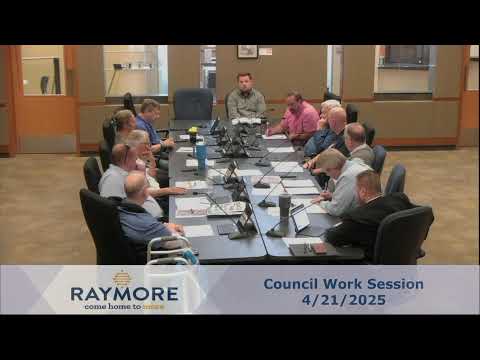
Raymore City Council members on Monday debated whether to enforce existing sign rules more strictly or amend the code to allow a narrow exception for election‑day signage after a contested local campaign drew complaints about signs on city and private property.
City staff outlined recurring problems around commercial corridors and intersections, saying placement is often the issue rather than sign content. "When you get into areas like Willow Wind and Dean Avenue ... the lot line barely extends just a couple of feet beyond the front of the parking lot," staff said, explaining why signs that appear off the street may still be in the right of way.
Council member Baker cited the U.S. Supreme Court case Reed v. Town of Gilbert and said the city’s current ordinance treats signs differently by content. "The Supreme Court in 2015 said that a political signs, religious signs, and directional signs cannot be treated separately than all the other signs and ordinances," Baker said, arguing that moving to a content‑neutral code has implications for how the city treats campaign and commercial signs.
Staff and council discussed three main options: strict, uniform enforcement of the existing code for all signs; continuing the current, more permissive practice; or adopting a narrowly tailored amendment to allow a limited number or size of signs on city property only for election day. Staff described a practical enforcement approach that would include sending notice to potential candidates in advance, drafting a property‑permission form for candidates to present if they place a sign on a private lot, and holding improperly placed signs in the first year before disposing of them.
Council members were divided. Some said the code should be enforced consistently across commercial and political signage. Council members Mills and others favored allowing a single, limited sign at each polling location on election day to increase voter awareness; Council member Barber argued against an election‑day exception and favored enforcement as written. Several members urged staff to notify candidates proactively about the rules and to return with a draft ordinance or amendment.
Staff described recent county steps: the county placed “no political signs” notices at nine polling locations this year after property owners raised concerns; staff said the county controls only a 25‑foot perimeter around polling buildings and that enforcement beyond that remains the property owner’s responsibility.
At the end of discussion staff said they would prepare an ordinance amendment option limited to a single sign per frontage for council consideration and continue outreach and enforcement planning.
Ending
Staff said they will return with a draft ordinance or amendment and a proposal for candidate notification and sign‑permission forms, and the council sign code update work remains in process.