Get Full Government Meeting Transcripts, Videos, & Alerts Forever!
Get email alerts on the Budget Operations topic
No spam. Unsubscribe anytime.
Alpine School District previews FY26 operations budget; projects $31.8 million in new revenue, flags $4.8 million gap
Summary
District staff presented the FY26 operations budget framework, citing a 4% increase in the state WPU, enrollment changes and $31.8 million in new revenue; staff asked the board to prioritize which requests to carry into the recommended budget.
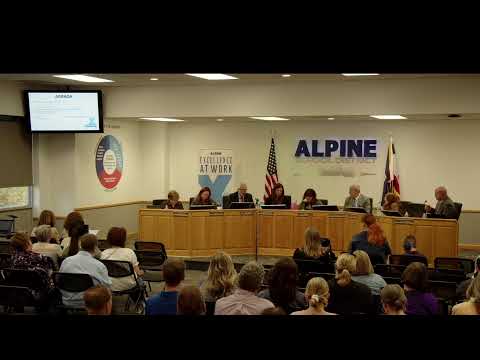
Superintendent Farnsworth and staff presented the Alpine School District fiscal year 2026 operations budget recommendations to the board in a study-session-format presentation, outlining revenue drivers, major requests and remaining gaps.
The presentation said two state-level drivers undergird the revenue projection: a 4% increase in the Weighted Pupil Unit (WPU) for FY26 and a projected enrollment change (a net decrease of about 226 students used in the district's estimate). Staff reported $31,822,000 in new revenue available for FY26 after accounting for one-time items that drop off from FY25 and other designated funding streams.
Why it matters: the operations budget drives staffing, benefits and program priorities used in the district's June budget book. Staff emphasized the board must decide which of the submitted operating requests to approve before the district publishes the superintendent's budget book, which staff said is due at the end of May and will be presented at the board's May meeting.
Key details from the presentation: - Staff said the district received 76 operations requests totaling about $62.4 million. Major recurring cost items included contract and hourly increases, step increases, and medical insurance estimated to rise about 8.3 percent. - Specific big-ticket requests called out were a $5.0 million set-aside for new districts, a $2.8 million math textbook/curriculum adoption, about $3.1 million in new-school opening costs and additional special-education and paraeducator FTE requests. - Staff described components of the revenue change: the WPU increase, one-time FY25 items that dropped off (for example, literacy textbook adoption funding that was one-time in FY25), self-funded departmental requests (CTE, warehouse), and previously board-approved increment-funded items. - Staff estimated a working shortfall of about $4.8 million in the last draft columns shown to the board; presenters explained the practice of budgeting conservatively (planning for a lower revenue scenario) and re-budgeting during the year if revenue proves higher.
Process and schedule: staff walked the board through the internal calendar: operations requests begin in December, district budget committee deliberations in March and finance-committee/board reviews in April, with the comprehensive budget book compiled for June and the superintendent's budget due by the end of May.
Board direction requested: staff asked the board to indicate which items from the draft (the blue/green columns in the packet) should be moved into the orange "planned" column for final recommendation. Presenters said many items in the green column are already reflected in the April 16 DLT recommendation.
Discussion points and clarifications: board members and staff discussed the difference between one-time and ongoing funding, the district's approach to evaluating programs currently funded by grant/one-time funds, and the district's process for prioritizing requests when additional revenue becomes available.
Ending: staff said they will finalize the recommended package for the May presentation and requested board members submit questions or recommendations by email if they want items reconsidered before the June budget adoption.