Get Full Government Meeting Transcripts, Videos, & Alerts Forever!
Get email alerts on the Energy Aggregation topic
No spam. Unsubscribe anytime.
NOPEC official warns Springfield residents of rising wholesale electric costs; city earns grant funds from aggregation
Summary
A NOPEC relationship manager explained how the regional wholesale market and PJM capacity auctions have driven supply rates higher and described the city’s participation in aggregation, which provided the city energy‑efficiency grants of about $60,000 this year.
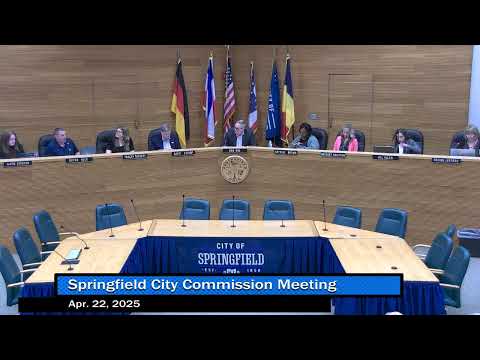
A relationship manager for the Northeast Ohio Public Energy Council (NOPEC) explained to the Springfield City Commission how recent changes in the regional wholesale market raised supply prices and why those shifts will raise residents’ electric bills starting in June.
Ginny (Genevieve) Costanzo, identified in the meeting as a NOPEC relationship manager, told commissioners that NOPEC aggregates member communities to negotiate supply rates and that Springfield joined NOPEC in February 2018. Costanzo said NOPEC’s program is evergreen—enrolled customers remain unless they choose another supplier—and that the organization offers several pricing options, including a market‑mirroring program rate, fixed terms, a discount relative to the utility’s monthly rate, and a higher‑cost green option.
Why it matters: Costanzo told the commission the NOPEC program rate for Springfield customers was 0.645¢ per kilowatt‑hour but will rise to 0.893¢ per kilowatt‑hour starting in June; she estimated the change could increase an average household’s bill by roughly $18 a month (supply portion only). Costanzo attributed the increase to an unusually high PJM capacity auction result last year and other supply constraints, and she said PJM, the regional grid operator covering 13 states, recently capped the next auction to help relieve pressure while longer‑term fixes are developed.
City grant funds: Costanzo also described NOPEC’s community grant program, which is funded by supplier payments negotiated at scale; she said Springfield received roughly $60,000 this year for an energy‑efficiency grant that the city and staff intend to apply to municipal building projects. In the meeting, a city official said the funds will be used toward replacing part of the service center roof and toward previous roof projects.
Consumer choices and protections: Costanzo emphasized there are no termination fees for NOPEC enrollment and reiterated that customers who sign separate supplier contracts should track contract end dates to avoid unwanted renewals. She also advised residents to use the Ohio Energy Choice website to compare offers and watch for fees or short‑term promotional terms.
Commission discussion: Commissioners asked about constraints on building new generation in Ohio and whether legislative changes could ease development of solar projects; Costanzo said there are state‑level restrictions that have slowed solar deployment and that NOPEC does some advocacy on related policy issues. Commissioners also asked NOPEC to provide a legislative flyer outlining the restrictions she referenced; Costanzo agreed to provide those materials.