Get Full Government Meeting Transcripts, Videos, & Alerts Forever!
Get email alerts on the Education Steam topic
No spam. Unsubscribe anytime.
Mahomet-Seymour junior high students demonstrate Project Lead The Way STEAM projects
Summary
Students at Mahomet-Seymour Junior High demonstrated STEAM projects using micro:bit controllers and MIT App Inventor during the April 22 Board of Education meeting. Teachers described course sequencing tied to state grant funding and future alignment with high school offerings.
Simon Anderson, a STEAM teacher at Mahomet-Seymour Junior High School, introduced a student showcase of Project Lead The Way curriculum at the board's April 22 meeting, describing the district's middle-school computer science courses and the grant funding behind them.
"Project Lead The Way is a STEM curriculum," Anderson said, explaining that the program offers grade-level sequences called Launch, Gateway and high-school pathways in computer science, biomedical and engineering fields. He said the district chose computer science courses for junior high using a state Computer Science Equity grant.
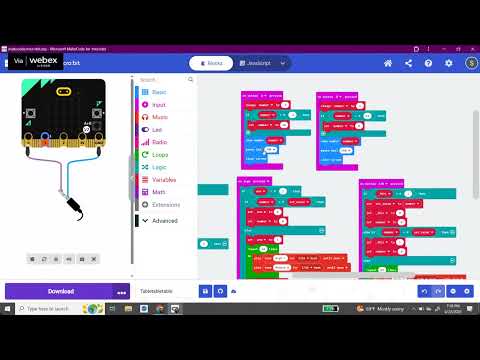
A sixth-grade student, Sebastian Munoz Najar, demonstrated a coded "safe box" that uses a micro:bit controller and copper tape as an input to detect opening, a keypad input to enter a passcode, and output LEDs and tones to indicate alarm or disarm states. Sebastian described the project's four requirements and showed a simulator of the block code used to run the micro:bit.
Eighth-grade students Victor and Grant presented an independent app project built in MIT App Inventor: a lane-based driving game with selectable skins, a survival timer and variable-speed obstacles. They described development steps, code procedures for resetting obstacles and hit-box issues they had to fix.
Anderson said the junior-high sequence feeds the high-school computer science and engineering options and that the district used VEX hardware for upcoming robotics units. He also noted hands-on mechanics and simple text-based coding elements planned for an eighth-grade course being phased in next year.
Board members and administrators complimented the students and staff for the classroom work and for aligning middle- and high-school pathways. Dr. Bagby and other administrators were acknowledged for supporting curriculum rollout.
The presentation emphasized collaborative problem-solving and engineering design process skills, and Anderson said course materials were funded in part by state grants and local professional development. He and the students took questions from the board about development time, practical applications and future curriculum sequencing.
Board members praised the demonstrations as evidence the junior-high work will feed into approved and proposed high-school offerings.
Ending: The board did not take an action on curriculum during the presentation; administrators said the junior-high work will support upcoming textbook and course approvals at the high school level.