Get Full Government Meeting Transcripts, Videos, & Alerts Forever!
Get email alerts on the Immigration Policy topic
No spam. Unsubscribe anytime.
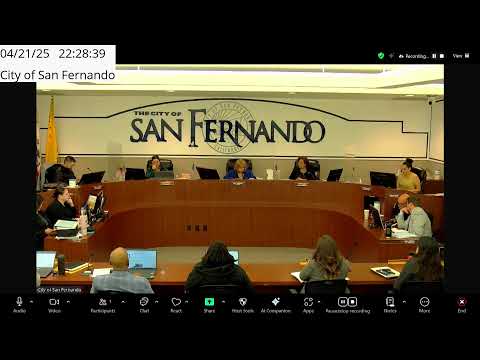
San Fernando council adopts data- and facility-protection resolution after weeks of debate on sanctuary policy
Summary
After extensive public comment and a wide-ranging debate about sanctuary-city protections, the council approved a resolution restricting data sharing and use of city facilities for immigration enforcement while leaving a separate ‘sanctuary city’ ordinance for later discussion.
The San Fernando City Council voted April 21 to approve a resolution that clarifies city limits on sharing personal data and on allowing immigration authorities to use city facilities for enforcement actions. The vote came after hours of public testimony and a lengthy council discussion about whether to adopt a standalone sanctuary-city ordinance.
What the council approved: Councilmember Joe Fajardo introduced a draft resolution that would (in its final, amended form) do three principal things: affirm the San Fernando Police Department’s existing policy not to enforce immigration law; prohibit city employees, contractors and vendors from collecting, disclosing or sharing personal information such as immigration status, place of birth, home address or phone numbers for the purpose of immigration enforcement unless presented with a valid judicial warrant or the person’s authorization; and restrict provision of city property and facilities for use by immigration authorities for enforcement purposes without a court-issued judicial warrant or probable cause. The resolution also directed staff to develop training for city personnel about the distinction between administrative and judicial warrants and to prepare an ordinance removing the voter-registration requirement for city commission appointees.
Council and public debate: The item followed weeks of public input and two prior council reports. The publicly submitted comments on April 21 included dozens of San Fernando residents, immigration advocates, attorneys and non-profit representatives who urged the council to adopt stronger protections for immigrants and to proceed with a sanctuary-city designation. Supporters argued the measures would reduce fear, encourage crime victims and witnesses to cooperate with police and protect families. "By not asking about or collecting information about immigration status and place of birth, we can guarantee that San Fernando residents . . . can safely access vital public services," said Shuming Chen of the California Immigrant Policy Center during public comment.
Opponents — including callers and some members of the public — warned that a formal sanctuary designation could put the city at risk of losing federal grant money or becoming a target for enforcement. Callers argued that federal law is supreme and warned of potential consequences to federal funding streams. Councilmembers repeatedly referenced the California Values Act (commonly known as SB 54) and state law that already limits local cooperation with federal immigration enforcement.
The council vote: Councilmember Fajardo moved to adopt the resolution as amended; Councilmember Patty Lopez seconded. The final roll call recorded votes of approval from Councilmembers Patty Lopez, Victoria Garcia, Joe Fajardo and Mayor Mary Mendoza; Vice Mayor Maria Solorio voted against the motion during the planning item vote but on this resolution the record shows the motion passed. (Clerk roll-call: "Council member Lopez? Yes. Council member Garcia? Yes. Council member Fajardo? Yes. Vice mayor Salodio? Thank you. Mayor Mendoza? Yes. Motion passes.") The council did not adopt a separate ordinance to declare San Fernando a “sanctuary city” at this meeting; Vice Mayor Solorio and other members had earlier expressed concern about possible federal funding consequences and asked staff for additional legal and fiscal analysis.
Other related actions and requests: Council directed the city manager to prepare training for staff about judicial versus administrative warrants and to draft an ordinance removing a voter-registration requirement for city commission applicants. The resolution includes a clause affirming that nothing in it prevents compliance with a valid judicial warrant or court order.
Community context: Multiple advocacy groups and legal practitioners urged the council to adopt a full sanctuary ordinance. The Mexican American Bar Association offered to help organize immigration clinics and "know-your-rights" workshops for the community; the presenter said the clinics would include pro bono consultations and could include know-your-rights information and referrals to nonprofit legal services.
What’s next: The council left the separate proposed ordinance establishing a formal “Safe San Fernando” sanctuary policy (agenda item 10) for later consideration while adopting this narrower resolution clarifying data protection and facility use. Councilmembers and staff said they will return with more detailed, coordinated language and training plans and that the topic may come back to an upcoming agenda.