Get Full Government Meeting Transcripts, Videos, & Alerts Forever!
Get email alerts on the Finance And Taxation topic
No spam. Unsubscribe anytime.
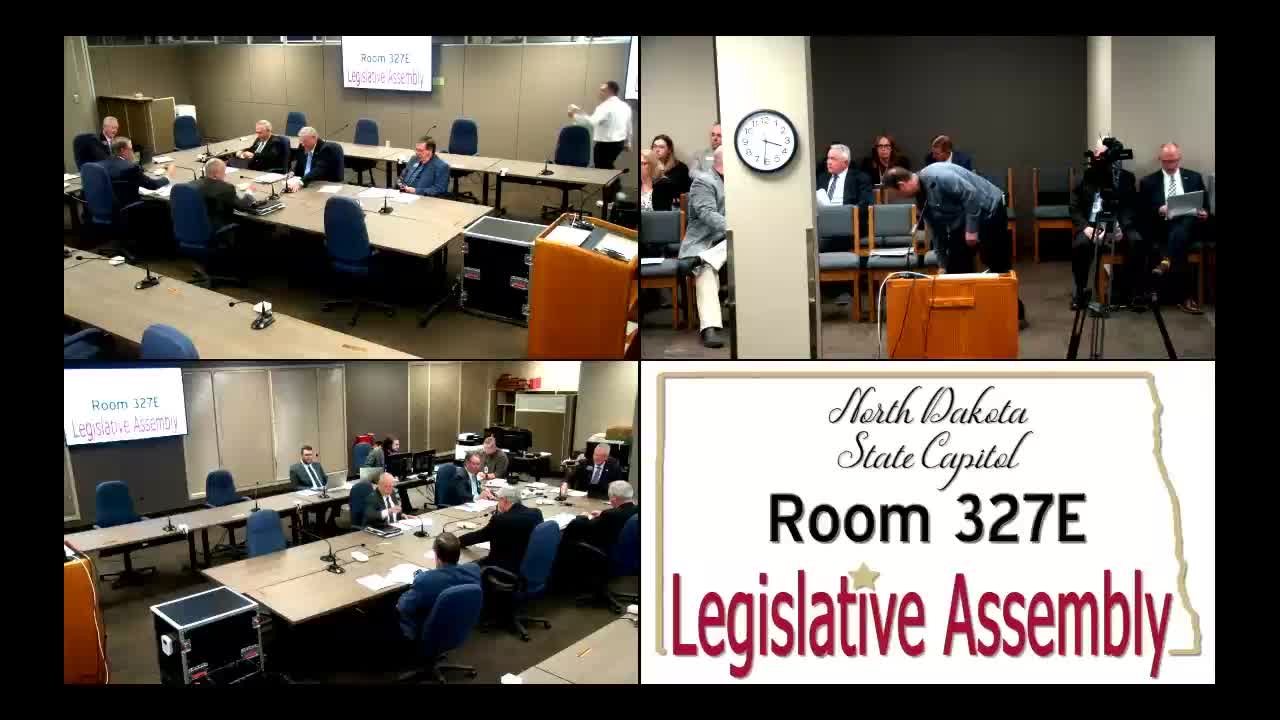
Conference committee reviews House-led amendments to House Bill 1176 on property-tax changes
Summary
The conference committee on House Bill 1176 met to review a House-proposed amendment that would raise Legacy Earnings Fund distributions, change primary residence credit amounts and process dates, alter levy-limit rules for bonds, townships and schools, and create a study committee to review property tax reform.
The conference committee on House Bill 1176 met to review a House-proposed conference committee amendment that would change how the state distributes earnings from the Legacy Earnings Fund and make several alterations to property-tax relief, levy limitations and administrative procedures.
Megan Gordon, Legislative Council staff, told committee members the amendment would replace the Senate’s second-half changes and be drafted from the reengrossed House version. "This would be in place of the amendments that the senate put on, in the first half," Gordon said as she walked members through the proposed amendment by page and section.
The amendment would increase the percent of earnings distributed from the Legacy Earnings Fund each biennium from 7% to 8%. After bond payments, the remainder would be allocated 25% to the highway fund for road projects and 75% to the legacy property tax relief fund to support the primary residence credit (PRC), Gordon said.
The House proposal also removes language in the bill that would have expanded the homestead tax credit while keeping a separate change that raises the renters' refund maximum credit from $400 to $600. Gordon said the overstruck language would remove the proposed homestead expansion and noted, "we believed, that at our existing homestead levels, they're gonna be covered with the amount of credit we're gonna ask for, with the PRC."
The amendment would raise the PRC to a flat $1,650 and would remove the existing limitation that the credit "may not reduce the property tax due on voter approved levies," meaning the PRC could be applied to taxes stemming from voter-approved levies if the change is accepted.
Gordon said the bill also expands the disabled-veterans credit by increasing the maximum credit in taxable value from 8,100 to 9,000 and adds language addressing co-ownership situations when a disabled veteran co-owns a home with someone other than a spouse.
Several administrative dates tied to primary residence certification would shift: the application date would move from Feb. 1 to April 1, the deadline tied to receipt would move from Feb. 28 to May 31, and a "no later than March 15" timing clause would be removed in favor of a "within 15 days of receipt" standard.
On levy limitations, Gordon said the amendment adds a subdivision to exempt taxes levied to pay bonds, evidences of indebtedness or obligations of political subdivisions — including levies for repayment under chapter 57-47 — from the proposed levy cap. She warned members that some counties already use mechanisms under chapter 57-47 for bonding and that questions remain about whether the new language is sufficiently narrow.
"As far as the potential abuse, I think that would be more of a policy decision or policy concern than I would be able to answer," Gordon said.
Committee members asked for additional legal review. Charles Dende, general counsel for the Tax Department, said 57-47 is largely a local budgeting issue and suggested counties might be better suited to answer detailed questions. Aaron Burst, legal counsel for the Association of Counties, said there is little case law on 57-47 and that, "theoretically, it could be possible" for the provision to be used in ways the drafters did not intend.
The draft also separates school district levies for clarity: it would identify the 60-mill school contribution used in the state aid formula separately from the 10-mill general fund levy, so the two items appear as distinct levies on tax statements. To address a potential shortfall if levy limits force some districts below the 60 mills, the amendment proposes an integrated formula gap-funding program allowing qualifying school districts to apply to the superintendent of public instruction for gap funding to make up the difference.
Gordon said the bill adds a legislative intent provision directing consideration of property tax relief from the Legacy Property Tax Relief Fund for non-primary-residence property classes when funds exceed what is needed for the PRC. It also creates a Tax Reform and Relief Advisory Committee composed of members from both chambers' finance and taxation committees to study historical relief, fiscal impacts, implementation issues and possible improvements to the real-estate tax statement.
The amendment updates appropriation language consistent with the change to Legacy Earnings Fund distributions, removes a general-fund transfer the House had included, and includes language allowing the tax commissioner to request a deficiency appropriation from the next legislative session if the commissioner anticipates a shortfall in appropriated funds. Near the end of the draft, the bill would require the tax commissioner to identify how much Legacy Earnings Fund money is used for tax-relief programs and for any program advertising or public-awareness campaigns.
Committee members flagged several items for follow-up, including legal review of the bonding exemption tied to chapter 57-47 and possible adjustments to committee membership for the advisory study committee. Senators and representatives agreed to reconvene the next morning to continue discussion; the chair said the committee was scheduled to meet again at 10 a.m.
There were no formal motions or final votes on the amendment during the meeting. The committee adjourned and set a follow-up meeting for the next day.