Get Full Government Meeting Transcripts, Videos, & Alerts Forever!
Get email alerts on the Concurrency Infrastructure topic
No spam. Unsubscribe anytime.
Committee pauses debate on H.4050 after competing testimony on concurrency, infrastructure and fees
Summary
House Bill 4050, which would permit local governments to adopt concurrency programs linking development approvals to infrastructure capacity, was adjourned after supporters said it gives localities a needed tool and opponents warned it could create fees and delays without guardrails.
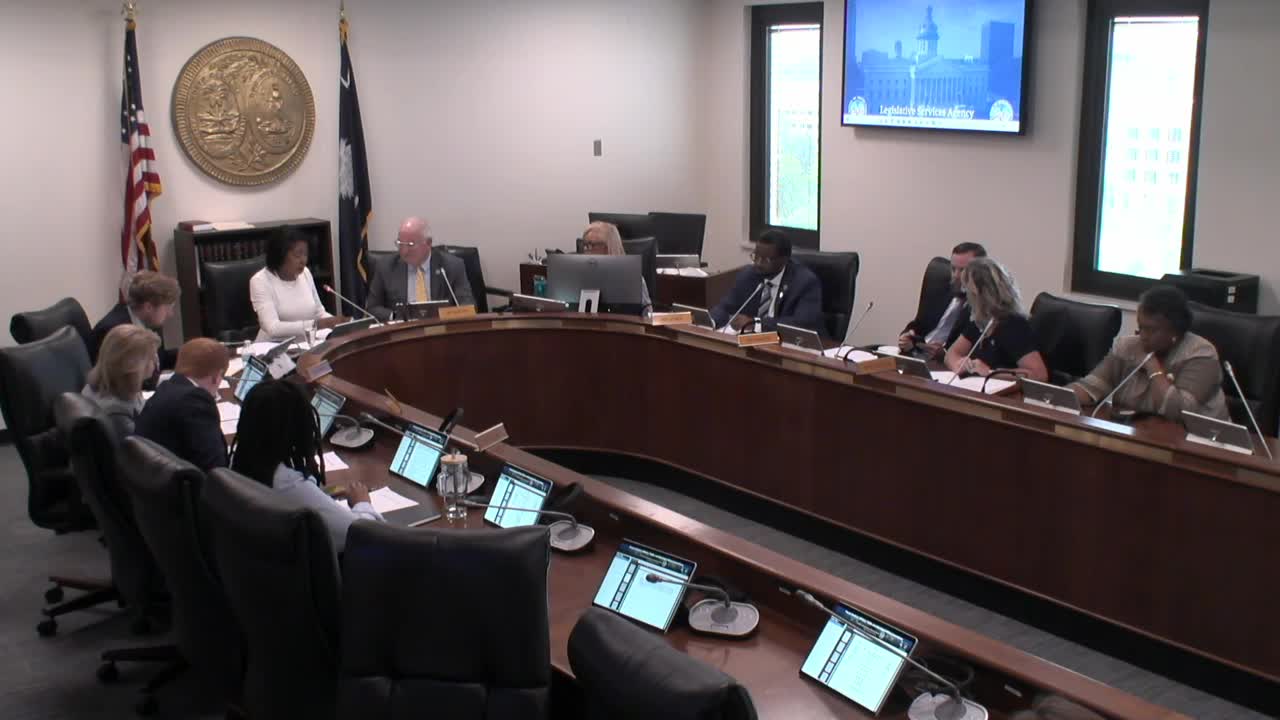
The House subcommittee adjourned debate on House Bill 4050 after a daylong hearing that featured testimony from the bill’s sponsor, municipal and county officials, conservation and legal advocates, and builders’ groups. H.4050 would expressly permit local zoning ordinances to include concurrency programs that condition land-development approvals on public facilities and service adequacy and allow local planning commissions to recommend concurrency-based regulations.
Why it matters: Supporters say the bill adds a permissive planning tool that helps local governments coordinate growth and infrastructure (roads, water, schools, emergency services) and can prevent ad hoc moratoria by providing a framework for developers and governments to agree on timing and funding for public facilities. Opponents — including builders and some chambers of commerce — warned the bill, as drafted, could be used as a de facto moratorium, create additional fees or duplicate existing review processes.
What the bill would do
Representative Wetmore, the bill’s sponsor, told the committee the measure is permissive — an additional tool local governments may adopt — and that it is intended to align development timing with infrastructure provision. “What this bill does is guides the timing of development. In other words, infrastructure first,” Wetmore said.
The bill requires jurisdictions to adopt a capital improvements plan in order to use concurrency and specifies that development will be limited to a developer’s proportionate share of required improvements; it also includes an explicit prohibition on “double-dipping” (offsetting proportionate share with existing impact fees).
Supporters’ arguments and examples
Local officials and conservation groups backed the bill in testimony. David Chenis, chairman of the Dorchester County Council, said concurrency provides local governments “tools in the toolbox” to require developers to participate in infrastructure needed to support growth and avoid last-minute development agreements that become drawn out. Zach Bier of Conservation Voters of South Carolina supported the bill as permissive and said it can help direct growth to areas with existing capacity.
Emily Poole, staff attorney for the South Carolina Environmental Law Project, said concurrency is a “critical addition” to local policy tools, can be applied in zoned and unzoned areas, and can reduce litigation by enabling negotiated, documented agreements on infrastructure obligations rather than repeated denials and subsequent lawsuits.
Opponents’ concerns
Adrian Kane, CEO of the Charleston-Hilton Head Home Builders Association and speaking for the Home Builders Association of South Carolina, offered strong opposition. Kane said local governments already require capacity checks for utilities, schools and roads before issuing permits, and added that the bill could duplicate reviews, increase delays and invite unregulated fee systems. Kane cited local examples where capacity fees rose substantially, saying Jasper County’s Buford Water & Sewer Authority increased a capacity fee from $6,200 to $22,000 per home and referring to local impact-fee programs such as York County’s.
The Charleston Metro Chamber of Commerce likewise opposed the bill as drafted, saying it risks creating de facto moratoria and asking for guardrails such as timelines and commitments by local governments to deliver infrastructure.
Clarifications from the hearing
Committee members and witnesses agreed the bill is permissive rather than mandatory; it adds concurrency to a list of optional planning techniques localities may use. Witnesses described practical features that would typically appear in local concurrency programs: capital improvement plans tied to comprehensive plans, proportional-share calculations for developers, thresholds for applicability (often applied to larger developments), and protections against double-charging when impact fees are already assessed.
Committee action
Representative Celeste Davis moved to adjourn debate on H.4050 to allow additional stakeholder work; the subcommittee adopted the motion by roll call with all members present voting Aye. Roll call as recorded: Joe Bustos (Aye), Celeste Davis (Aye), Sarita Edgerton (Aye), Representative Jones (Aye), Magnuson (Aye), Blake Sanders (Aye), Courtney Waters (Aye).
What’s next
Committee members asked for more specific guardrails and timelines, including a required capital improvements plan and clearer documentation of proportional-share calculations, before the bill advances. Supporters and opponents agreed to continue negotiations during the interim.