Get Full Government Meeting Transcripts, Videos, & Alerts Forever!
Get email alerts on the Casino Gaming topic
No spam. Unsubscribe anytime.
Lawmakers hear mixed testimony on H 4176 casino proposal for Santee
Summary
A legislative subcommittee heard hours of testimony both for and against H 4176, a bill that would authorize a large-scale casino development on the I‑95 corridor near Santee. Supporters focused on jobs, tax revenue and local investment; opponents raised concerns about addiction, crime, economic displacement and tribal exclusion.
A South Carolina legislative subcommittee held an extended public hearing on H 4176, the I‑95 economic stimulus/casino proposal, hearing residents, local officials, tribal leaders and industry representatives who sharply disagreed about the project’s risks and benefits.
Supporters told the panel that a single, regulated casino at Santee would bring construction and permanent jobs, new tax revenue and a broader tourism base for a persistently low‑income region. James McQuillah, president of the Orangeburg County Chamber of Commerce, said the site’s location “directly on I‑95” makes it a natural tourism stop and estimated the project could create “800 to 1,000 direct jobs.” County leaders, community pastors and small‑business owners echoed that theme: “This bill is a chance to bring something real and lasting to our community,” said E. Jean Davis Capers, who identified herself as a Utahville resident.
Tribal leaders and developers also spoke. Brian Harris, who identified himself as chairman of his tribe’s council, described the Catawba Nation’s history and urged the committee to protect tribal opportunities. Harris said the tribe now operates gaming across the North Carolina border and that it has negotiated compacts there; he told members the state bill “doesn’t even mention us” and urged support for an amendment to restore the Catawba’s negotiated rights.
Economists and economic development witnesses told the committee the bill’s fiscal impact could be substantial if a large resort is built. Doug Walker, economics professor at the College of Charleston, said the bill’s fiscal summary—based on a $200 million project—likely understates revenues and that a $700 million investment could generate considerably more in state receipts, which he estimated “could be anywhere from $70 to $100 million” annually depending on project size.
Opponents framed gambling as a public‑health and social problem. Tony Beam, representing the South Carolina Baptist Convention, said gambling “profits off of those who lose” and described addiction risks; Palmetto Family Council’s Steve Pettit called gambling “a moment of moral reckoning.” Local residents and speakers cited studies and personal experience to warn about addiction, household debt and pressure on public services.
Several speakers raised implementation questions including who would hold licenses, how revenue would be shared locally versus out‑of‑state, and potential litigation tied to tribal claims. Representative McCravy, not on the committee, said he had reviewed studies showing links between casino introduction and bankruptcy or suicide and urged more hearings and research before legislative action.
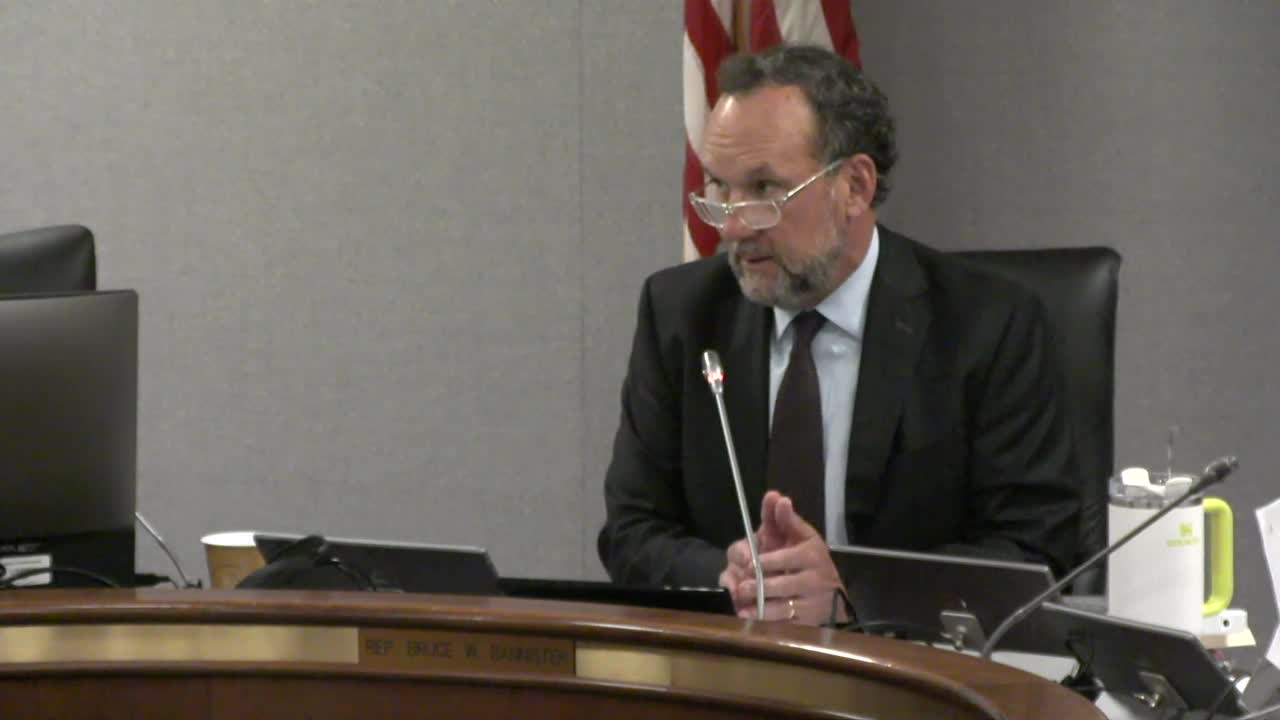
Chair remarks at the start of the hearing said the subcommittee did not plan to vote that day and wanted time to vet proposed amendments. No formal action or vote on H 4176 was taken during the session; members collected amendments and testimony for future consideration.
The committee accepted written materials and said it will reconvene to review amendments. Further hearings and drafting changes were discussed as next steps but no next meeting date was announced.