Get Full Government Meeting Transcripts, Videos, & Alerts Forever!
Get email alerts on the Homeschool Equal Access topic
No spam. Unsubscribe anytime.
Subcommittee approves bill to clarify homeschool student access to extracurriculars, CTE; adds transfer protections
Summary
The House Education and Public Works Subcommittee advanced H.3802, a bill that clarifies and strengthens homeschool students’ equal access to extracurricular activities, co‑curricular programs and CTE offerings, and bars districts from charging fees that enrolled students do not pay.
The House Education and Public Works Subcommittee advanced H.3802, a bill that clarifies and strengthens homeschool students’ equal access to public school extracurricular and co‑curricular activities, career and technical education (CTE) programs and protections from participation fees.
The bill would: (1) confirm that homeschool students may participate in extracurricular and co‑curricular activities and CTE offerings in districts where those programs are available; (2) prohibit a school district from charging a homeschool or governor‑school student a participation fee or other charge when the fee is not assessed on enrolled students; and (3) add language protecting certain transfers so a homeschool student moving between public schools is not automatically barred from sports participation on transfer.
Why it matters: Testimony described multiple cases in which homeschool families say districts used narrow or new terminology — notably “co‑curricular” — and local policies to deny access or to require fees not charged to enrolled students. Witnesses said the result was denied opportunities for competition, specialized CTE training such as cosmetology, or costly up‑front payments that could block low‑income students from participation.
Witnesses who spoke strongly in favor of the bill included homeschool parents, local homeschool association leaders and attorneys from the Homeschool Legal Defense Association (HSLDA). A homeschool parent who identified herself as the Trinity Homeschool Academy director recounted being turned away from a local high school swim team and said, “The discrimination is real.” The witness said her family’s son ultimately prevailed after HSLDA intervened, but only after a year‑long appeal process.
Katharine Gregory, a homeschool parent, described an access dispute involving the East Cooper Center for Advanced Studies’ cosmetology program and told the committee that districts were using the phrase “co‑curricular” to deny homeschool students the ability to apply. Kelly Rowe, a board member of the South Carolina Home Educators Association, urged lawmakers to pass the amended language to prevent districts from circumventing the original 2012 equal access law; she told the panel, “We are not asking for extra special rights. We’re just asking for same equal footing.”
Darren Jones, senior counsel with the Homeschool Legal Defense Association, said the bill addresses gaps left by the 2012 equal access law and will make the promise of that law enforceable in more cases. “This bill now implements that promise to a greater degree,” Jones said.
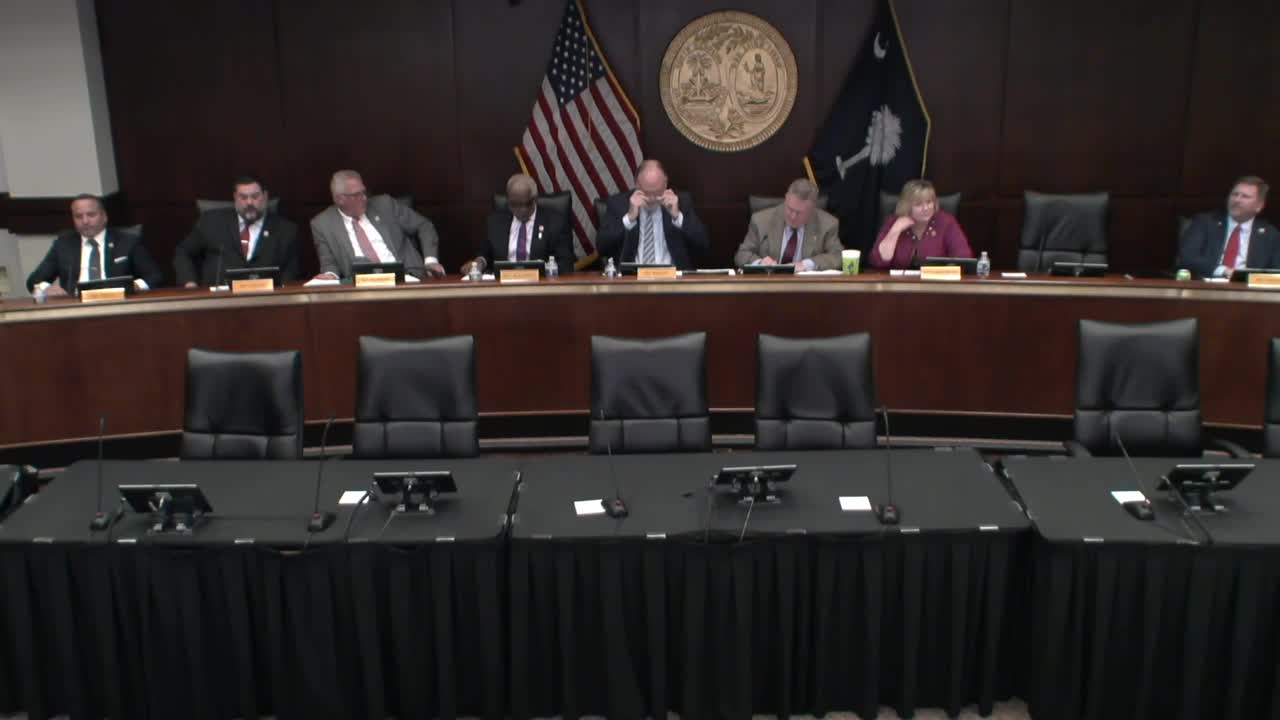
Committee action: Representative Vaughn offered an amendment to protect homeschool students who transfer between public schools from being barred from sports after an initial transfer; the amendment added language allowing that protection to apply even if administration changes or a successor organization assumes league duties. The subcommittee adopted the amendment by roll call and then reported H.3802 favorably as amended to the full committee on a recorded vote.
Substantive concerns raised in testimony included: district-level interpretation of “co‑curricular” versus “extracurricular,” practices of charging fees to homeschool students (one witness reported a $500 fee in one county), and unclear appeals paths when parents or students are denied access. Lawmakers and witnesses discussed Attorney General opinions and prior provisos that shaped the current practices and which the bill seeks to clarify.
The subcommittee voted to send the bill to the full committee for further consideration; the committee’s favorable report does not itself change local district policy but would direct subsequent committee and floor consideration of the statutory language.