Get Full Government Meeting Transcripts, Videos, & Alerts Forever!
Get email alerts on the State Employees Benefits Smarthealth topic
No spam. Unsubscribe anytime.
Unions urge lawmakers not to cut SmartHealth wellness incentive included in bill to end program
Summary
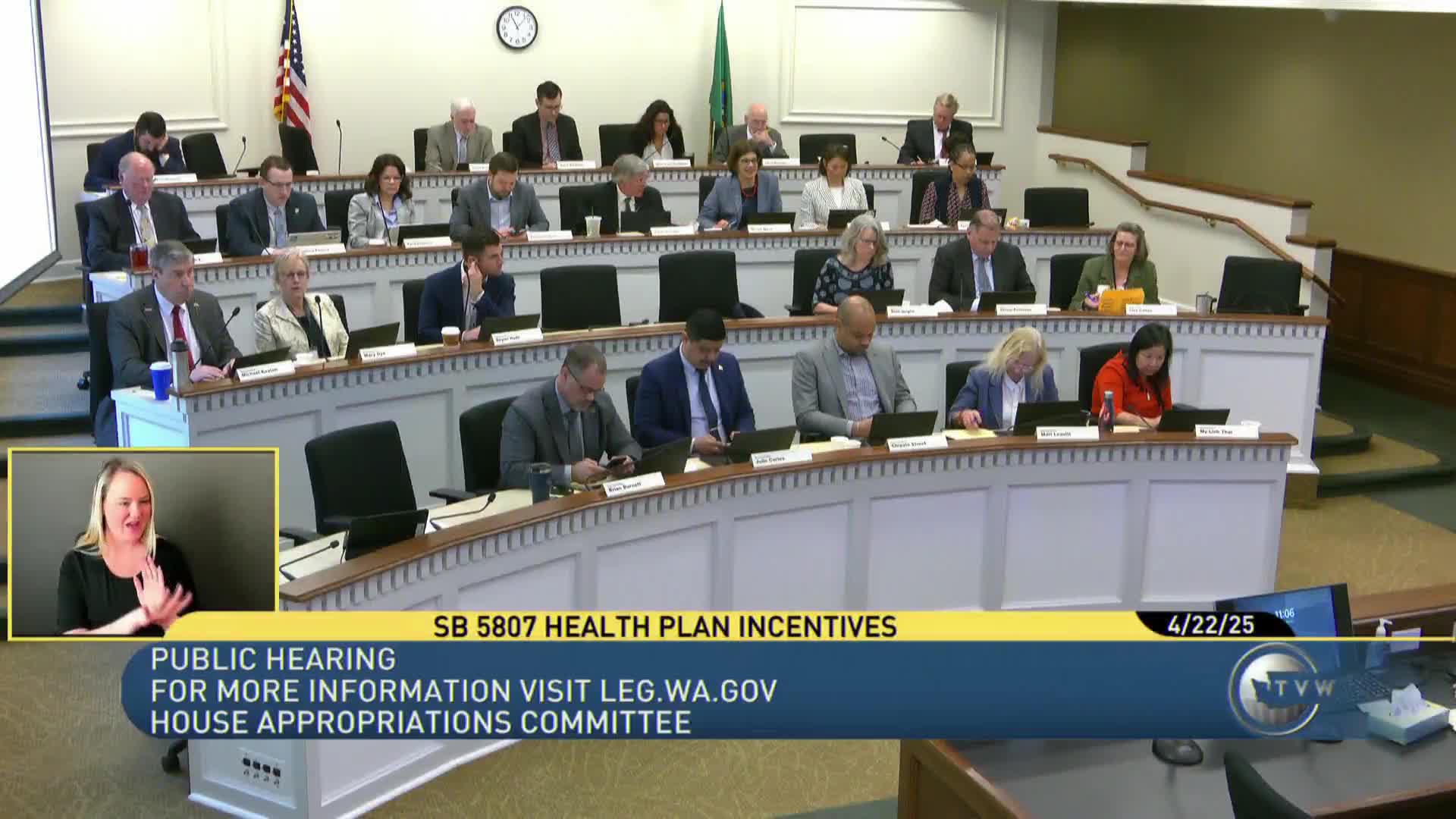
Staff told the committee substitute Senate Bill 5807 would eliminate the SmartHealth wellness program in PEBB and SEBB effective 2028, saving roughly $7.5 million annually; union witnesses opposed removing a negotiated benefit and said the $125 deductible reduction matters to lower‑wage workers.
House staff briefed the committee on substitute Senate Bill 58‑07, which would eliminate the SmartHealth wellness program in the Public Employees Benefits Board (PEBB) and School Employees Benefits Board (SEBB) systems as of January 1, 2028. Staff said the program’s removal is estimated to reduce full‑year expenditures by about $7.5 million, with implementation phasing producing smaller first‑year savings.
Why it matters: SmartHealth is a wellness program that lets eligible employees complete an online health assessment or self‑attest activities to earn up to a $125 annual reduction in plan deductibles; it has been offered in PEBB since 2015 and in SEBB since that program began.
Testimony Union representatives spoke against the bill. Nicole Gomez of the Washington Federation of State Employees said the $125 reduction ‘‘is not a huge amount, but it matters,’’ noting members use that money for small but essential needs such as eyewear. Seamus Petrie of the Washington Public Employees Association said removing an earned, negotiated benefit weakens state compensation and warned the change could be "penny wise and pound foolish" if it undermines long‑term health outcomes.
Staff and members discussed limited outcome data. Representative questions drew staff answers that the committee had not been presented with robust outcome evidence showing the program’s long‑term health savings.
What happens next The hearing closed with opposition from unions but no committee action recorded on the bill at the hearing. The committee may consider program evaluation, bargaining implications and whether alternative savings should be identified.
Ending Union witnesses said the bill removes a negotiated workplace benefit that is meaningful to lower‑income employees; staff emphasized estimated budget savings and noted limited outcome data in the hearing record.