Get Full Government Meeting Transcripts, Videos, & Alerts Forever!
Get email alerts on the Health Vision Care topic
No spam. Unsubscribe anytime.
Heated testimony on House Bill 4,135 as providers, plans and patient advocates debate vision benefits
Summary
Five witnesses and several associations testified for and against House Bill 4,135, which would change how vision care plans contract and disclose benefits; committee members voted to adjourn debate to allow further stakeholder negotiations.
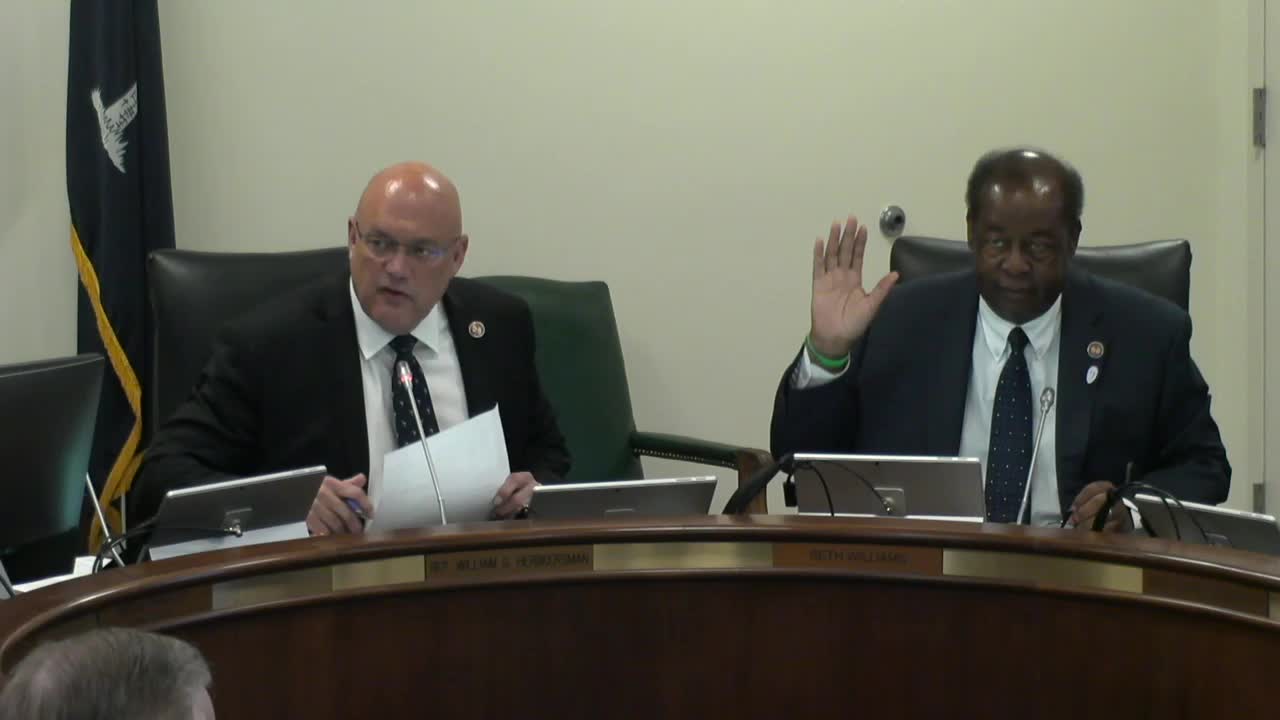
The subcommittee heard more than an hour of testimony and questions on House Bill 4,135, a measure that would change how vision care plans operate and how providers can source lenses and materials.
Jody McGinnis, a licensed optician and owner of two clinics in Moncks Corner and North Charleston, spoke in favor of the bill and testified she has paid out of pocket to keep patients functioning when network rules or supplier limits left patients without covered lenses. "I put $286 into this lens for the patient," McGinnis said, describing a November 2024 case in which a member’s covered lens had been discontinued by network suppliers.
Representing the National Association of Vision Care Plans, Julian Roberts urged opposition. He said the association’s members provide vision benefits to millions nationally and contend the bill would increase costs and confuse consumers by requiring opticians be listed alongside optometrists and ophthalmologists in provider directories. "House Bill 4,135 threatens this affordability and accessibility," Roberts told the committee.
Other witnesses disputed each other on market structure and regulatory oversight. Mary Johnson, an eye‑care consultant who said she worked on Georgia’s similar 2013 law, said state statutes that allow providers to choose suppliers can encourage local manufacturing and protect patient access. "Since legislation has passed in Georgia, there have been huge manufacturing plants that have opened in the state," Johnson said. Jim Ritchie of the South Carolina Alliance of Health Plans — representing major payors and Medicaid managed‑care organizations — told members the bill, as drafted, would undermine the consumer protections and network controls insurers use to keep care affordable. "This bill will undermine both of those principles," Ritchie said.
James Morris, an attorney who described a long personal experience seeking specialty lenses for his son, said opticians are the "pharmacists of the eye care world" and argued some vision plans are selling unregulated products marketed as insurance. "There is no regulation of any of the vision care plans in the state of South Carolina at all," Morris said.
Committee members asked detailed questions about rural access, customer service, plan appeal processes, and whether the bill would apply to insurance or voluntary discount plans. Members also discussed prior stakeholder negotiations, and Representative Wooden moved to adjourn debate to allow further talks among stakeholders; the motion was seconded and passed unanimously. Committee leadership clarified that adjourned debate (carryover) preserves the bill for continued negotiation rather than killing it.
The subcommittee did not vote on final passage; the committee voted to adjourn debate to permit additional stakeholder work before further action.