Get Full Government Meeting Transcripts, Videos, & Alerts Forever!
Get email alerts on the Elliott State Research Forest topic
No spam. Unsubscribe anytime.
State outlines budget, research and permit timeline to activate Elliott State Research Forest
Summary
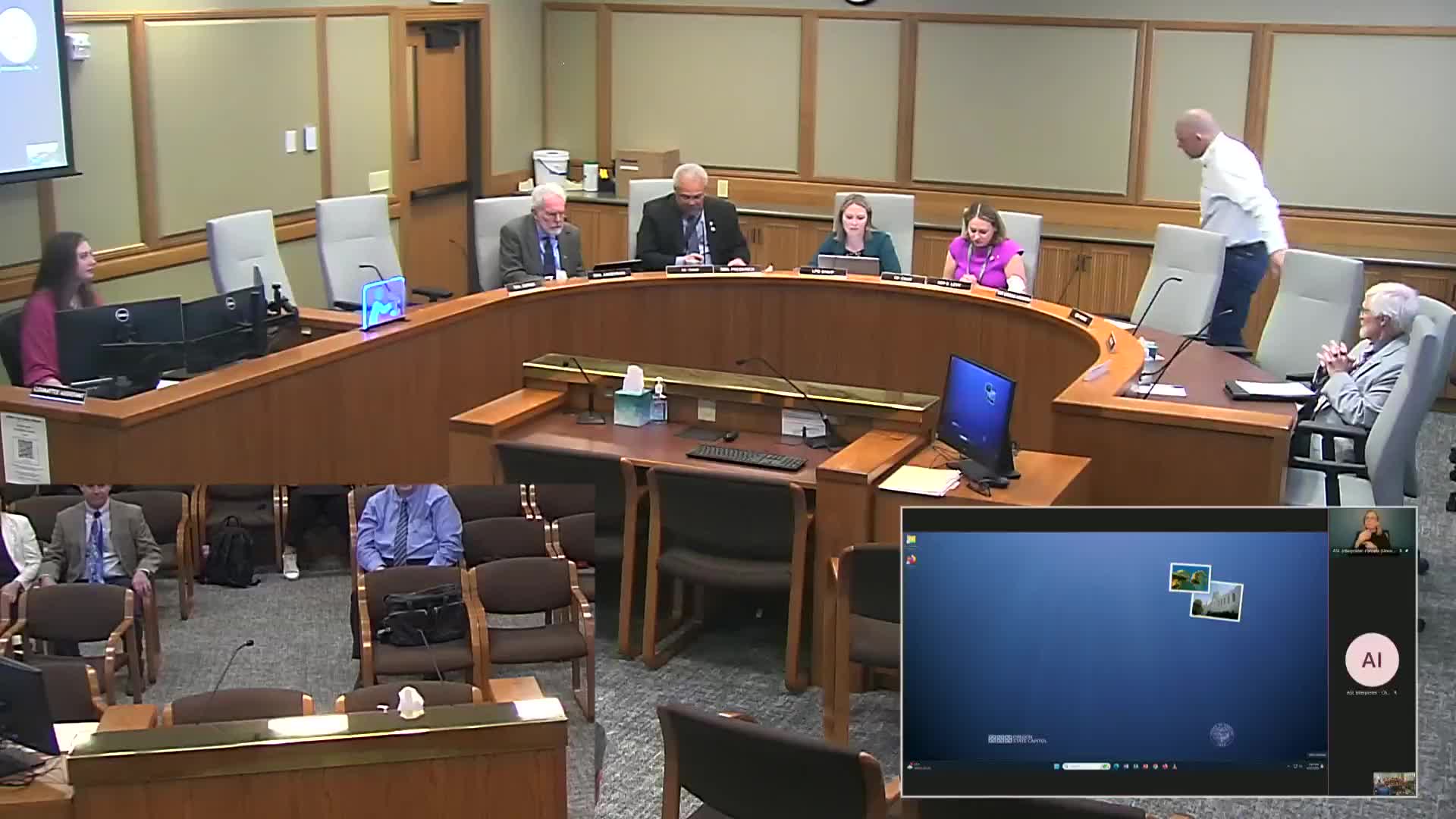
Department of State Lands officials told a legislative subcommittee April 22 that a $12.1 million governor’s request and a mix of timber, carbon and grant revenue will be used to stand up operations, while a federal decision on the forest—s habitat conservation plan remains a near-term contingency.
The Oregon Department of State Lands (DSL) told the Legislature—s Natural Resources Subcommittee on April 22 that it is seeking funding and partnerships to begin active operations on the Elliott State Research Forest and that key federal permits under the Endangered Species Act remain a near-term contingency.
"The Elliott State Research Forest is envisioned as a nationally important center for forest science and management," said Chris Castelli, deputy director of DSL's land management division, in opening remarks to Co Chair Frederick, Co Chair Levy and committee members. He described a governor's budget package that combines a $10 million base request and a $2.1 million federal carryover for Shutter Creek headquarters work, for a total of $12.1 million for the 2025–27 biennium.
The money would fund staff and contracts and be distributed across five service areas, Castelli said: roughly $4.2 million for economic and community benefits (including timber harvest contracting, habitat restoration and road maintenance), $2.2 million for research and partnerships, $1.3 million for conservation (including monitoring to meet a habitat conservation plan), $150,000 for education and recreation planning, and $2 million for governance and administration. DSL has hired five staff so far and expects a team of nine.
Why it matters: DSL intends the Elliott to generate multiple revenue streams and public benefits—timber sales, a voluntary carbon project, grants and private giving—while supporting research, education, recreation and tribal and community interests. Officials said standing up the forest now is intended to produce revenue in future biennia and to keep the management effort financially independent.
Permits and legal timeline
Establishing active forest operations depends on federal decisions tied to DSL's Habitat Conservation Plan (HCP) under the Endangered Species Act (ESA). "We anticipate a decision and permits by June," said Darren Gooding, the Elliott State Research Forest manager, but he warned the federal administration transition could delay that timeline. DSL finalized HCP negotiations with federal services last September and the final environmental impact statement was published in January; regional offices have forwarded a decision package to the national office in Washington, D.C.
The HCP submitted by DSL identifies three listed species to be covered: the marbled murrelet, the northern spotted owl and Oregon Coast coho salmon. Gooding told lawmakers the HCP and associated permits are "essential to the research supporting multiple public values and delivering multiple public benefits," and that DSL would explore alternatives if federal permits are not issued on the anticipated schedule.
Revenue model: timber, carbon, grants
DSL officials described a diversified revenue model. Timber sales and harvest contracts are the primary near-term revenue source; DSL—9s draft biannual operations plan estimates about $4.445 million per year in timber revenue for the plan—s early years, which the agency said would approach roughly $9 million across the two-year period if markets and operations go as planned.
DSL has also executed a carbon development management agreement (signed November 2024) to pursue a voluntary private-market carbon credits project alongside timber harvest and research. Officials said inventory and project development work are under way and that any sale of credits would not occur before 2027. A 2023 assessment cited in the meeting estimated about $9 million in potential carbon revenue over 10 years beginning in 2027, though Castelli and Gooding described that figure as an early estimate.
DSL said it will continue to seek grants and private funding; the agency noted an existing HUD grant to redevelop Shutter Creek, a former federal property being readied as the research forest headquarters. The HUD award was originally about $4 million, officials said, with roughly $2.1 million carried forward for continued planning and maintenance work at the Shutter Creek site (work outside the $10 million base budget).
Research partnerships and operations
DSL described ongoing conversations with Oregon State University and other research partners about a research consortium and baseline monitoring. "OSU would be extensively involved with the consortium," Gooding said; DSL has an agreement with OSU to deploy previously available federal funds for baseline monitoring. The forest management plan adopted by the State Land Board in October (and codified in administrative rule earlier this month) provides the management framework and calls for separate planning on research, education and recreation.
Gooding said the agency included four initial research projects in the 2025–27 biannual operations plan to begin work while the consortium and longer-term design are developed. Lawmakers asked about specific research areas such as mycology; DSL agreed to provide lists of planned projects and noted the board of directors will meet at Shutter Creek soon.
Other program elements and local impacts
DSL said it intends to use a lean core staff while relying on contracts for operations and services to support local economies and job creation. The agency described ongoing wildfire protection patrols, road maintenance, site leases (including communication-site leases), and early facility upkeep at Shutter Creek. DSL also said one cell tower at Shutter Creek is leased to Verizon and two other towers in the forest are used by state agencies.
Discussion and risks
Committee members pressed DSL on which budget items are startup costs likely to decline in later biennia. Castelli and Gooding said professional services, planning and research engagement expenses could decline as baseline staff and programs are established, while some conservation monitoring and equipment costs may remain relatively steady. The primary near-term risk identified at the hearing is the timing and outcome of the federal HCP decisions; DSL represented that it will pursue alternatives if federal permits are delayed.
No formal committee action or vote occurred at the April 22 informational meeting. Committee co-chairs closed the session after questions and follow-up requests for information.