Get Full Government Meeting Transcripts, Videos, & Alerts Forever!
Get email alerts on the Liquor Apportionment Warehouse topic
No spam. Unsubscribe anytime.
OLCC explains distilled‑spirits distribution, warns warehouse debt will reduce city and county shares
Summary
Oregon Liquor and Cannabis Commission officials told the House Committee on Revenue that a new warehouse will improve distribution but its debt service will reduce the share of liquor revenue flowing to cities and counties unless sale of current properties or other steps offset the cost.
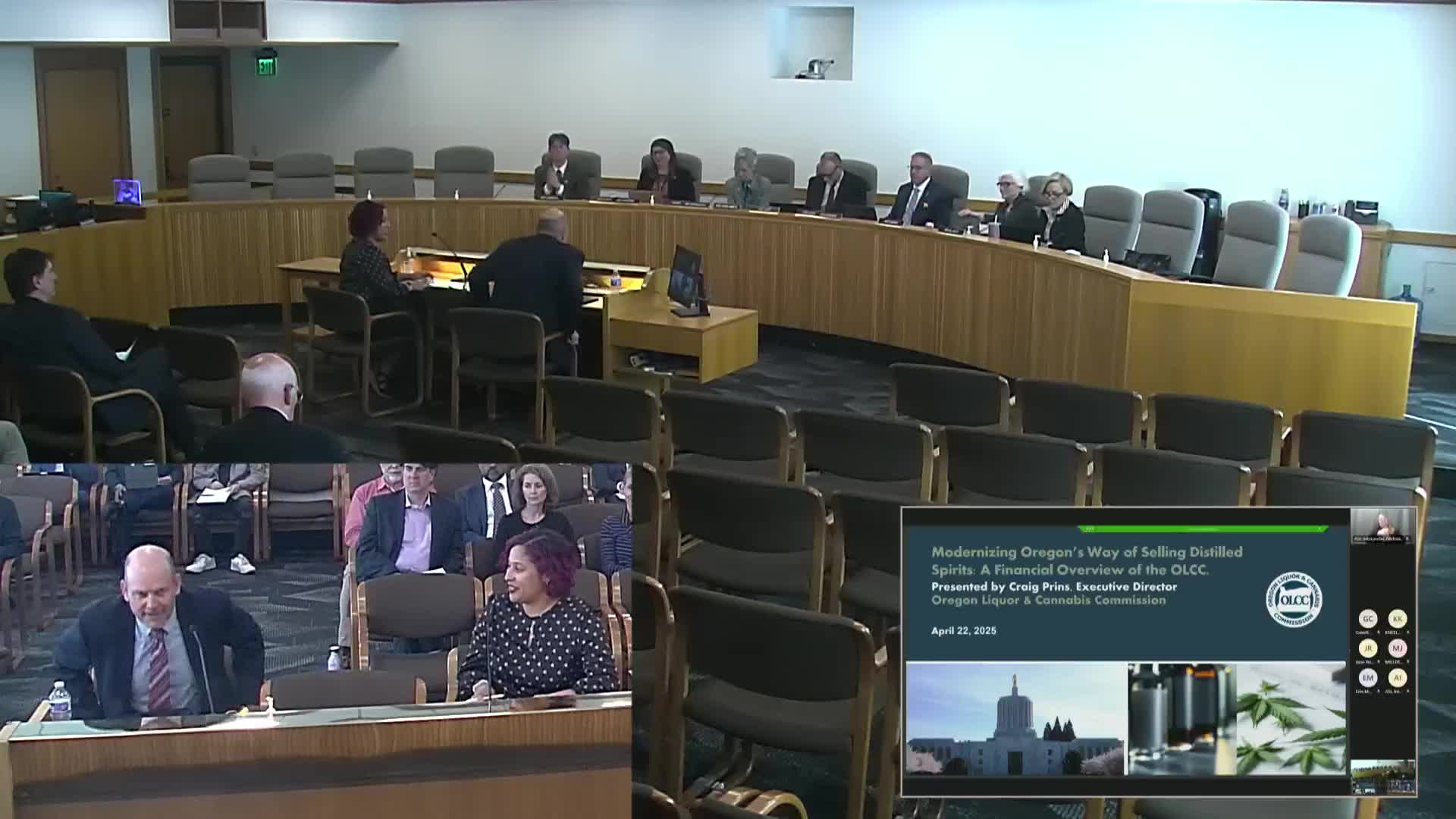
Craig Prins, executive director of the Oregon Liquor and Cannabis Commission, told the House Committee on Revenue on April 22 that Oregon's control model for distilled spirits generates hundreds of millions in state and local revenue each biennium but is facing distribution pressure as liquor sales slightly decline and debt service for a new warehouse begins.
"Every year it does generate hundreds of millions of dollars to schools, parks, and health care," Prins told the committee, explaining the control model in which the state purchases distilled spirits, stores them in a commission warehouse and sets retail prices for 285 state liquor stores. Prins described social objectives the control system aims to achieve, including limiting excessive alcohol use by controlling price, hours and locations of sales.
Prins said OLCC expects a biennial general‑fund contribution of about $308.5 million with the current surcharge and that cities' combined share for the upcoming distribution is estimated at about $164.2 million, down from $176 million in 2023. He told the committee the agency recently broke ground on a new warehouse and that 2025 debt service is projected at roughly $27 million. "We expect to be able to sell the current two warehouses," he said, noting a December 2022 estimate of roughly $28 million for those properties that could offset early debt service.
Jenna Jones of the League of Oregon Cities and Twila Miller, chief financial officer for the City of Eugene, said the reduction in state shared liquor revenues is already hitting local budgets. "We're operating in a structural gap where expenditures are growing at a faster rate than revenues," Miller told the committee, and the city projects about a $1.5 million annual reduction in liquor revenue compared with prior forecasts. Jones said changes introduced to agent and tasting‑room compensation and the warehouse debt service both contributed to a decline in net distributions to cities.
Committee members asked whether the warehouse budget was approved by the legislature. Prins said the Legislature approved bonding authority and the budget in 2022; policy decisions about applying proceeds from the sale of existing warehouses or allocating revenue to cover debt service would be directed by the Legislature.
The committee held the item as informational and closed the meeting after a shortened question period; Prins and League staff provided materials for further review.