Get email alerts on the Ada Transition Plan topic
No spam. Unsubscribe anytime.
Metro presents ADA transition plan update; plans divisional action lists and annual reporting
Summary
Metro told the Regional Transit Committee it completed an ADA transition plan developed with community input and will publish the plan online, create divisional action plans, and issue an annual accessibility report beginning in 2025.
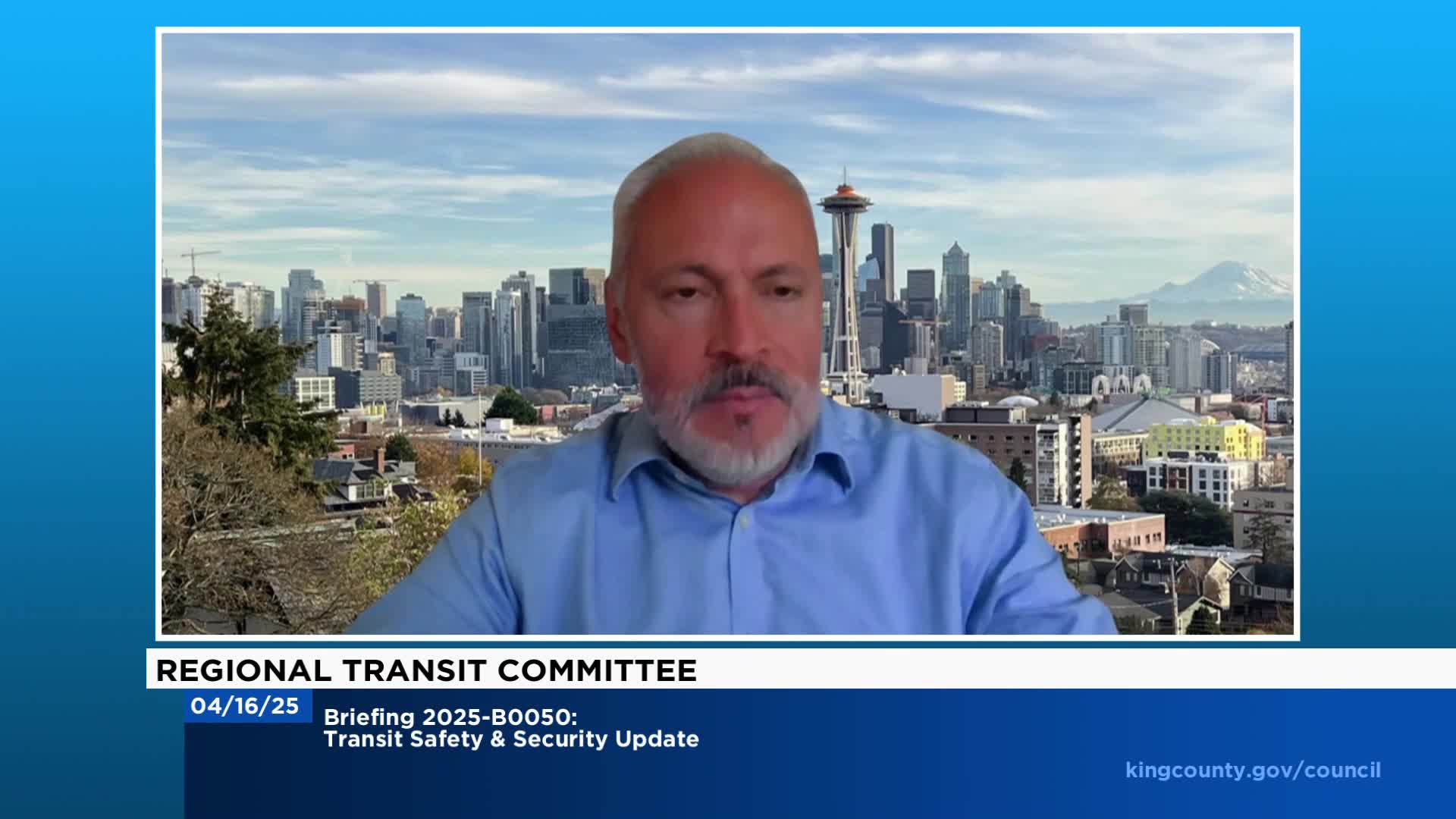
King County Metro presented its federally required Americans with Disabilities Act (ADA) transition plan to the Regional Transit Committee on April 16, outlining findings from a system-wide self-evaluation, community engagement and next steps for implementation.
Brian Mannion, deputy director of Metro’s Mobility Division and the project’s executive sponsor, said the plan is a framework to identify barriers and develop strategies to bring Metro programs, services and facilities into compliance with Title II of the ADA. Metro’s project team — including ADA universal access program manager Taryn Farley, ADA coordinator Dion Graham and community engagement lead Christina Gonzalez — summarized outreach and technical findings and described how Metro will prioritize and track work.
Dion Graham said Metro received feedback from more than 300 individuals and organizations during outreach and used five engagement methods, including meetings and online surveys, to identify barriers and improvements. Findings the team flagged as strengths included broad fixed-route coverage and many drivers’ competence; areas for improvement included obstructions in accessible pathways, inconsistent paratransit practices and a need for expanded agency-wide ADA training and better complaint- and modification-request tracking.
Metro said it will post the finalized transition plan on its website within days and will develop divisional action plans that prioritize barrier removal based on criteria such as legal risk, community impact, ridership and ease of remediation. Metro said it will publish an annual accessibility report beginning at the end of 2025 summarizing progress toward implementing the plan and that it will conduct a formal plan update every three years as required under Title II.
Committee members asked about jurisdictional coordination (for example, sidewalk obstructions and private micromobility devices near stops) and whether Metro’s data systems will be coordinated across agencies. Metro staff said the agency will work with local jurisdictions and cited existing coordination with the Seattle Department of Transportation (SDOT) as an example of reviewing plans in early stages to avoid rework. Staff also said Metro’s Connecting to Transit team is developing tools to gather more pathway-access data to support interjurisdictional discussions.
Taryn Farley described Metro’s prioritization framework — legal risk, community impact, operational/financial impact and ease of remediation — and said divisional action plans will be dynamic, updated by community feedback and operational needs. Metro stressed that improving accessibility supports broader strategic goals to increase mobility for priority populations and said it will continue targeted outreach to disability communities and regional ADA partners.
The briefing was informational. Committee members expressed support for implementation and requested follow-up reporting and continued outreach as Metro posts the plan and begins action planning.
AI generated
The text on this page is AI generated. Summaries, highlights, analysis, and video transcripts are all produced from the original source material.
AI can make mistakes, so if you spot one, and we will fix it for everyone.
Note: the source content is unaltered by us. Any content source we link to, be it a video, an audio recording, or a document, is presented exactly as its publisher released it. That publisher is usually a government body, sometimes an individual official or another organisation.