Get Full Government Meeting Transcripts, Videos, & Alerts Forever!
Get email alerts on the Medical Examiners topic
No spam. Unsubscribe anytime.
Committee hears bill to allow physician assistants and nurse practitioners to serve as county medical examiners
Summary
A public hearing on Senate Bill 536 centered on expanding who may serve as county medical examiners to include licensed physician assistants (PAs) and nurse practitioners (NPs). Supporters said the change would help rural counties cope with rising caseloads; no vote was taken.
House Committee on Behavioral Health and Healthcare Chair Noss opened a public hearing April 22 on Senate Bill 536, a measure to expand the pool of clinicians eligible to serve as county medical examiners to include licensed physician assistants and nurse practitioners.
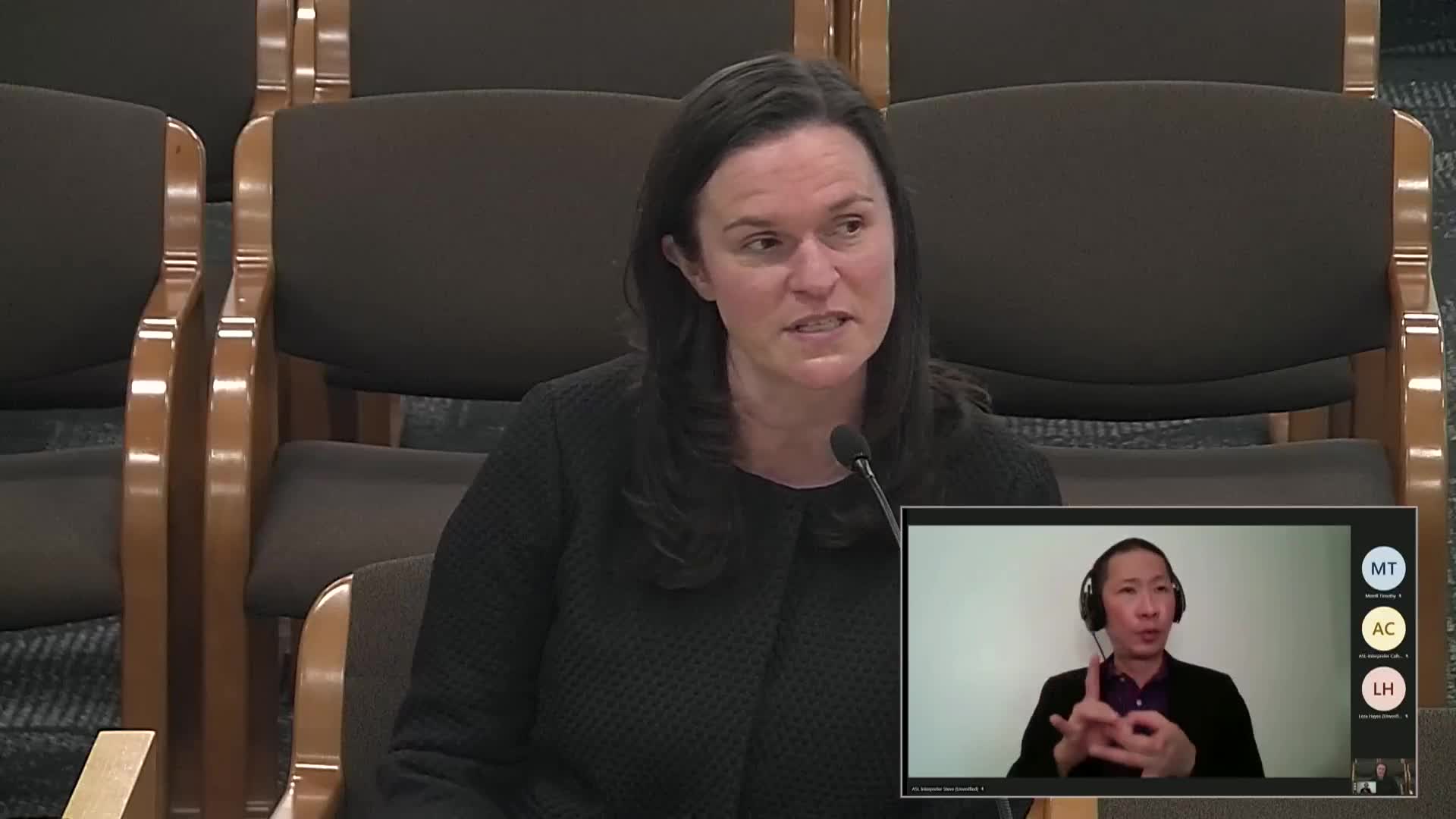
The bill’s supporters told the committee the change is aimed at easing caseload pressure on Oregon’s medical examiner system and improving access in rural areas. Lisa Hayes, a physician associate practicing in Oregon and acting chair of the government affairs committee for the Oregon Society of PAs, said, "PAs are licensed clinicians who practice medicine in every specialty and setting in the state of Oregon." Hayes added the profession is ‘‘dedicated to expanding access to care’’ and described the bill as a way to remove an ‘‘arbitrary barrier.’’
Tim Dooley, testifying for the Association of Oregon Counties, said counties are "strongly supportive of the Senate bill 536" and detailed how counties use part‑time contracted medical examiners to certify causes of death and supervise investigations. Dooley told the committee "about 15 percent of all deaths statewide fall into a category that requires medical examiner involvement." He said the state police‑run chief medical examiner’s office would continue to handle autopsies and forensic testing.
Supporters cited a report from the medical examiner improvement work group convened after passage of a 2024 House bill; that group recommended expanding eligible licensees to reduce caseload burdens. Hayes told the committee the change would not require new state funding and would be particularly helpful in rural and tribal communities that struggle to recruit local physicians. She also said the Oregon Society of PAs is coordinating with stakeholders and legislative counsel on a pending technical amendment to clarify language referencing the American Board of Pathology.
Committee members asked how implementation would work and whether the work requires special additional training. Dooley explained that counties typically contract with a part‑time clinician to answer investigators’ questions and certify paperwork; he said the bill would broaden who counties may contract with rather than create a new employee classification. On training, witnesses said the county medical examiner role does not require a forensic pathology specialty: "These aren't forensic pathologists," Dooley said, adding that forensic needs are referred to the state police and board‑certified pathologists.
Representatives pressed for data about how many other states allow nonphysician medical examiners and asked whether pay or contracting issues might arise. Witnesses did not provide a multi‑state tally but offered to follow up on that question. No formal action or vote occurred during the hearing.
The committee kept the record open for the public hearing; no final vote or committee recommendation was recorded at the hearing's close.