Get Full Government Meeting Transcripts, Videos, & Alerts Forever!
Get email alerts on the Public Safety Drones topic
No spam. Unsubscribe anytime.
House Judiciary hears bill to raise penalties for drones that interfere with wildfire response
Summary
The House Committee on Judiciary held a public hearing on Senate Bill 1125A, which would increase criminal penalties for using an unmanned aircraft system (drone) to interfere with law enforcement or wildfire suppression operations; sponsors and members debated identification, intent and penalty thresholds.
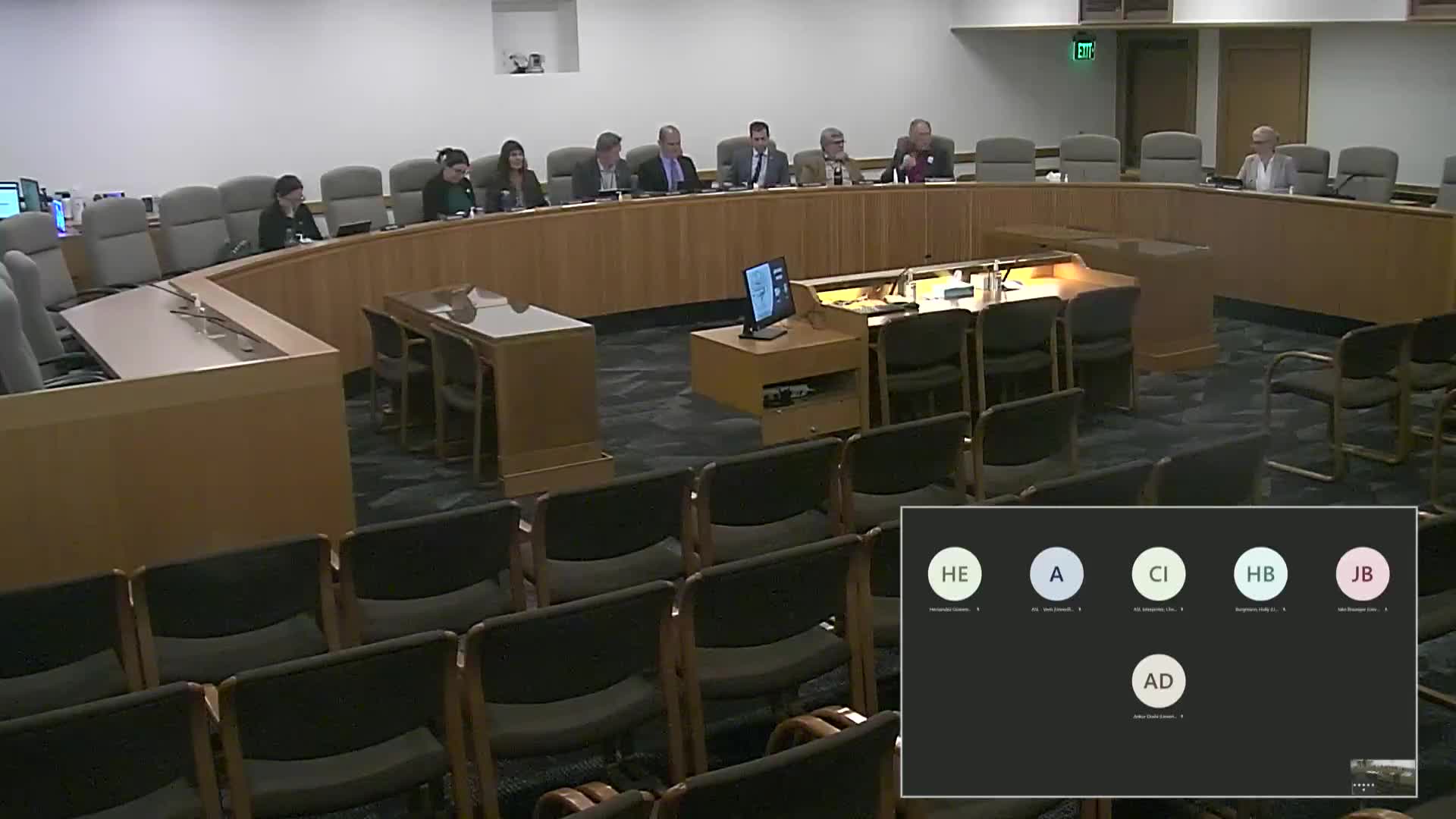
The House Committee on Judiciary opened a public hearing April 22 on Senate Bill 1125A, a measure that would raise criminal penalties for people who use unmanned aircraft systems to interfere with emergency response and wildfire-suppression operations.
State Sen. Floyd Prezonski, the bill sponsor, told the committee the measure seeks to “enhance penalties for individuals that are flying drones in areas where there is a wildfire suppression attempt,” and to distinguish sanctions based on intent and the seriousness of outcomes. “If it unfortunately results in some type of death, it should be at the higher level,” Prezonski said.
The bill language described during the hearing would make interference that knowingly, intentionally or recklessly causes death or serious physical injury with an unmanned aircraft system a Class A felony; causing interference itself would be a Class C felony, and causing property damage by interfering would be a Class B felony. The sponsor noted the measure would apply to conduct occurring on or after the bill’s effective date. The transcript records that, on the Senate floor, the measure previously received “21 ayes and 7 nays.”
Committee members focused questions on enforcement and scope. Representative Anderson asked how law enforcement would identify the operator of a drone; Prezonski said he did not have an answer for investigative techniques but noted there are registration and marking requirements and other means “we are not familiar with” to identify owners. Representative Tran asked whether media using drones to cover events would be exempt; Prezonski said media would have to comply with any restricted‑area rules and that media sometimes coordinate with law enforcement for safety and access.
Vice Chair Joseph pressed on the bill’s penalty structure, asking whether any threshold limits property‑damage penalties so that relatively small losses would not trigger a Class B felony. Prezonski said the bill does not include monetary thresholds and that he modeled the penalty tiers on existing templates: inadvertent or low‑risk use would face lesser sanctions, while serious injury, large property damage or death would be placed at higher levels.
Representative Lewis asked whether the bill authorizes forfeiture of the unmanned aircraft system; Prezonski said forfeiture was contemplated in at least one of the related drone bills and could be available as a court sanction. Representative Mannings summarized the statutory elements as requiring possession or control of a drone, interference with emergency response, and resulting property damage for the higher penalty tier; Prezonski agreed with that reading.
The public hearing closed after members discussed coordinating the measure with a related bill (House companion or similar legislation identified as 34 26 in the hearing). Prezonski offered to work with other lawmakers on aligning penalty structures.
The committee did not take a final vote on SB 1125A during the hearing.
Looking ahead, the sponsor said he will coordinate with the bill sponsor of the related legislation and with House members to seek agreement on appropriate Oregon policy language.