Get Full Government Meeting Transcripts, Videos, & Alerts Forever!
Get email alerts on the Tribal Jurisdiction Pl280 topic
No spam. Unsubscribe anytime.
House committee hears bill to create statutory process for Oregon tribes to seek retrocession from Public Law 280
Summary
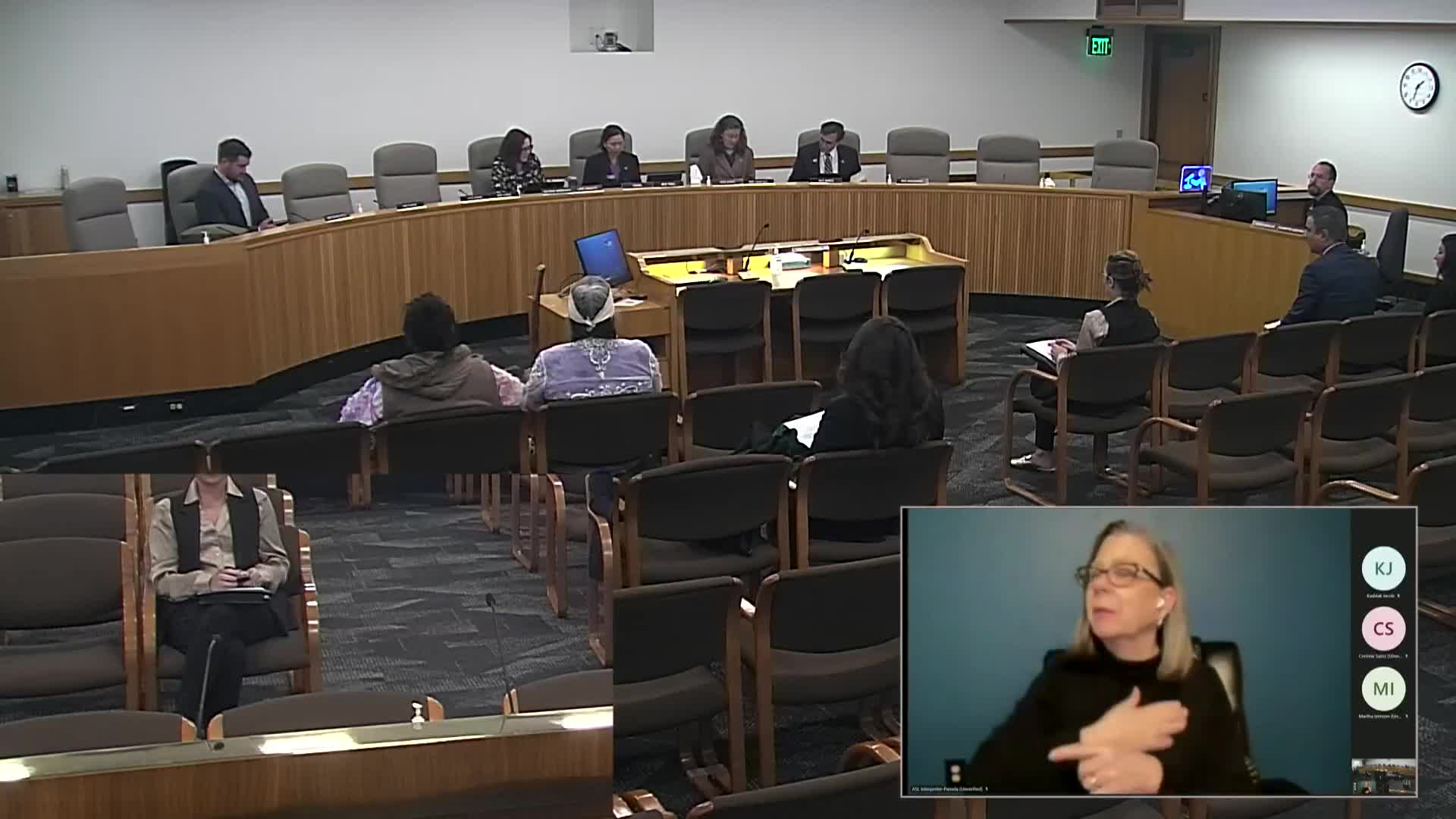
The House Committee on Emergency Management, General Government, and Veterans held a public hearing April 22, 2025, on Senate Bill 1011, which would create a statutory process for federally recognized Oregon tribes to request retrocession of Public Law 280 jurisdiction.
The House Committee on Emergency Management, General Government, and Veterans held a public hearing April 22, 2025, on Senate Bill 1011, which would create a statutory process for a federally recognized Indian tribe in Oregon to request that the governor seek retrocession of Public Law 280 jurisdiction to the federal government.
Supporters said the bill is a procedural measure to provide clarity and respect for tribal sovereignty. State Senator Anthony Broadman, who sponsored the measure in the Senate, said SB 1011 would give tribes a predictable, government‑to‑government pathway to return jurisdiction assumed under Public Law 280 (PL 280) rather than rely on informal requests to the governor.
The bill would not itself expand or remove jurisdiction, Broadman said: it establishes a process. Representative Emily McIntyre noted the bill was discussed by the Legislative Commission on Indian Services and described SB 1011 as “laying the groundwork” for future work. Corine Sams, a member of the Confederated Tribes of the Umatilla Indian Reservation Board of Trustees, told the committee a statutory pathway would create clarity, timelines and transparency and cited the tribes’ prior experience with a governor’s executive order that achieved criminal retrocession for CTUIR in 1980.
Committee members asked how broadly retrocession would apply. Broadman and legal counsel explained that retrocession under PL 280 applies to land that federal law defines as “Indian country” (18 U.S.C. § 1151). Oregon’s Indian country is a patchwork of on‑reservation trust land, on‑reservation fee land, off‑reservation trust land and other categories; PL 280 historically affected different Oregon tribes in different ways depending on their restoration acts and restoration histories. The bill, proponents said, would only provide a state procedure for tribes that are currently subject to PL 280.
Witnesses and staff clarified limits of the measure. Martha Klein Isenson, Office of Legal Counsel for CTUIR, told the committee the bill does not change the federal limits established by the U.S. Supreme Court in Oliphant v. Suquamish Indian Tribe (1978) — tribes generally do not have criminal jurisdiction over non‑tribal members except in narrow circumstances (for example, limited authorities added through Violence Against Women Act reauthorizations). Isenson said remedies to confer tribal criminal jurisdiction over nonmembers (sometimes called an “Oliphant fix”) would require federal action and are outside the scope of SB 1011.
During public comment, Lana Jack of Celilo (Celilo Falls) urged the committee to account for bands, communities and individual Indians not currently federally recognized. Jack described historic harms from termination‑era policies and warned that the bill, if enacted “without language of bands, communities and individual Indians,” could further erase communities that are not federally recognized. Legal counsel and tribal witnesses responded that SB 1011 is not the vehicle to change federal recognition or to confer jurisdiction over nonmembers; counsel said amendments adding unrecognized groups would be legally ineffective without federal recognition or congressional action.
Committee staff and witnesses also noted a historical example: CTUIR achieved criminal retrocession through an executive order by then‑Governor Vic Atiyeh (Executive Order 80‑8, signed May 13, 1980), and the tribe has since operated a tribal court that proponents say improves judicial economy for regional courts.
No committee action or vote was taken during the hearing. Committee members asked clarifying questions and received commitments from proponents that the bill is procedural and intended to be used in good‑faith government‑to‑government discussions if a tribe seeks retrocession.
If advanced, the bill would set statutory criteria, timelines and a formal response requirement for the governor’s office when a federally recognized Oregon tribe subject to PL 280 seeks retrocession. The measure does not force any tribe to request retrocession and, according to witnesses, would not on its own alter federal or tribal jurisdictional limits set by federal law.
Topics covered: the history and effect of Public Law 280, the legal meaning of retrocession, examples of past retrocession, the limits imposed by Oliphant and federal recognition issues, and testimony from tribal representatives urging statutory clarity.
The committee closed the public hearing and did not take a vote on SB 1011 during the April 22 session.