Get Full Government Meeting Transcripts, Videos, & Alerts Forever!
Get email alerts on the Code Enforcement topic
No spam. Unsubscribe anytime.
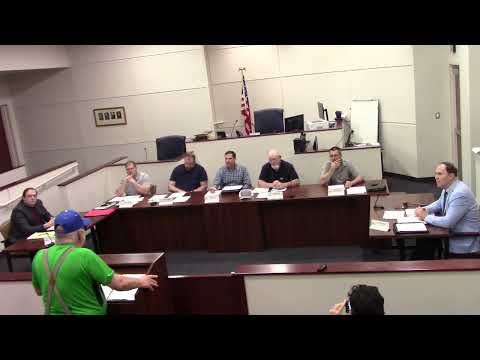
Resident tells Shelby City Council ordinances lack "teeth" after years of yard junk and alleged livestock violations
Summary
A Shelby resident urged the council to strengthen code-enforcement tools after a neighbor's persistent yard litter and apparent livestock violations that he says threaten children on an adjacent property.
Bob Henry, a Shelby resident who said he lives at 84 Broadway, told the Shelby City Council during public comment that a neighbor at 80 Broadway has «accumulated litter» that is spilling onto adjoining property and presents a safety hazard.
Henry said he has photographic evidence and that his wife owns 82 Broadway, where his stepdaughter and four great-grandchildren live. “It's a hazard to our 4 great grandchildren that live there,” Henry said. He added that the neighbor keeps refrigerators and other metal items and that a junk car without wheels or an engine remains on the lot.
Henry said he and his wife have pursued enforcement: a sheriff's deputy cited the neighbor this morning for refrigerator doors and his wife filed a complaint with the sheriff's office. Henry said the neighbor has prior citations and repeated fines, but he questioned whether existing penalties sufficiently deter repeat violations.
The transcript references “provision 660.03,” which Henry described as an escalating ordinance that treats a first offense as a minor misdemeanor and subsequent offenses as fourth-degree misdemeanors. Henry asked what happens after fines are paid and said he and code enforcement see enforcement limits when offenders simply pay the penalties.
Council members acknowledged the complaint and indicated staff and code enforcement are aware of the property. The mayor said the council would likely refer exterior-maintenance and related enforcement issues to a committee for further discussion.
No formal action or new ordinance was proposed on the record; the item was raised during the meeting's public-comment period and will be handled administratively or in a future committee discussion, according to council remarks.