Get Full Government Meeting Transcripts, Videos, & Alerts Forever!
Get email alerts on the Infrastructure Priorities topic
No spam. Unsubscribe anytime.
Council lists roads, lighting, sewer conversion and crosswalks as top capital priorities
Summary
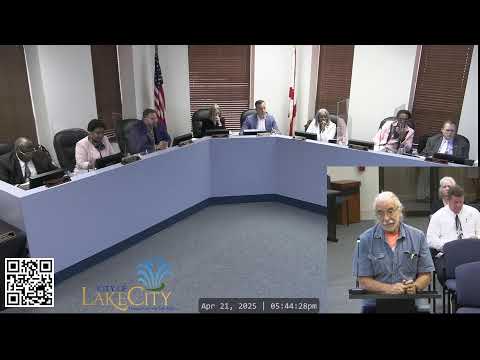
During the Lake City budget workshop council members prioritized road repairs, street lighting, crosswalks, sewer conversion for in-town septic, and targeted park upgrades as top capital and infrastructure needs for FY2026.
At a Lake City City Council budget workshop, council members identified streets, street lighting, crosswalks, sewer conversion for in-town septic systems, and targeted park improvements as top capital priorities for the coming budget year.
Vice Mayor Young emphasized comprehensive street repairs rather than temporary fixes, saying the city “need[s] repayment of a lot of streets” and that addressing roads also helps reduce flooding. Councilman Carter listed “roads, lights and code enforcement” as priorities and cautioned against short-term repairs that can worsen stormwater issues. Councilman Jernigan and others also named sidewalks as a priority.
Several members raised pedestrian safety: Vice Mayor Young asked staff to pursue crosswalk improvements, noting the city is already working on that item. Council members said that improved lighting would address safety and public-safety concerns and mentioned a planned program to better identify outages and repair street lights faster.
Council members also discussed replacing in-town septic systems with sewer in targeted areas, pairing that work with available state grant dollars. Councilman Carter suggested continuing grant-seeking for Youngs Park improvements and proposed low-cost amenities — such as a dog park or a small disc-golf course at Campbell Park near Lake Montgomery — to activate underused space and discourage illicit activity in those parks.
Council members noted some projects could be advanced through grants and state funding rather than local tax increases, and they directed staff to include these capital priorities in budget planning and grant-seeking efforts.
No capital projects were approved at the workshop; members primarily conveyed priorities for staff to factor into the draft budget and to pursue grant opportunities.