Get Full Government Meeting Transcripts, Videos, & Alerts Forever!
Get email alerts on the Budget Revenue topic
No spam. Unsubscribe anytime.
Lake City council resists immediate property tax hike; awaits fire and stormwater studies
Summary
At a Lake City budget workshop, council members largely rejected raising the ad valorem millage now, agreed staff will present a completed fire-assessment study and recover a 2017 stormwater study to inform any future fee or rate changes.
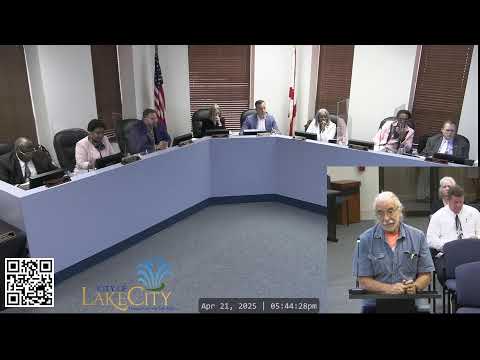
At a Lake City City Council budget workshop for fiscal 2026, council members signaled they do not support an immediate increase to the city’s ad valorem millage rate and said they will wait for completed technical studies before considering higher fire or stormwater assessments.
The discussion centered on three revenue options the city is weighing for next year: raising the property (ad valorem) millage, increasing a fire assessment that currently requires a General Fund transfer, and implementing a dedicated stormwater fee. Finance staff and the city manager described studies under way to clarify needs and rates.
Council member Jernigan answered “Yes” when asked about considering an ad valorem increase; however, Councilwoman Harris, Councilwoman Young and Councilman Carter all said they would not support a property-tax increase at this time. Several members said they preferred putting specific tax or fee questions to voters rather than raising rates administratively. Councilman Carter said the council should “paint the vision” for voters if a ballot measure is proposed.
City staff said the city currently transfers $925,000 from the General Fund to cover the fire fund shortfall. Rosenthal and finance staff said the city engaged a consultant (identified in the workshop as Binesh) to conduct a comprehensive fire-assessment study. Finance staff told the council the fire assessment is governed by Florida statutes and that the consultant will present a range of proposed rates once the study is complete. Council members generally said they would review the consultant’s recommendations before supporting any increase; Councilwoman Harris said she would oppose a higher rate “not without substantial data.” Councilman Carter said he is open to an increase depending on the study’s findings.
On stormwater, Rosenthal and the finance director said a stormwater fee would fund projects to reduce flooding, prevent silt buildup and address neighborhood drainage over time. Council members asked whether a fee would apply citywide and whether it would be calculated by impervious surface. Staff said the fee design could be variable (for example, based on impermeable surface) or flat, and that options would be presented if the council chooses to pursue a fee.
Council members asked staff to recover and circulate the 2017 stormwater assessment because the council previously had the 2017 study completed and then voted by resolution not to implement the fee at that time. Several council members said they would support commissioning a new study if the prior analysis is no longer sufficient. Vice Mayor Young and others said they would consider a stormwater fee only if the new study shows a “die-hard necessity.”
No formal rate increases or fee ordinances were adopted at the workshop. The council’s direction to staff was procedural: to present the completed fire-assessment findings when available and to recover and distribute the 2017 stormwater study for council review so members can decide whether a new study or a fee proposal is warranted.
Next steps identified during the workshop: the fire-assessment consultant will complete and present its findings to the council; staff will retrieve and circulate the 2017 stormwater assessment and scope any new study if the council requests one.