Law director outlines new state option to charge for police-video redaction; council asks for usage data
Loading...
Summary
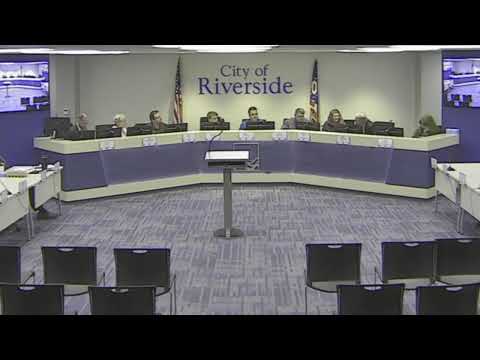
Jim Miller, Riverside's law director, briefed council on April 21 about a recent amendment to the Ohio Public Records Act that gives law-enforcement agencies an option to recover labor and technology costs when producing redacted dash- and body-camera footage.
Jim Miller, Riverside's law director, briefed council on April 21 about a recent amendment to the Ohio Public Records Act that gives law-enforcement agencies an option to recover labor and technology costs when producing redacted dash- and body-camera footage.
Miller told the council that the amended provision, which he said "went into effect April 3," allows a public-law-enforcement agency to charge for the soft costs of reviewing, redacting and preparing video footage for public release. Under the statutory framework Miller described, the law permits a charge of up to $75 per hour of produced video footage, with a maximum of $750 per request.
Miller said the amendment also permits agencies to provide an estimate within five days of receiving a request and to require payment of that estimate before beginning production. "This law does balance the considerations and say yes the labor time that's spent doing this is worthwhile of being remunerated," Miller said, describing why the legislature authorized the change.
City Manager and council members discussed practical implications. The manager noted that actual total-compensation costs for an officer reviewing footage already exceed $50 per hour and that if overtime or after-hours work is required the effective hourly cost will be higher; he said the city currently absorbs such costs. He suggested there may be administrative options short of charging the full statutory maximum, and council members asked staff to collect concrete usage data from the police department to inform policy.
Council members and staff raised additional points:
- Requests are common enough to generate recurring work for records staff; even short clips can require multiple reviews to ensure proper face blurring and sensitive redactions.
- The amendment treats media requesters the same as private individuals; media organizations would be subject to the same fee framework unless the city chooses otherwise.
- The law gives local councils latitude: a municipality may adopt a master fee schedule or a public-records policy that sets the fee level, waivers and discretionary criteria; the council previously delegated public-records policy authority to the municipal public-records commission, which affects how the city might implement any fee.
Council direction and next steps: Council members asked staff to return with data on how often police video is requested, by whom (private individuals, victims, law firms or media), and how long typical requests last. Staff also said it will look into software and outsourcing options and provide cost estimates and draft policy options, including sliding scales or carve-outs for short clips or victim requests.
Why it matters: If Riverside adopts an implementation that charges for redaction time, requesters would face new upfront costs for complex video requests. Staff and council must weigh the policy tradeoffs between recouping municipal costs and preserving public access.